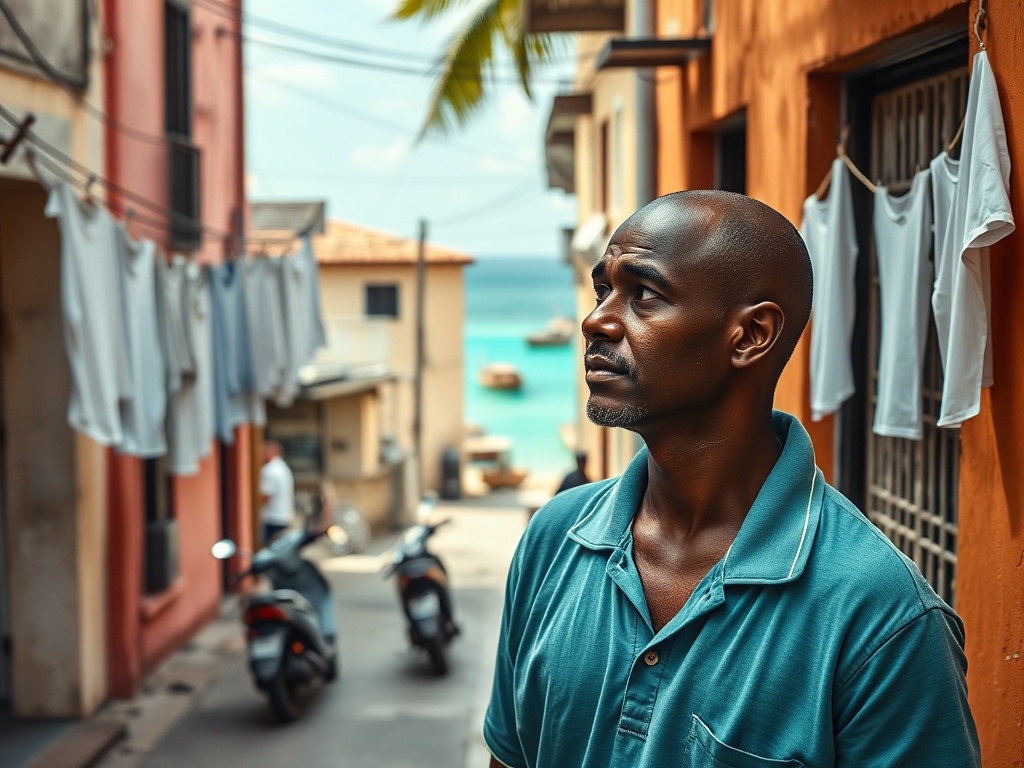
The Vanishing Shore: A Maldivian Search for Home in a Changing Nation
The sea has always been our constant, the rhythm of waves against shore a familiar heartbeat. Yet in recent years, another rhythm has emerged—the steady migration from outer islands to the crowded streets of Malé, where identity becomes fluid and belonging becomes a question.
Sometimes I wonder if we've lost something essential in this concentration. The phase two reclamation might have been the last for the Malé region, but the pull continues. People come and rarely return, their lives rewoven into this urban fabric. They build homes, find work, raise children who know only concrete and crowded spaces. Yet when it comes to having a voice, they're often tethered to islands they left behind, to places where parents hold property or where birth certificates were issued decades ago.
What does it mean to belong to an island? Is it the land your family owns, the house your parents built? Or is it the community where you actually live, where you face daily challenges and celebrate small victories? The tribal mindset that ties us to ancestral geography creates invisible borders within our own nation. We speak of one Maldives, yet we maintain systems that divide us by origin rather than unite us by shared experience.
This isn't just about voting rights or political representation—it's about the fundamental human need to influence the environment where you wake each morning. When people can't hold local councils accountable for the streets they walk, the water they drink, the schools their children attend, something vital is lost. The connection between citizen and community weakens, replaced by a transactional relationship with distant bureaucracy.
The defense spending question echoes in this context—what are we defending if not the right of every Maldivian to feel at home wherever they choose to build their life? Not just secure from external threats, but secure in their belonging, in their ability to shape the policies that affect their daily existence.
Perhaps the real development we need isn't more land reclamation in one region, but the reclamation of our shared identity. To recognize that a Maldivian is Maldivian, regardless of which island they call home today. That the fruits of policy should be enjoyed where people reside, not where their paperwork says they belong.
In this archipelagic nation of scattered islands, we're learning that home isn't just coordinates on a map—it's where we're allowed to put down roots, where our voice matters, where we can watch our children play in safety and know that this place, this community, recognizes us as belonging.
— Source fragments: Having a requirement to reside for a minimum amount of time is fine so long as it does not subject one to a decade long weight. But one should be able to as soon as is possible to elect representatives, have a say on policy and enjoy the fruits of it where they reside; Any policy which recognizes anyone as being more belonging to a particular island smacks of hypocrisy and double-standards; Shall we let go of our tribal mindset and tighten as well as enforce laws that recognize the right of all Maldivians to influence policy through voting and become entitled to policies and privileges where they live rather than where they were born; As far as I know, most people who migrate to the Malé region rarely go back. It makes more sense for them to vote where they live, not just where they were born; Sometimes I wonder if phase two should've been the last land reclamation in the Male' region. The next ones should've been done up north or south so people from those areas could migrate there, instead of everyone crowding into Male'