The Waiting Land
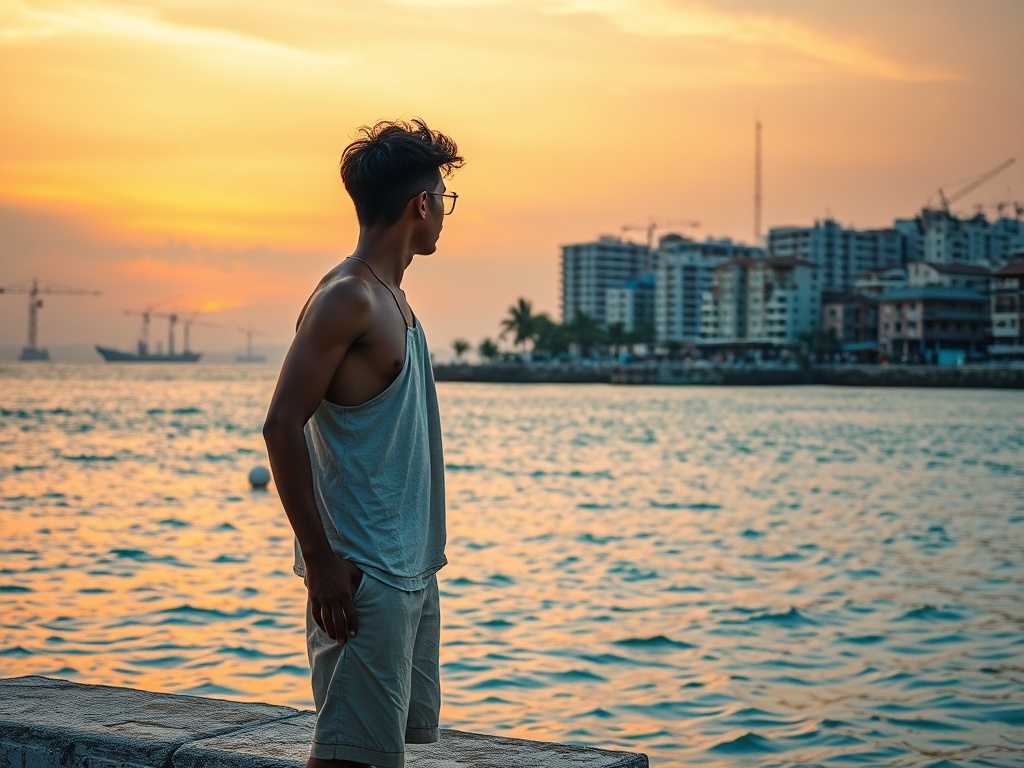
The sea breeze carried the scent of salt and diesel as Ismail stood on the edge of the harbor, watching the construction cranes move like metal herons across the water. Gulhifalhu—the name that had become a mantra of hope during the last election. They had promised his family a plot there, a place to escape the suffocating closeness of their two-room flat in Malé where five people breathed the same recycled air.
His father had believed it. "Just wait," he'd said, his eyes bright with the politician's promises. "They're building it for people like us." But that was two years ago. Now the reclaimed land rose from the sea like a concrete mirage, and Ismail watched as the contracts went to relatives of ministers, to party loyalists, to anyone but the fishing families who had voted with hope in their hearts.
Today, the final list had been published. His family's name wasn't there. His mother had cried quietly in the kitchen, the sound swallowed by the hum of their aging refrigerator. His father had gone silent, the way he did when the world proved too heavy for words.
Ismail walked along the seawall, the concrete warm beneath his bare feet. He passed the new luxury apartments rising where the old fish market once stood. The windows reflected the setting sun like golden coins. Inside those buildings, he imagined, people lived with space to breathe, with views of the ocean that didn't include their neighbors' laundry lines.
He thought of his grandfather's stories—of an atoll where every family had their own land, where children played among coconut trees instead of concrete corridors. That world felt as distant as the stars beginning to prick the evening sky.
At the edge of the harbor, he saw old Ahmed mending his net, his movements slow and practiced. "They promised you too?" Ahmed asked without looking up.
Ismail nodded, the movement feeling heavy.
"The sea doesn't make promises," Ahmed said, his needle moving through the net. "It just is. These men... they build islands from nothing, but forget the people who are already here."
The last light caught the white crests of waves breaking over the reef. Out there, beyond the construction and the politics, the ocean remained—constant, deep, indifferent to the schemes of men. Ismail understood now that hope, like land, could be reclaimed and reshaped until it bore no resemblance to what you once knew. He would have to build his own future, stone by stone, in the spaces between other people's promises.
— Source fragments: "There's no land left. The reclaimed land of Gulhifalhu and Hulhumale' were all given free to Male' people... When is giving RT people some hope, it's disgusting to see you giving lectures about financial plans."
— Tone: wistful