The Weight of Authenticity
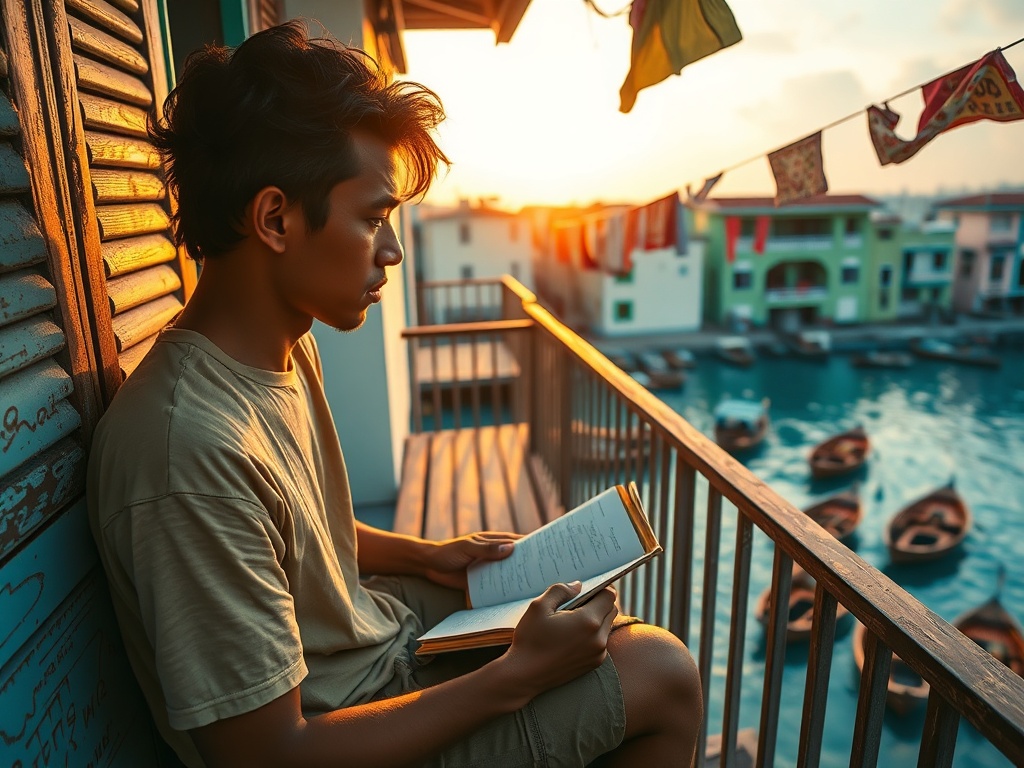
The afternoon sun casts long shadows across the narrow streets of Malé, where the air carries the scent of salt and diesel. On a balcony overlooking the sea, a young man writes in a worn notebook, his pen moving with the certainty of someone who has found his own voice. He thinks of the political slogans echoing through the city, the borrowed rhetoric, the imitated styles that fill social media feeds and public speeches. 'It's always best to be yourself,' he writes, the words flowing naturally, unforced.
Around him, the city pulses with competing narratives—the chants from recent protests still lingering in the air, the heated debates about foreign military presence, the memes from Hulhumeedhoo that spread like wildfire. In this cacophony, authenticity becomes both refuge and rebellion. He remembers his grandfather, a fisherman who never pretended to be anything but what he was, whose stories carried the weight of lived experience rather than borrowed phrases.
The young man closes his notebook, watching the dhoni boats return to harbor. Their movements are not imitations but responses to the sea's particular demands—each captain reading the waves according to their own understanding. This, he realizes, is the truth that transcends political camps and social media trends: that impact comes not from perfect imitation but from genuine expression. The most powerful voices in Maldivian history were never echoes but originals—whether in poetry, politics, or daily life.
As dusk settles over the islands, turning the sea to liquid gold, he understands that in a nation grappling with complex identities and external pressures, the courage to be authentically oneself might be the most revolutionary act of all. Not as defiance, but as simple, unwavering truth.
— Source fragments: "It's always best to be yourself. You might imitate my writing style, it will never have the same impact. Because authenticity cannot be copied."