The Weight of Empty Ballot Boxes
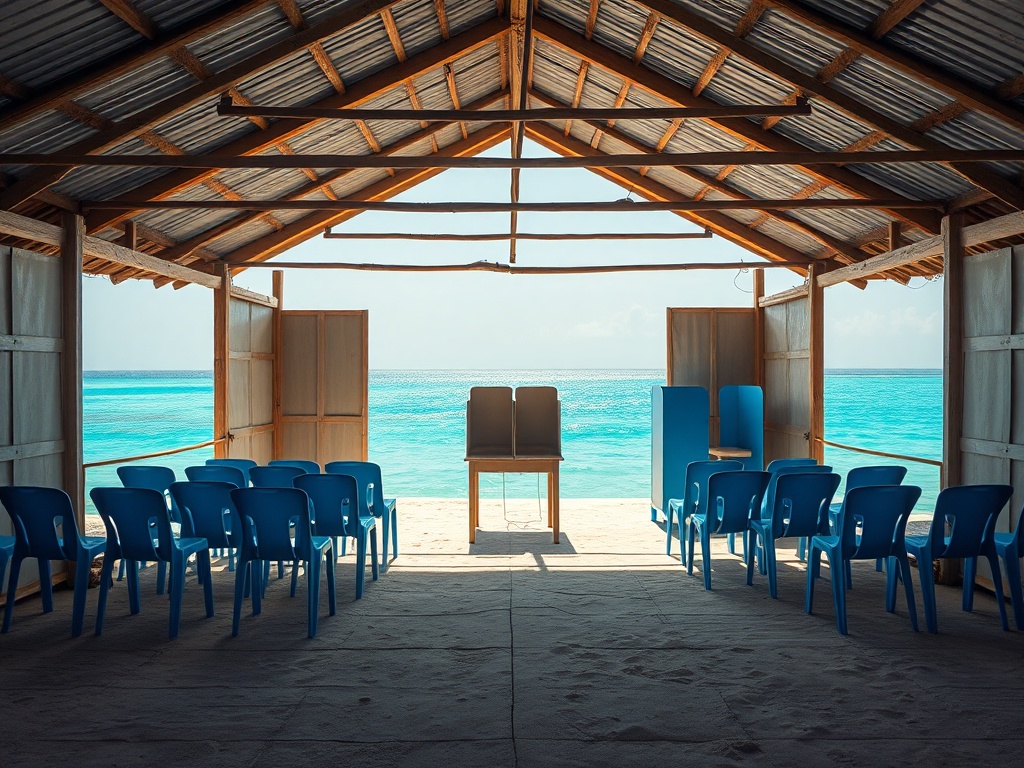
The afternoon sun beats down on the tin roofs of Malé, the heat rising in visible waves from the asphalt. In a small café near the harbor, the television murmurs with news of the Addu vote. The screen shows empty polling stations, plastic chairs waiting for bodies that never came. Someone at the next table scoffs, "At least they kissed. That's all I cared about," turning away from the political drama to the simpler human moments that make life here bearable.
But others watch with heavier hearts. They remember when the Bill was introduced to the Majlis, when amendments were proposed to ensure a minimum turnout—fifty percent, a simple majority of voices to decide the fate of all. That proposal now lies rejected, a discarded life jacket on a ship that insists it cannot sink. The fundamental problem remains: the fate of islands can be decided by just a few people, their voices echoing in near-empty rooms while the sea continues its eternal rhythm against the shore.
There's talk of separation too, not of islands from nation, but of Malé from itself. "Each one should have a different ATM machine," someone says, a fragmented wish for autonomy in a system that feels increasingly monolithic. It's not really about cash machines, but about breathing room, about creating spaces where individual agency might still flourish.
Meanwhile, in distant halls of power, the nation speaks of peace and security through trust, of human rights through inclusion. The words float like beautiful kites over the atolls, their strings cut from the grounded reality of those who live here. The gap between pronouncement and practice widens like the channel between islands at high tide.
What happens when legitimacy divorces participation? When the few speak for the many by default? We prepare for more consequential questions than this one—questions about terms of power, about the very architecture of governance. The low turnout isn't just an absence of votes; it's a presence of something else—disillusionment, distraction, the quiet erosion of belief that one's mark on a ballot matters against the tide of predetermined outcomes.
Yet life continues. Fishermen still mend their nets. Children still chase each other through narrow alleys. The call to prayer still rises five times daily, a rhythm more reliable than any political cycle. In these constants, we find our true referendums—not in the empty stations, but in the daily choices to care for one another, to preserve what matters, to remember that while governments change, the soul of a people endures in the small kindnesses between neighbors, in the shared laughter over tea, in the determination to keep living meaningfully regardless of who claims to lead.
— Source fragments: Low turnout referendums, proposed amendments for minimum participation rejected, separation wishes, contrast between political concerns and personal moments