The Weight of Empty Words
The plane descended through clouds that clung to the Indian Ocean like cotton wool, revealing the atolls below—emerald and turquoise fragments scattered across deep blue. After five years studying in Malaysia, Ahmed felt the familiar humidity wrap around him like a returning ghost as he stepped onto the tarmac. The air still carried the salt and diesel scent of Malé, but something else lingered beneath—the metallic taste of disillusionment.
His uncle picked him up in a weathered pickup truck. "Welcome back to the land of promises," the older man said with a wry smile that didn't reach his eyes. "They're building another artificial island. For the people, they say."
As they drove through the congested streets, Ahmed noticed how the city had changed. New buildings rose like concrete mushrooms, but the same old problems festered in their shadows. He remembered the online voices he'd followed from abroad—the endless debates about donations that were really bribes, media that spoke in tongues depending on who paid, justice that came with price tags.
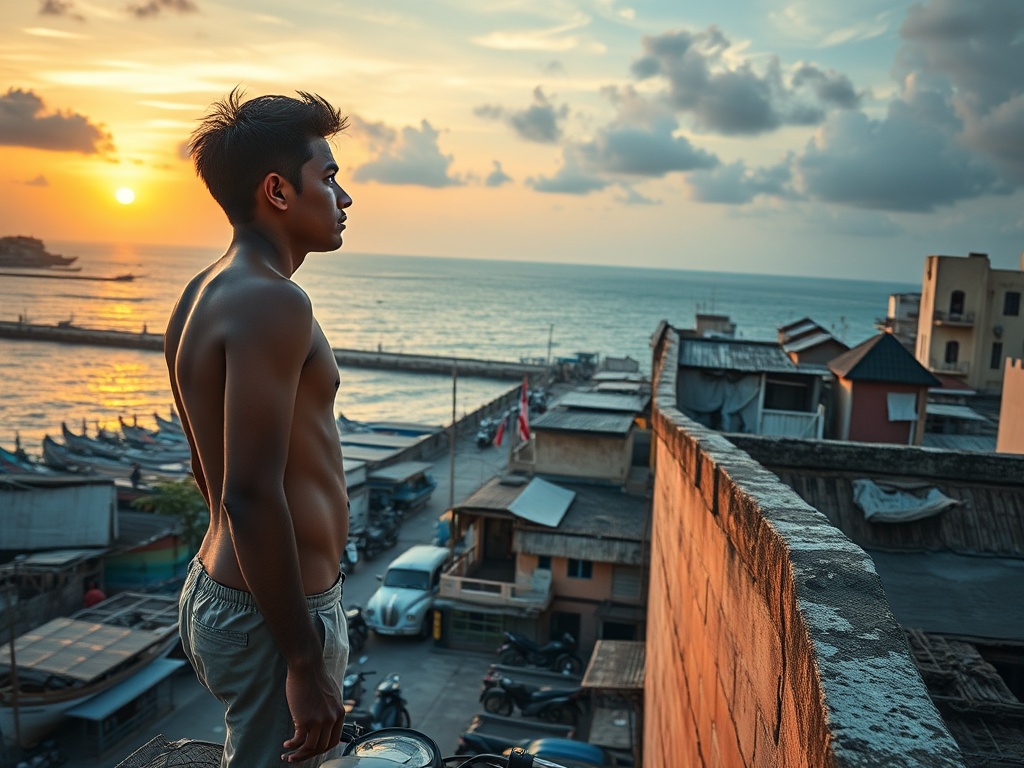
That evening, sitting on the rooftop of his family's cramped apartment, he watched the dhoni boats bob in the harbor. The sunset painted the sky in hues of orange and purple, a daily masterpiece that cost nothing, unlike everything else here. His cousin joined him, scrolling through news on his phone.
"Look at this," his cousin said, showing him headlines from competing outlets. "Same event, three different truths. Which one do you believe?"
Ahmed thought of the fragmented conversations he'd absorbed online—the anger about corruption, the despair over shamelessness, the longing for something genuine. He remembered one voice insisting: 'We need an alternative narrative.'
Down below, a political rally was forming. Men in white shirts handed out packets of rice and envelopes. The crowd swelled, their cheers sounding rehearsed. An old fisherman sitting nearby muttered, "They feed us today so we'll forget they're starving us tomorrow."
Later, walking through the narrow streets, Ahmed passed a group of young men his age. Their eyes were hollow, their laughter too loud. One offered him a pill. "To make the world look better," he said with a bitter laugh.
At the local café, the television showed politicians making grand speeches. The men drinking tea around him barely glanced up. "Empty words," one said to no one in particular. "Like throwing sand at the ocean and calling it land."
That night, lying on his childhood bed, Ahmed listened to the sounds of the city—the call to prayer mingling with car horns and distant arguments. He thought about the leader someone had described online: self-sacrificial, uninterested in praise, focused on reducing disparity. "The complete antithesis of the Maldivian politician," they'd written.
He opened his laptop and began typing—not the angry fragments he'd seen online, but something quieter, more persistent. A story about a young man returning to an island paradise that was slowly drowning, not from rising seas, but from the weight of its own contradictions.
The screen glowed in the dark room, a small beacon in a country where truth had become the most valuable, and most dangerous, currency.
— Source fragments: Most of the donations even come from stolen or ill gotten funds! Our whole society is so screwed and full of shame! | The maldives should find an Alternative narrative | he was the complete antithesis of the maldivian politician | I have learned everything what is happening in Maldives. So no one believe the Justice on their heart | There's no independent media here | Vampire which is sucking the blood of Maldivian's people