The Weight of Foreign Hands
The sea around us has always been our boundary and our gateway, but lately it feels more like a corridor through which foreign interests flow unchecked. When I read about nations being used as chessboards in global power games, I can't help but see the reflection in our own turquoise waters.
We know this feeling in the Maldives—the subtle pressure of foreign aid that comes with invisible strings, the development projects that seem to serve external agendas more than local needs. Our smallness makes us vulnerable to becoming instruments in others' conflicts, our sovereignty treated as negotiable by powers who see our strategic location as more valuable than our people's aspirations.
There's a particular weariness that settles in the bones when you live on islands constantly being pulled by external currents. The fisherman who can no longer fish in waters claimed by foreign vessels, the young graduate who watches jobs go to imported labor, the family that sees their island's character changing to accommodate foreign tastes—these are the quiet casualties of geopolitical maneuvering.
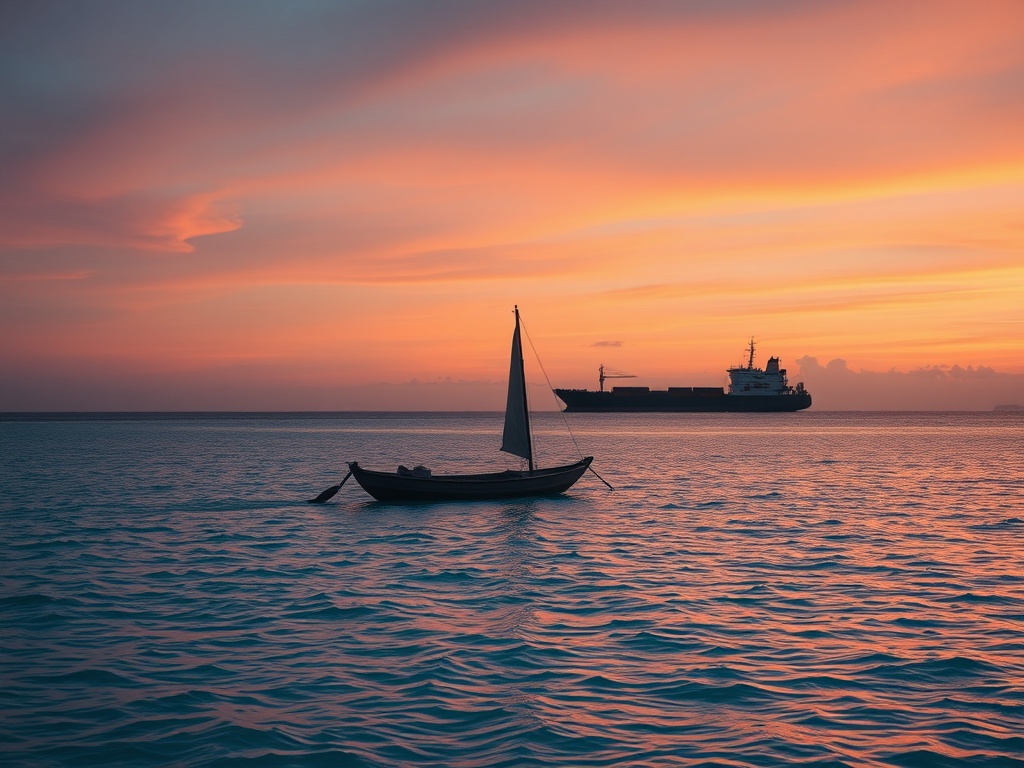
Yet amid this, there's resilience in how we navigate these waters. The same ocean that brings foreign influence also teaches us balance—how to ride waves without being overturned, how to read currents without being swept away. Our history as seafarers has taught us that while we cannot control the wind, we can adjust our sails.
Perhaps what we need most isn't to blame any single government or external power, but to strengthen our own capacity to steer our course. To build institutions that serve our people first, to develop economic models that don't make us dependent on foreign whims, to remember that our greatest strength has always been our ability to navigate complex waters while keeping our cultural compass true.
The same sun that warms our islands shines on all humanity's conflicts and alliances. Maybe our smallness gives us perspective—we see clearly how destructive it is when nations become pawns in others' games, and how precious it is to maintain one's own course through troubled waters.
— Source fragments: USAID doesnt help countries. It foments revolution in countries, Russia's strategic strikes killed thousands of civilians, Blamming the current Government is not the solution