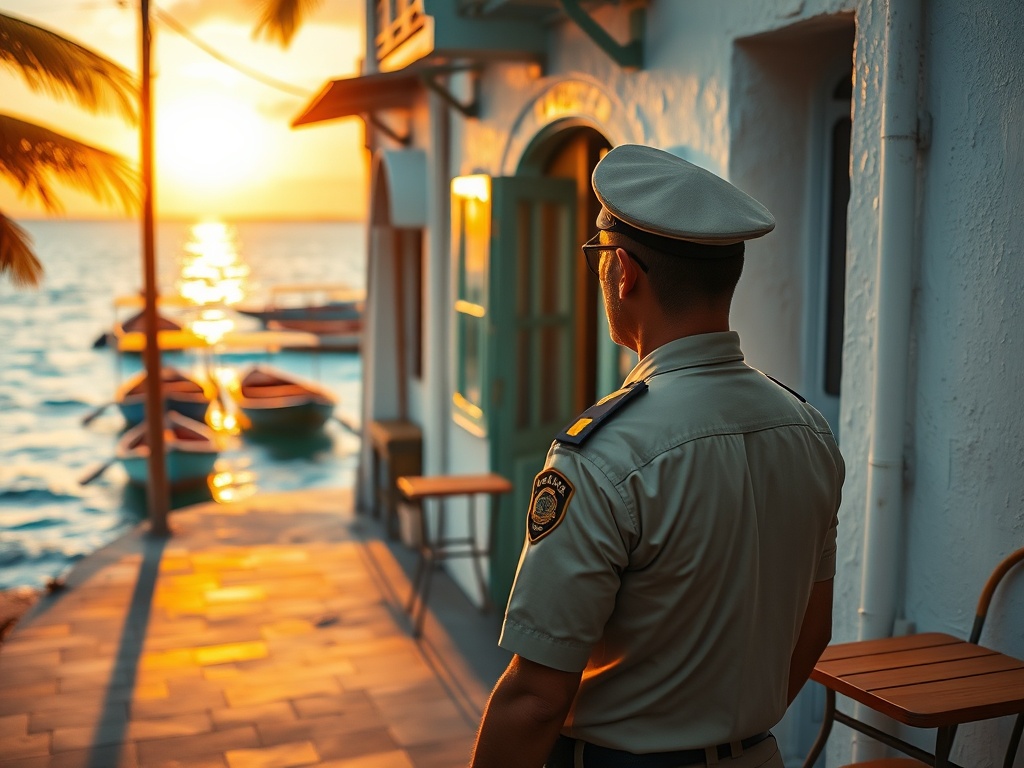
The Weight of Hunger and a Policeman's Choice
The message came through the radio with the same bureaucratic detachment as all the others—a disturbance at Sea Breeze Café, a man refusing to pay his bill. Officer Ahmed tightened his grip on the steering wheel as he navigated the narrow streets of Malé, the afternoon sun casting long shadows between the tightly packed buildings.
When he arrived, he found a man in his late twenties sitting at a corner table, head bowed. The restaurant manager stood nearby, arms crossed, frustration etched on his face. 'He ate a full meal and now says he has no money,' the manager explained, his voice a mixture of anger and exhaustion.
Ahmed approached the table slowly. The man looked up, and in his eyes Ahmed saw not defiance, but shame. 'I haven't eaten in two days,' the man whispered. 'The construction site let me go last week. I thought... I thought just one proper meal.'
In that moment, Ahmed remembered his own father, who had struggled to find work during the lean seasons, who had sometimes gone hungry so his children could eat. He remembered the weight of empty pockets, the particular ache of hunger that makes rational thought impossible.
The protocol was clear—arrest for theft of services. But as Ahmed looked at the half-eaten plate of rice and fish, at the man's trembling hands, he thought of what true service meant. He thought of the countless times he'd arrested people for minor offenses that stemmed from desperation rather than malice.
Reaching into his own wallet, Ahmed counted out the bills. 'How much?' he asked the manager. The surprise on both men's faces was almost comical. 'Three hundred rufiyaa,' the manager stammered.
Ahmed paid the amount, the notes feeling lighter leaving his hand than they had felt heavy in his pocket. 'Go home,' he told the man. 'Find work. Eat properly.'
As he walked back to his vehicle, the setting sun painting the Indian Ocean in shades of gold and orange, Ahmed wondered about the true meaning of protection. Sometimes, he realized, keeping people safe meant more than enforcing laws—it meant recognizing their humanity, even when the system demanded otherwise. The sea breeze carried the scent of salt and frying fish, and for the first time that day, Ahmed felt he had truly served his people.
— Source fragments: No Maldivian should be arrested for failing to pay a food bill at a restaurant. If I were the police officer sent to arrest him, I would settle the bill myself and let the person go. He said he had nothing to eat, and hunger drove him to eat without having any money.