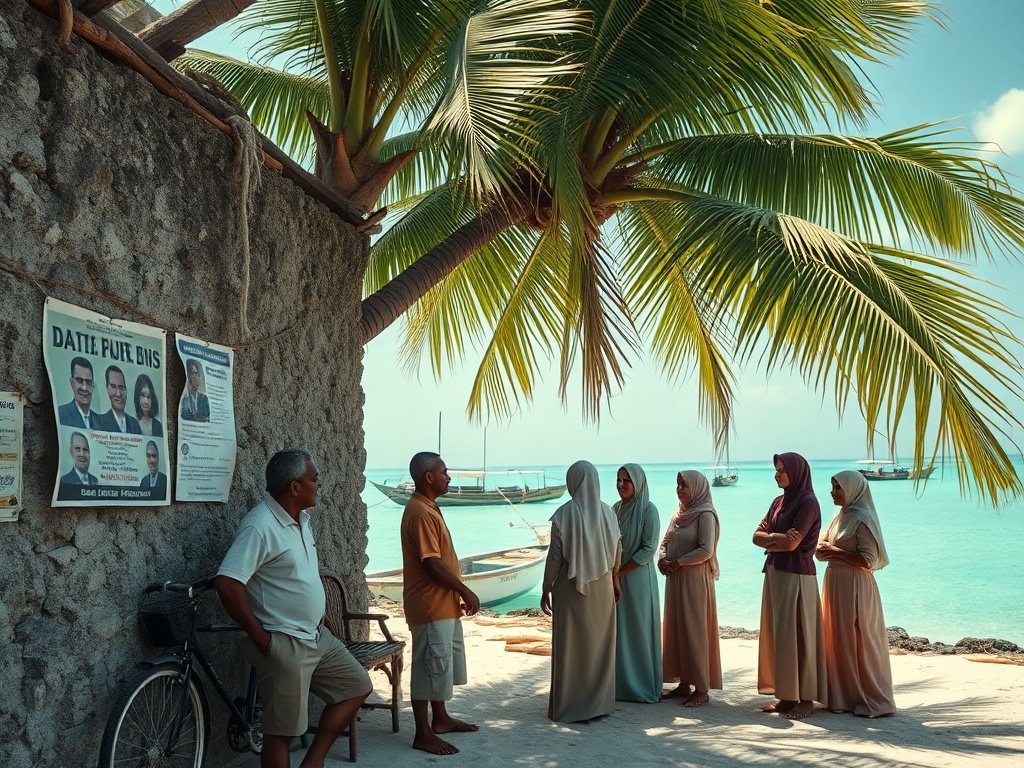
The Weight of Island Expectations
The sun bleaches the coral stone walls of the island office, where faded campaign posters still cling, their promises curling at the edges. 'Taraqhee'—development—the word hangs in the salty air long after the speedboats carrying politicians have vanished back toward Malé. On this island, like so many others, voting becomes a transaction, a hope traded for concrete, for reclaimed land, for a new harbor wall that might finally keep the monsoon waves from swallowing homes.
You watch from the shade of a breadfruit tree as men gather at the coffee shop, their voices weaving through the scent of mas huni and roshi. They speak of which candidate brought the last generator, which one promised the next water desalination plant. It's a calculus of survival, this weighing of tangible gifts against abstract ideals. The sea doesn't care about political philosophy; it only respects walls that stand against it.
Yet in the evening, when the generator hums to life and casts uneven light across the sand streets, you see the other cost. The young man who finished his tourism diploma but has no resort to work at, who watches political appointees fill positions he studied for. The woman who runs a small tailoring business, competing against imported clothes brought in by well-connected traders. Their disappointment is a quiet tide, rising slowly.
This is the dual reality of our archipelago—islands making practical choices for immediate needs, while the larger currents of society shift in ways that leave many stranded. The development that arrives often feels like a transaction completed, the politician's debt paid, while the deeper struggles—of opportunity, of fairness, of a future that isn't just concrete and cables—remain like the ever-present horizon, visible but always out of reach.
— Source fragments: voting for candidates based on their wether they bring 'taraqhee' to that island, I'm disappointed. This is why we struggle
— Tone: wistful