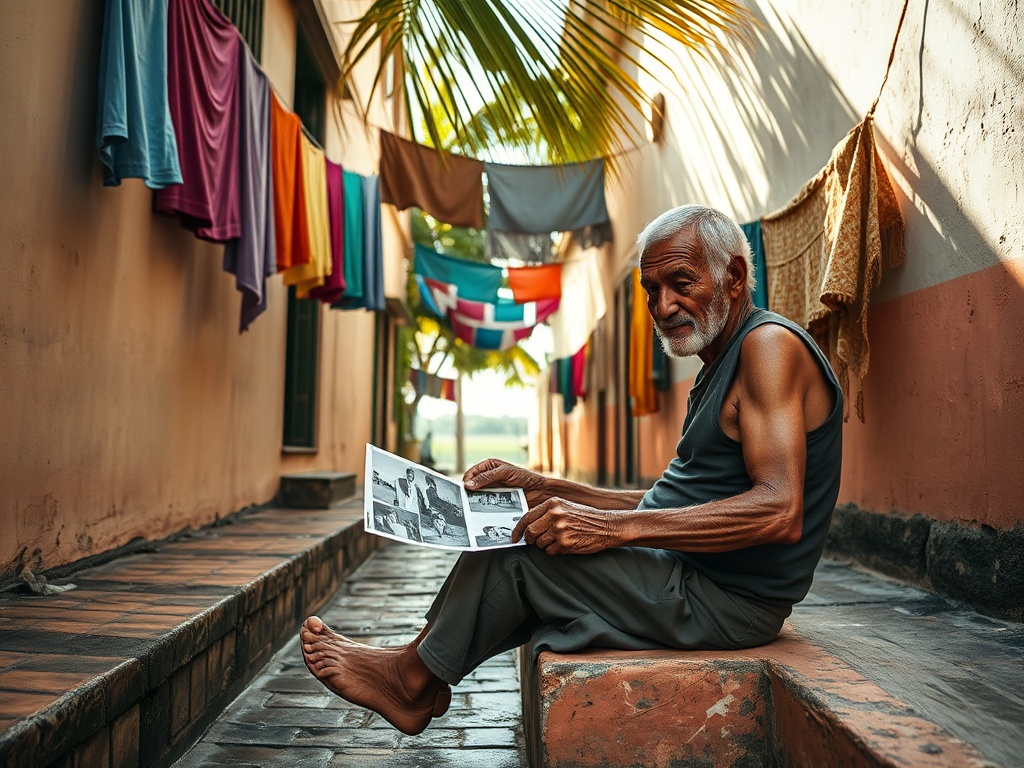
The Weight of What We Erase
Sometimes, walking through Malé's narrow streets, I wonder about the layers beneath my feet. Not the coral stone foundations or the reclaimed land, but the stories buried in our collective memory. The ones we've smoothed over like sea-worn glass, until all the sharp edges are gone.
Our history might be the easiest to erase precisely because we're so determined to polish it. In classrooms, in official narratives, we scrub away anything that might reflect poorly on our 'verin'—our forebears. We fear that acknowledging their flaws might somehow diminish our own worth. But what grows in soil that never faces the sun?
I think of how we preserve our old mosques—carefully maintaining the lacquer work, the coral carvings, while pretending the wood never knew termites. We document the grand architectural achievements while forgetting the political tensions that surrounded their construction, the compromises made, the voices silenced.
This selective memory isn't just about the distant past. We're doing it now, with current events, with political narratives. We flatten complex realities into simple heroes and villains, erasing the messy human details that might help us understand ourselves better.
Perhaps what we fear isn't the negative light itself, but the responsibility that comes with seeing clearly. If we acknowledge that our history contains shadows as well as light, we might have to do something about the shadows we're casting today.
The sea teaches us that erosion is natural—but so is building anew. Maybe we need to trust that our identity is strong enough to withstand complexity, that our national character can bear the weight of truth. Because a history that's too polished eventually becomes too slippery to hold onto.
— Source fragments: maldivian history might be the easiest one to erase because of how afraid our academia is of representing any of our verin in a remotely negative light