The Weight of Words
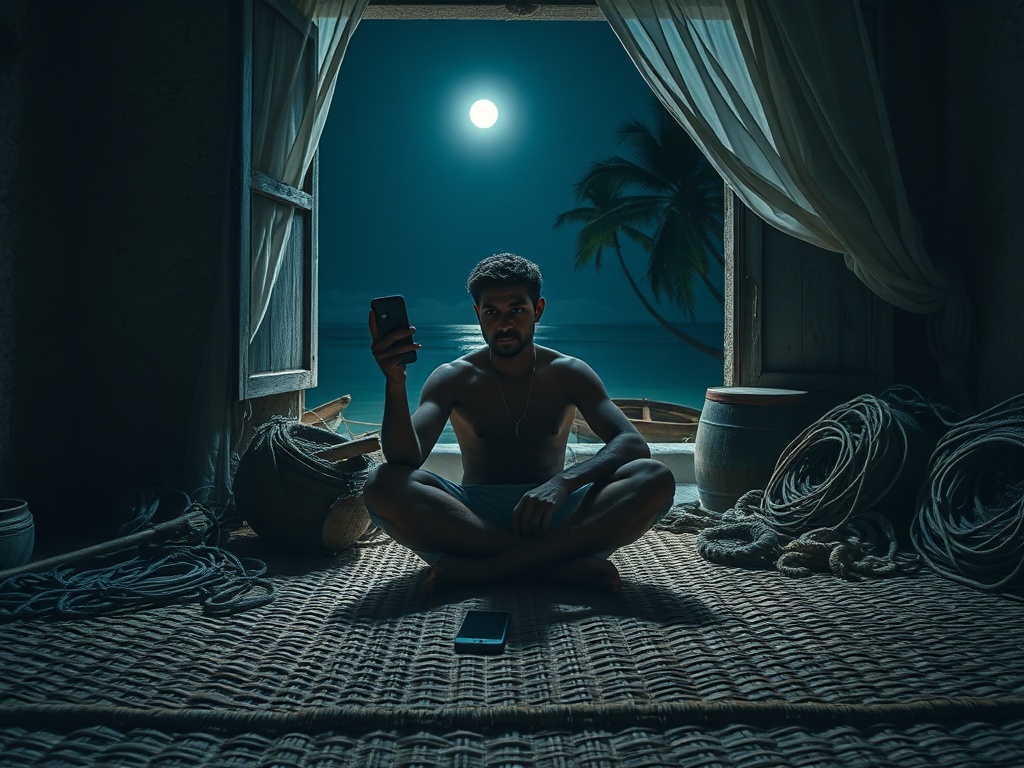
The message notification glowed on his phone screen, casting a blue light across the dark room. Ismail sat on the floor of his small Addu home, the scent of salt and decaying frangipani blossoms drifting through the open window. He scrolled through the comments—the same familiar arguments, the same anger echoing across digital distances.
He remembered the meeting just weeks before, the one that had prompted those tweets. Men and women who had flown from Europe, from jobs and families, gathering in this very room. Their faces illuminated by a single bulb hanging from the rafters. They had pooled their money, their time, their hope. An Adduan engineer named Hassan had sold his car in Germany to fund his trip home. A nurse named Aishath had used her annual leave. They had maps spread across the floor, voices low and serious, plotting not violence but participation—a campaign for local council seats, a push for development funds, a vision for their atoll that didn't depend on the bitter politics of the north.
Ismail had tweeted their conclusion—a simple statement of their resolve. But the internet had done what it does. It had stripped the context, the sacrifice, the smell of sweat and determination, and left only the brittle shell of a political position. The replies were a torrent. Someone called him a disgrace to his faith. Another spoke of wiping people from the earth. The words felt heavy and alien, like stones thrown from a great distance, landing in the soft sand of his reality.
He looked out at the lagoon, a sheet of black silk under the moon. This was the reality: the gentle lap of water, his father mending a net by lamplight next door, the shared hope for a new generator for the island school. The online fury was a storm on a far horizon, loud but ultimately separate from the patient, difficult work of building something here. He thought of Hassan, who would be back at his construction job in Frankfurt now, sending money home. He thought of Aishath, tending to patients in a London hospital. Their commitment was measured in actions, not words. They had asked him if anything more was needed. His answer had been no. The work was here, on the ground, in the slow, unglamorous effort to make things better. The shouting online was just noise.
He put the phone face down on the floor. The blue light vanished. In the darkness, he could hear only the sea and the rhythmic click of his father's needle against the net. This was the defense he believed in—not of wiping out, but of building up. A defense built not on ancient curses, but on the modern, wearying, and hopeful work of very busy Adduans.
— Source fragments: although I tweeted this, this is the conclusion reached after real hard work by very busy Adduans some of who travelled from Europe to Addu just for this, investing time and money.