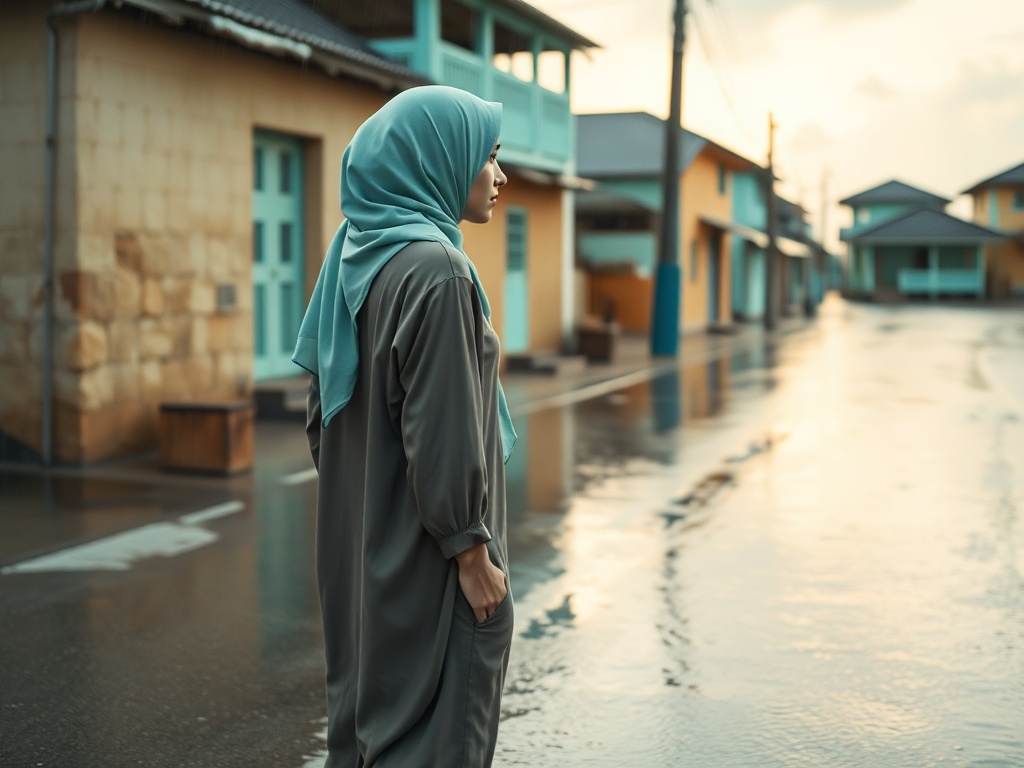
The Woman on the Malé Street Corner, Faith in Her Heart and a Choice in Her Hands
In the heart of Maldivian society, where faith forms the bedrock of national identity, a complex conversation unfolds about the boundaries between religious obligation and personal freedom. The debate centers on one of Islam's most visible symbols—the hijab—and what it represents in a nation that is constitutionally 100% Muslim.
The discussion reveals a spectrum of perspectives, from those who emphasize the hijab's religious significance to others who question the nature of enforcement in a diverse society. At its core lies the distinction between sin and crime—between spiritual consequences and legal punishment. As one viewpoint notes, "Not wearing a buruga is not a punishable crime per shariah. Might be a sin, but it's not a crime. Religion is between you and the Creator."
This distinction becomes particularly relevant in a society grappling with how to maintain Islamic values while respecting individual agency. The conversation touches on deeper questions about free will, with references to theological distinctions between angels who obey without choice and jinn who were granted autonomy—highlighting how freedom of choice is itself part of divine design.
The concept of 'fitna'—social discord or temptation—emerges as a central concern. Some argue that religious guidelines serve to minimize societal harm, drawing parallels to how communities regulate other behaviors for the common good. Yet others question the application of this principle, asking how a woman without head covering constitutes the same level of social disruption as more extreme examples.
What becomes clear is that beneath the surface of this theological discussion lies a broader tension between religious tradition and modern realities. In a nation facing pressing socioeconomic challenges—from youth unemployment to housing crises—questions about personal religious expression intersect with concerns about societal priorities and the appropriate role of community guidance versus individual conscience.
The conversation reflects a society in transition, where centuries of Islamic tradition meet contemporary questions about personal freedom and social harmony. It's a discussion that goes beyond mere clothing to touch on fundamental questions about faith, community, and the delicate balance between religious obligation and personal choice in a modern Muslim nation.
— Source fragments: Not wearing a buruga is not a punishable crime per shariah. Might be a sin, but it's not a crime. Religion is between you and the Creator; It's about minimizing fitan; Allah hasn't asked anyone to force anyone what to wear; Is not wearing hijab a sin?