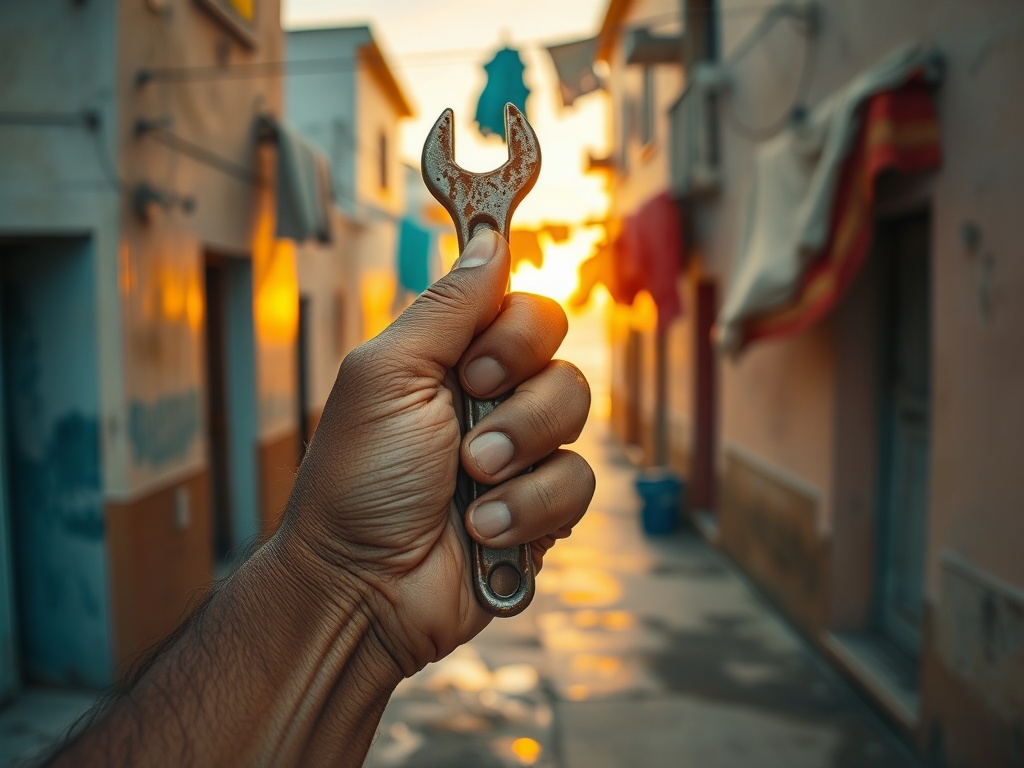
The Wrench in Corrupt Gears
The sun bleeds orange over the tin roofs of Malé, casting long shadows that stretch like grasping fingers across the narrow streets. Down below, the air is thick with the salt of the sea and the simmering frustration of a people watching their islands change hands, their futures mortgaged, their voices drowned out by the machinery of power. It is in this heaviness that a single thought emerges, clear and sharp: 'Become the wrench that stops the gears of a system fueled by corruption.'
It starts not with a grand protest, but with a quiet refusal. It is the shopkeeper who will not pay the unofficial 'fee' to the local councilor's nephew. It is the teacher who, in a classroom smelling of chalk and damp notebooks, tells her students that integrity is not an old-fashioned idea but the very foundation a society is built upon. It is the fisherman who, mending his net under the glare of a single bulb, shakes his head at the story of a resort lease given to a cousin of a minister, while his own son cannot find work.
This wrench is not made of steel, but of collective memory. 'They've done it before, they'll do it again,' someone types into the glowing void of the internet, a weary acknowledgment of a cycle that feels as inevitable as the monsoon. But memory also holds the image of a different gear—the one that sticks, that grinds the whole apparatus to a halt. It is the stubborn civil servant who demands the paperwork is correct. It is the journalist who publishes the figures, even when the phone calls come in the night. It is the neighbor who shares a bag of rice when the subsidies fail and the price of bread skyrockets.
The system relies on the greased ease of complicity. It counts on people being too tired, too scared, or too hopeful for a small piece of the spoils. But the wrench is the decision to be inconvenient. It is the act of asking, 'Where are the stats for this?' It is the courage to stand on the corner and say, 'No,' when the traffic lane is closed for a minister's convenience. It is the faith, as another voice notes, that in a democracy, it needs at least 50% of the people to be good. Not perfect, just good enough to say, 'This far, and no further.'
The sea does not rage against the coral; it wears it down, grain by grain, over centuries. So too does resistance work. It is a slow, persistent pressure applied at the points of greatest friction. It is the understanding that the gears cannot run without us. And sometimes, all it takes is one stubborn wrench, thrown into the works at just the right moment, for the whole machine to shudder, to stutter, and for a moment—a precious, breathless moment—to fall silent.
— Source fragments: Become the wrench that stops the gears of a system fueled by corruption.