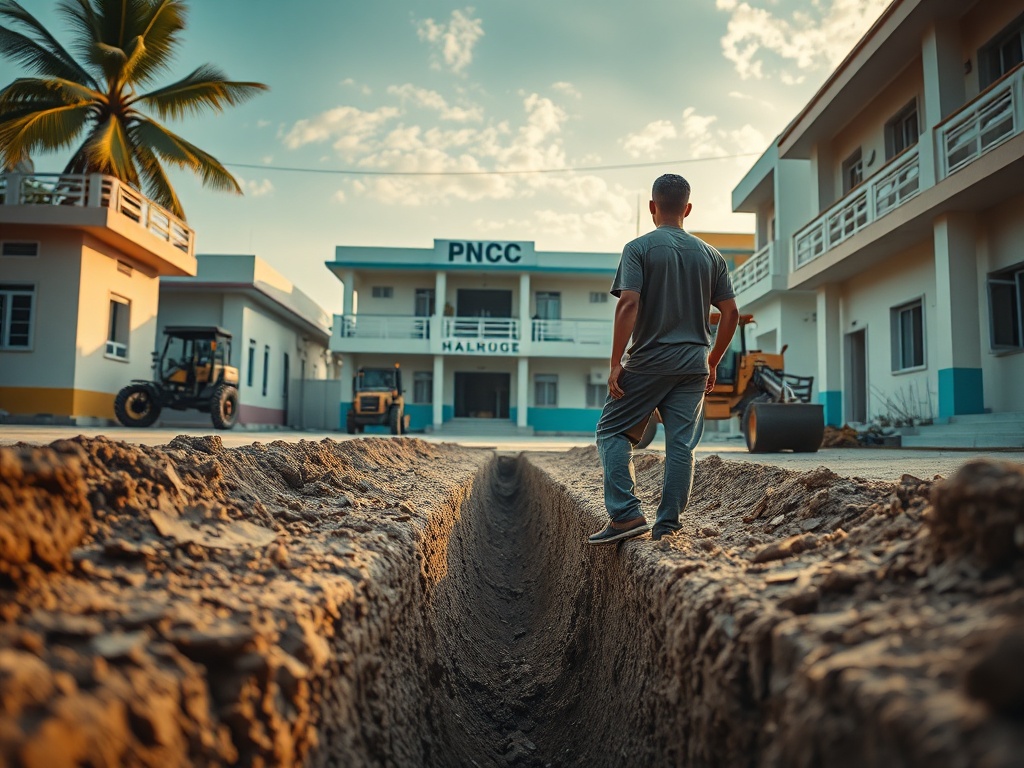
They’re digging again even though a major renovation was done recently.
In the heart of Malé, the sound of digging has returned to PNC Haruge. Just months after a major renovation was completed, the earth is being torn open once more. Residents passing by pause, their faces a mix of confusion and weary recognition. Why must this happen again? What could possibly justify tearing up newly laid pavements and disrupting daily life so soon after a costly project was declared finished?
This is not an isolated incident. Across the capital, public spaces and government buildings undergo repeated, seemingly unnecessary construction. Each project drains state coffers, funded by taxpayer money or borrowed funds that deepen our national debt. The question on every citizen’s mind is simple: who benefits from this cycle of construction and re-construction? Are these genuine public works, or is there a deeper, more political motive at play?
Consider the context. Our economy is strained—foreign currency shortages, a high cost of living, and heavy reliance on imports squeeze households every day. Meanwhile, public sector bloat sees dozens of politically appointed staff in every ministry, while essential services like healthcare and housing remain in crisis. When infrastructure projects repeat without clear explanation, it fuels public suspicion. Is this a way to funnel money to connected contractors? To create visible ‘development’ for political gain, regardless of actual need?
There is also the issue of transparency. Major renovations, like the one recently completed at PNC Haruge, are often announced with fanfare, promising improved facilities and modern amenities. Yet, when the work is redone shortly after, no detailed justification reaches the public. This lack of accountability erodes trust. It suggests that public resources are treated as discretionary funds for those in power, rather than as assets belonging to the people.
What does this mean for Maldivians struggling with daily life? For the youth facing unemployment, or families grappling with housing shortages, repeated digging symbolizes misplaced priorities. Every rufiyaa spent on questionable construction is a rufiyaa not spent on education, healthcare, or economic diversification. It reinforces a perception that governance is less about public welfare and more about perpetuating control.
The solution begins with demanding answers. Why was the initial renovation insufficient? What specific new need justifies this fresh disruption? Independent audits of public works contracts and project timelines could shed light on whether these initiatives serve the public or private interests. Until then, the digging continues—and with it, the gnawing feeling that we are witnessing not progress, but a performance.