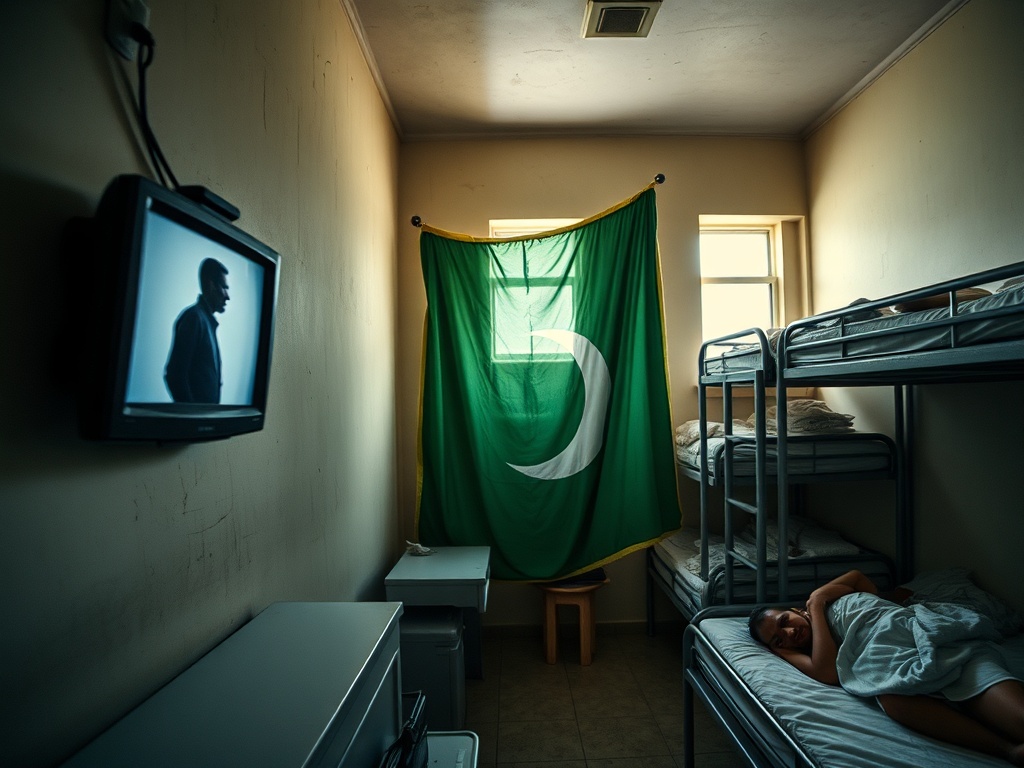
Thousands of Expatriate Workers Live in Squalor Under State Policy
In the quiet hours, a fundamental question lingers in the Maldivian consciousness: what is the true measure of our humanity? We are a nation that feels global tragedies deeply, expressing outrage at violence inflicted on innocents oceans away. Yet, this outward compassion rings hollow against systemic injustices woven into our own society.
The dissonance is stark. We decry the loss of life in distant lands, recognizing the universal imperative to mourn every life lost. Yet, within our own borders, we have constructed a parallel reality. Thousands of expatriate workers, the backbone of construction and service industries, live under policies that strip them of dignity. They are racially profiled, housed in squalor, and treated as a subhuman underclass. This is the documented outcome of state policy, a betrayal of International Labour Organization conventions.
This selective empathy extends into the justice system. A remand hearing conducted over a pixelated video feed from Dhoonidhoo Custodial obscures a suspect suffering from a severe skin infection—a direct result of state mismanagement and medical neglect. The judge cannot see the weeping sores through the blurred image. The man's pain is rendered invisible by poor technology, a metaphor for how the system obscures its own failures.
We perform similar filtering in political discourse. We express amazement at foreign agencies creating narratives through torture, yet turn a blind eye to conditions in our own detention centers. We muster performative sympathy for certain women and children suffering abroad, while the plight of local women, religious minorities, and LGBTQ+ individuals facing daily discrimination is met with silence or hostility.
This is the core crisis: the commodification of compassion. Human rights have become a matter of optics, something to be met 'halfway' to preserve donor aid. It is a transactional approach to dignity. We are outraged by the use of a child by a terrorist, yet fail to protect children groomed and abused within our own families. We debate extrajudicial killings abroad while accepting a system where a disabled person's access to justice is contingent on navigating a biased bureaucracy.
The Maldivian paradox is this: we recognize the universal truth that every life lost is a tragedy, yet fail to apply the principle universally at home. We diagnose the splinter in the world's eye while ignoring the beam in our own. Until we see the expatriate worker, the neglected detainee, the marginalized woman, and the abused child not as 'others,' but as reflections of our collective soul, our mourning for distant tragedies will remain a hollow ritual. The true test of our nation's character is not in the tweets we send, but in the justice we build on our own shores.
— Source fragments: Discrimination and inhumane treatment of foreign workers; neglect and inadequate medical care for detainees (e.g., skin infection from poor conditions); selective empathy and performative outrage; treating human rights as a matter of optics; internal human rights issues for women, minorities; contradictions in justice system administration.