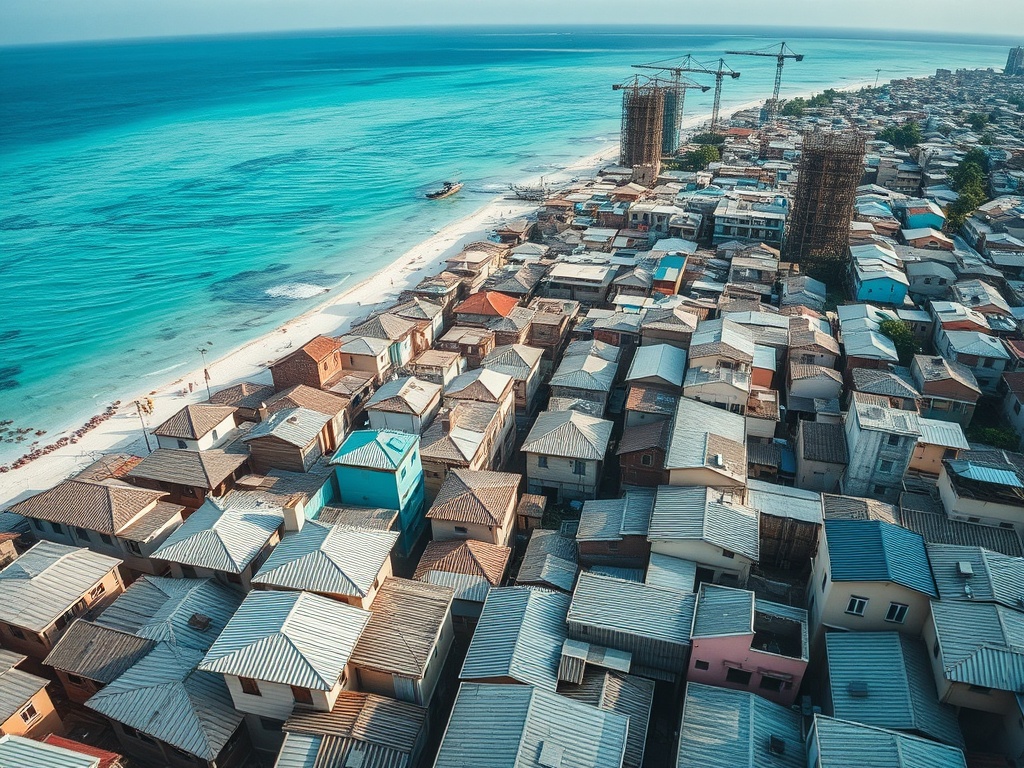
Thousands Wait for Homes That Never Come in Male'
In the cramped islands of the Maldives, land represents more than real estate—it embodies belonging, heritage, and dignity. Yet for thousands of Maldivians, this fundamental anchor remains perpetually out of reach, creating a society divided between those who benefit from state allocations and those condemned to wait indefinitely.
The frustration echoes across social media platforms and household conversations: "Why should you have a first class advantage of being able to get land from your island and get another flat from the capital while we can't get either?" This sentiment captures the essence of a systemic imbalance that has become increasingly difficult to ignore. The perception of a two-tier system—where political connections translate into housing privileges while ordinary citizens remain in limbo—fuels growing resentment.
Recent land demarcation activities in Villimale', conveniently timed ahead of mayoral elections, have only intensified these concerns. The pattern is familiar to many Maldivians: election cycles bring promises of housing solutions and sudden administrative actions that critics argue serve political interests rather than public need. As one observer noted, "It's time for the grab and getaway," suggesting that land distribution has become transactional rather than equitable.
At the heart of this crisis lies Male's extreme congestion, where multiple generations often crowd into single households. Families who have called the capital home for decades—some since their great-grandfathers' time—find themselves competing for limited housing against a system they perceive as rigged. The emotional toll is palpable in statements like "We have been living here since our great grandfather! Male haven't been given land for the past 40 years."
The housing shortage intersects with broader economic pressures, including the high cost of living and limited employment opportunities. When basic shelter becomes a political commodity rather than a fundamental right, the social contract frays. The situation is further complicated by reports of subsidized flats being subleased for profit by recipients living abroad, creating a secondary market that benefits speculators rather than addressing genuine housing needs.
What emerges is a portrait of a nation at a crossroads, where the distribution of land has become a metaphor for deeper questions about fairness, governance, and national identity. As Maldivians navigate these challenges, the conversation has shifted from simply demanding housing to questioning the systems that determine who receives it and why. The solution will require more than just physical space—it demands a reimagining of what constitutes justice in a nation where every square meter of land carries the weight of history and hope.
— Source fragments: Why should you have a first class advantage of being able to get a land from your island and get another flat from the capital while we can't get a land and a flat either; Wait for your turn bro! We have been living here since our great grandfather! Male haven't been given land for the past 40 years; Today Male' City Council officials demarcated a plot of land next to Sinamale4 in Funavaa Area of Villimale', the mayoral elections are near and its time for the grab and getaway; i have no land given for free by the state!