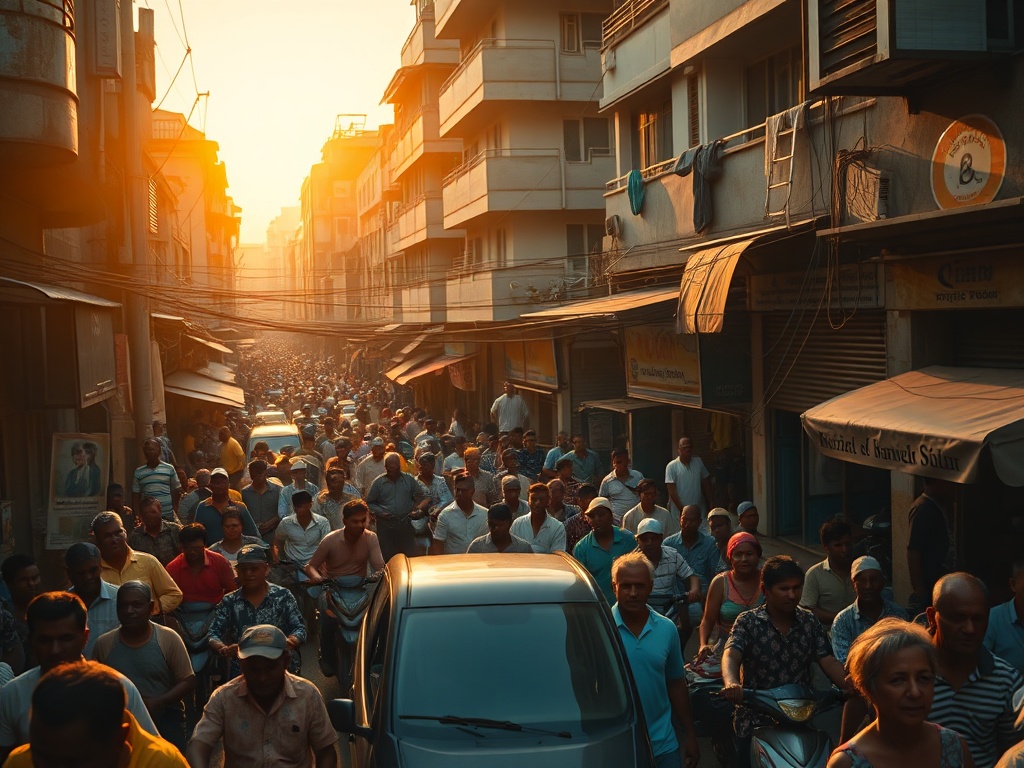
Too many people, too little space
Sometimes I stand on the ferry coming into Malé and watch the city grow on the horizon, this dense cluster of buildings rising from the sea. It looks like a promise from a distance, but as we get closer, you can feel the pressure building. The engine hums, the water slaps against the hull, and we all know we're heading toward the same squeeze.
When we arrive, the crush begins. The streets feel narrower every year, the buildings taller, the spaces between us smaller. We talk about housing shortages and high costs not as statistics but as the reason our cousin sleeps in the living room, why our friend pays half his salary for a single room, why young couples postpone marriage because there's nowhere to start a life together. The strain on infrastructure shows in the water that sometimes runs brown, in the garbage that piles up faster than it can be taken away, in the electricity that flickers during peak hours.
We came here for opportunity, for jobs, for education, for the chance at something better than our islands could offer. But what happens when the center cannot hold? When the very things that drew us here—the hospitals, the schools, the jobs—become harder to access because there are too many of us competing for too little? The congestion isn't just about traffic; it's about our lives becoming more complicated, more expensive, more crowded in every way.
Yet we adapt, as Maldivians always do. We learn to navigate the tight spaces, to share what little room we have, to find moments of quiet in the chaos. There's a resilience in how we continue, how we build communities even in the most crowded conditions. But I wonder sometimes if we're losing something in this compression—the breathing room, the island pace, the sense that life should have space to unfold naturally.
What will we become if this density continues? Will we learn to live with even less, or will we find new ways to spread out, to reclaim the space we need? The questions hang in the humid air, as present as the crowded streets around us.