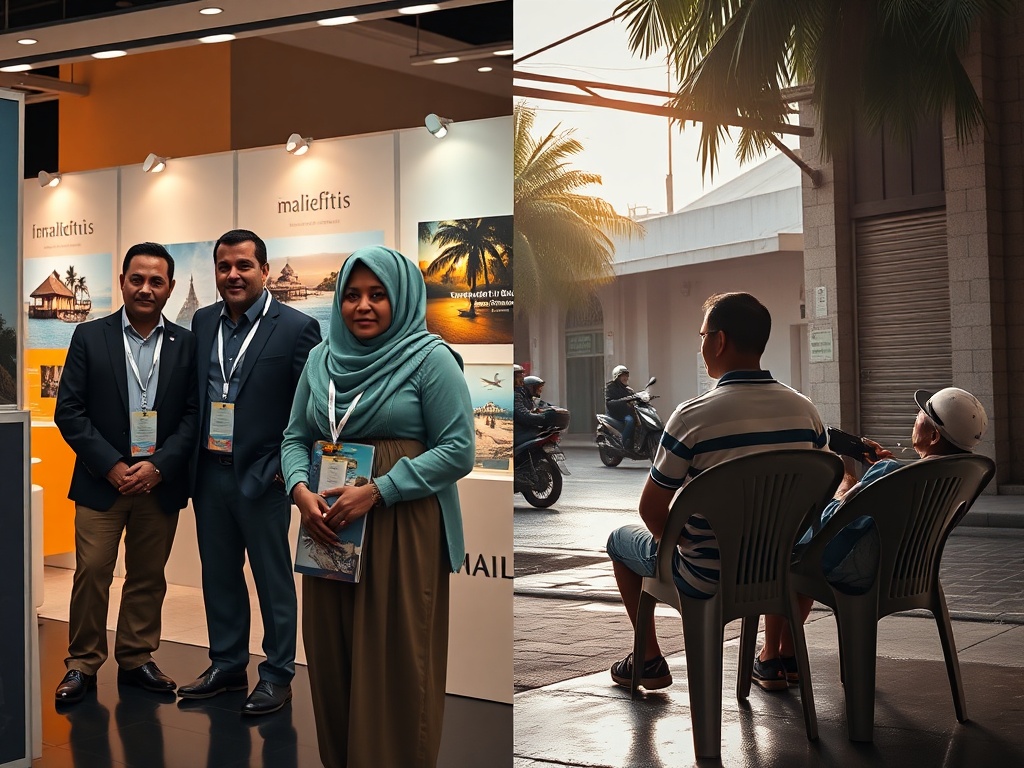
Tourism Delegations Board Flights While Local Emails Go Unanswered
The image has become all too familiar: Ministry of Tourism delegations boarding flights to international exhibitions, their travel funded by taxpayer money, while back home, local tourism entrepreneurs struggle to get a simple email response. This disconnect between government officials and the industry they're meant to serve reveals a deeper systemic issue in how tourism governance operates in the Maldives.
Local business owners who form the backbone of the tourism economy report a consistent pattern of neglect. Requests for meetings go unanswered, emails disappear into bureaucratic voids, and genuine concerns about industry challenges are met with indifference. Yet these same officials become instant experts on the global stage, presenting at international forums about a sector they seem to understand only from conference halls and exhibition floors.
The irony is palpable. While ministry staff enjoy the privileges of international travel—staying in quality hotels, attending networking events, and representing the Maldives abroad—the very people who live and breathe tourism daily cannot secure basic administrative support. These local operators understand the ground realities: the seasonal fluctuations, the staffing challenges, the infrastructure limitations, and the evolving demands of international travelers.
What makes this situation particularly frustrating is that these business owners aren't asking for handouts or special treatment. They seek partnership, dialogue, and practical solutions to grow an industry that accounts for the majority of the nation's foreign exchange earnings. Their proposals could create jobs, stimulate local economies, and strengthen the tourism ecosystem, yet they hit an impenetrable wall of bureaucracy.
The problem extends beyond mere unresponsiveness. There's a fundamental misunderstanding of how tourism actually functions at the operational level. Officials who spend their days in air-conditioned offices, following routines of signing in and out, cannot possibly grasp the dynamic challenges of running tourism businesses across the archipelago.
This disconnect represents more than just bureaucratic inefficiency—it's a missed opportunity for genuine public-private partnership. The knowledge and experience residing in local businesses could inform better policies, more effective marketing strategies, and smarter resource allocation. Instead, we see resources diverted to international travel that often yields little tangible benefit for the actual industry.
The solution requires a fundamental shift in how the ministry engages with stakeholders. It demands creating accessible channels for communication, establishing regular consultation mechanisms, and most importantly, developing genuine respect for the practical expertise that exists outside government offices. Until tourism officials become true partners rather than distant administrators, the full potential of Maldivian tourism will remain untapped.
— Source fragments: Ministry of Tourism fly to exhibitions abroad using our tax money; when we need ministry support they never listen, never give us time to meet, don't respond to emails; They don't truly understand tourism