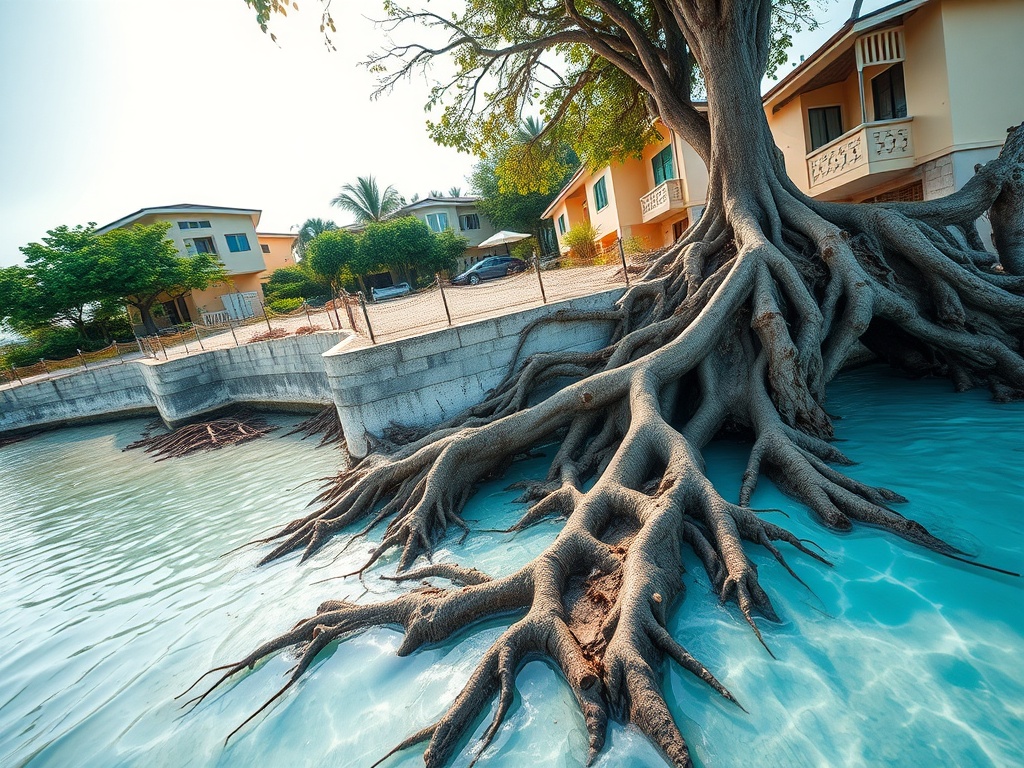
Tree roots cracking walls while Villimale waits for real solutions
The complaint came from a Villimale resident during a public consultation, delivered with the weary familiarity of someone who has heard too many excuses: "This time they are giving excuse of roots going into houses and bats." The statement captures a growing frustration across Maldivian communities where basic infrastructure problems meet bureaucratic deflection.
Meanwhile, another resident observed the surreal nature of public demands, noting how someone had asked the president for an artificial beach "because the natural beaches are not good enough." This juxtaposition reveals a deeper tension in Maldivian urban development—between addressing fundamental infrastructure failures and pursuing vanity projects that serve political optics over practical needs.
The tree root problem exemplifies this disconnect. When roots from mature trees damage homes and infrastructure, the proposed solutions often seem disconnected from reality. Residents question whether simply cutting trees will reverse the damage, pointing to the need for proper root barriers and sustainable urban planning. Yet these technical solutions frequently get lost in political posturing.
This pattern extends beyond Villimale to the capital Malé, where traffic congestion has made life "intolerable" according to residents. The criticism that leaders engage in "lip service and photo ops" rather than substantive problem-solving reflects a broader skepticism about governance. As one observer noted, responsibility for problems initiated years ago continues to be passed between administrations without meaningful resolution.
The fundamental issue isn't just about tree roots or artificial beaches—it's about a governance approach that prioritizes visible, politically beneficial projects over the unglamorous work of maintaining and improving existing infrastructure. When residents see their basic concerns met with excuses while resources flow toward showcase developments, trust in public institutions erodes.
What emerges is a portrait of communities caught between genuine infrastructure needs and political realities. The solutions exist—proper urban planning, technical interventions like root barriers, and sustained maintenance of public spaces. But implementing them requires moving beyond the cycle of blame-shifting and photo opportunities to embrace the difficult, long-term work of building resilient communities.
— Source fragments: Villimale tree roots damaging houses, request for artificial beach during public consultation, criticism of political lip service and responsibility avoidance regarding urban problems