Twenty-Four Thousand Rufiyaa and a Single Sheet of Paper
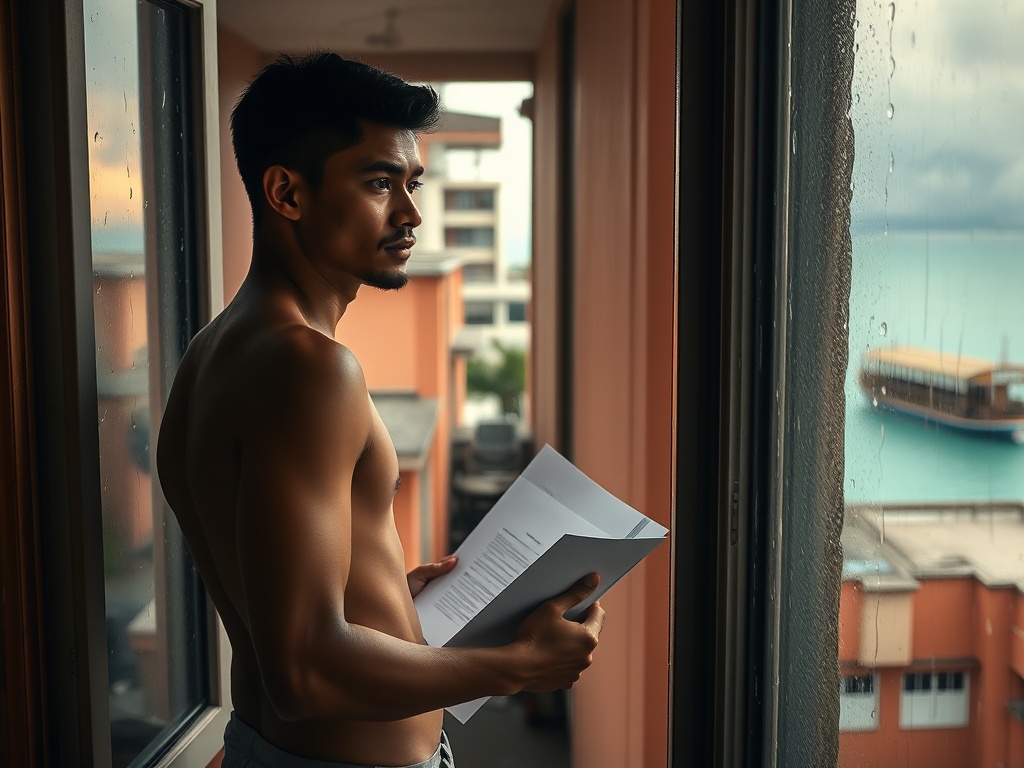
The envelope felt heavy in my hands, though it contained only a single sheet of paper. Another rejection. From my tiny rented apartment in Malé, I could hear the rain beginning to fall on the corrugated roofs nearby, the sound like a thousand tiny hammers. Twenty-four thousand rufiyaa each month, paid for these four walls that would never be mine. The landlord had texted again—'Send a reminder later'—the same automated response I'd received nine times before. Waiting for rent from the government was like waiting for rain in the desert, my neighbor had joked bitterly yesterday. We both knew it wasn't really a joke.
My phone buzzed with a message from my mother. 'Any news about the land?' she asked, the same question she'd been asking for years. My inherited land—somewhere in the atolls, paperwork lost between ministries, a phantom plot that existed only in family stories. I was born here in Malé after my parents left Fuvahmulah in the eighties, chasing work, chasing a future. Now I'm not eligible for housing in Malé because I 'belong' to Fuvahmulah, and not eligible in Fuvahmulah because I don't live there. The system had carved me into pieces, each fragment belonging to a different island, leaving the whole of me homeless.
Downstairs, Ahmed was packing again. A good job offer in Addu, he'd told me, his eyes bright with temporary hope. He'd buy a house there, live a few years, then sell and move back north when his tenure ended. A sensible plan in a country where mobility should be our birthright among these thousand islands. But we both knew the reality—the paperwork, the permits, the invisible walls between atolls that made such simple dreams feel revolutionary.
Through my window, I watched the ferry arrive from the airport island, disgorging tourists heading to resorts. Beyond them, the sea stretched to the horizon, that impossible blue that held all our islands. Somewhere out there, people I knew were collecting housing flats like tokens in a game—one in Malé, another in their home island, a third through some relative's name. Temple run, someone had called it, this frantic collection of what should be basic rights.
The rain had stopped, leaving the air thick with the smell of wet concrete and salt. I looked at the rejection letter again, then at the photo on my wall—my grandfather standing before his family home in Fuvahmulah, the thatched roof and coral stone walls that had sheltered generations. He never had to prove he belonged. The land knew him, as the sea knows the shore.
I picked up my phone to text my mother back. 'No news,' I typed, then deleted it. Instead, I wrote: 'Still looking.' Because what else could I do? This is the water we're born into, these paper islands we navigate, always searching for solid ground that doesn't wash away with the tide of policy and privilege.
— Source fragments: currently we are stuck with land we are born in; I'm from Male' and yet paying 24k for rent; My inherited land?; where do I belong? That's how a broken system creates second-class citizens; Waiting for rent from a RT is like waiting for rain in the desert; I want every Maldivian to get free land like the politicians