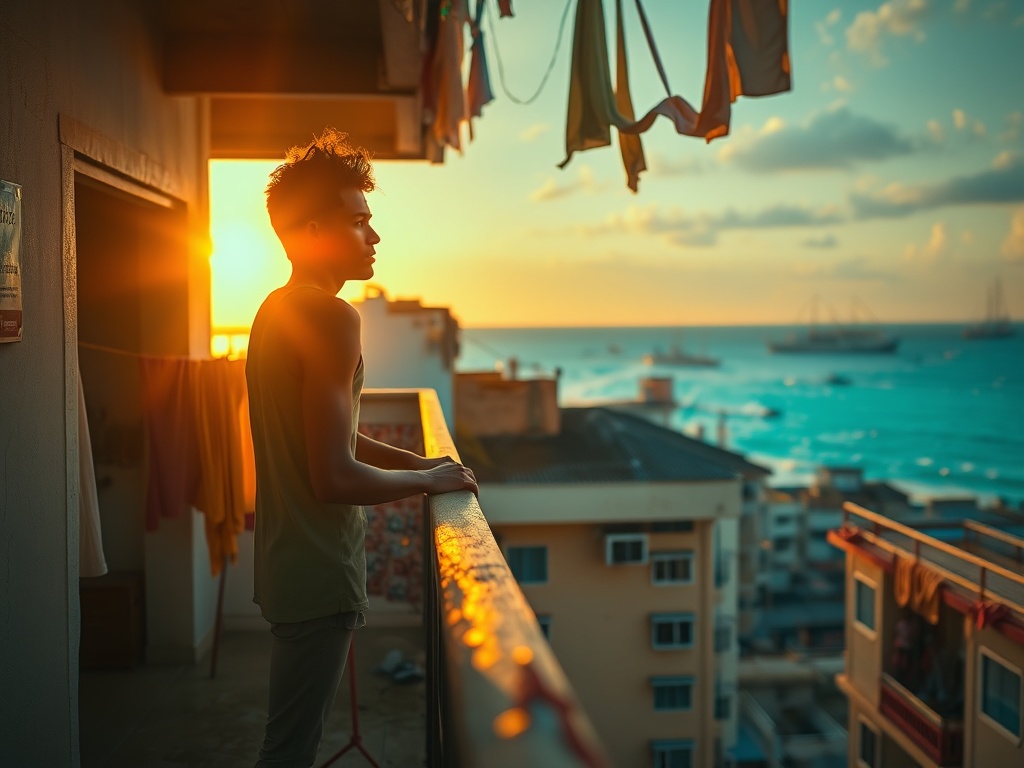
Twenty-Four Thousand Rufiyaa for a Box in the Sky
The rain had just stopped when Ahmed stood on the balcony of his rented apartment in Malé, watching the water drip from the concrete edges into the narrow alley below. Twenty-four thousand rufiyaa every month, and this box in the sky would never be his. The numbers echoed in his mind like the call to prayer from the nearby mosque—a constant reminder of something just out of reach.
His phone buzzed with a message from his cousin in Addu. "They're offering land grants again. But you have to prove you've lived there for five years."
Ahmed laughed bitterly. How could he prove he belonged anywhere? His parents had left Fuvahmulah before he was born, chasing opportunity in the capital. Now he was born of Malé but not of it—a permanent guest in the city of his birth, ineligible for housing here because his family registry still tied him to an island he'd never called home.
He remembered his grandmother's stories of Fuvahmulah—the wide streets, the mango trees heavy with fruit, the sense that the land knew you. She would describe the plot that should have been his inheritance, but when he'd inquired at the land registry, they'd looked at him with blank bureaucratic faces. "You don't reside there," they'd said, as if residence was something you could pin down like a butterfly.
Down in the street, he watched a family loading furniture into a truck—another failed attempt to make a life in the capital. He'd seen it so many times: people arriving from the atolls with hope bright in their eyes, only to have it dimmed by the relentless math of rent and the knowledge that they were building someone else's wealth.
Last month, a friend had shown him photos of the land grant he'd received in Laamu. "It's beautiful," the friend had said, "but the clinic is two hours by boat, and my wife needs regular checkups." The choice between belonging and healthcare—a choice no one should have to make.
Sometimes Ahmed would go to the harbor and watch the inter-island ferries come and go. Each vessel carried stories like his—people caught between islands, between systems, between the life they had and the one they wanted. He knew couples who maintained separate registrations on different islands, gaming the system just to have a chance at housing. He knew elders who spoke of a time when land wasn't something you applied for, but something you inherited through generations of care and connection.
The sun broke through the clouds, casting long shadows across the crowded buildings. In that moment, Ahmed understood that his longing wasn't just for land, but for anchor—for something that would tether him to this archipelago in a way that paperwork and policy never could. He was Maldivian in every cell of his body, in every memory of salt air and coral sand, yet the system kept telling him he didn't quite belong anywhere.
He took out his phone and began typing a message to his cousin. "Maybe we're looking at this wrong," he wrote. "Maybe the problem isn't where we belong, but that the belonging has conditions."
— Source fragments: stuck with land we are born in, paying 24k for rent to an apartment which will never be mine, inherited land? I live in Male' for rent, where do I belong? broken system creates second-class citizens, policy could fix that, people who already have housing are taking advantage