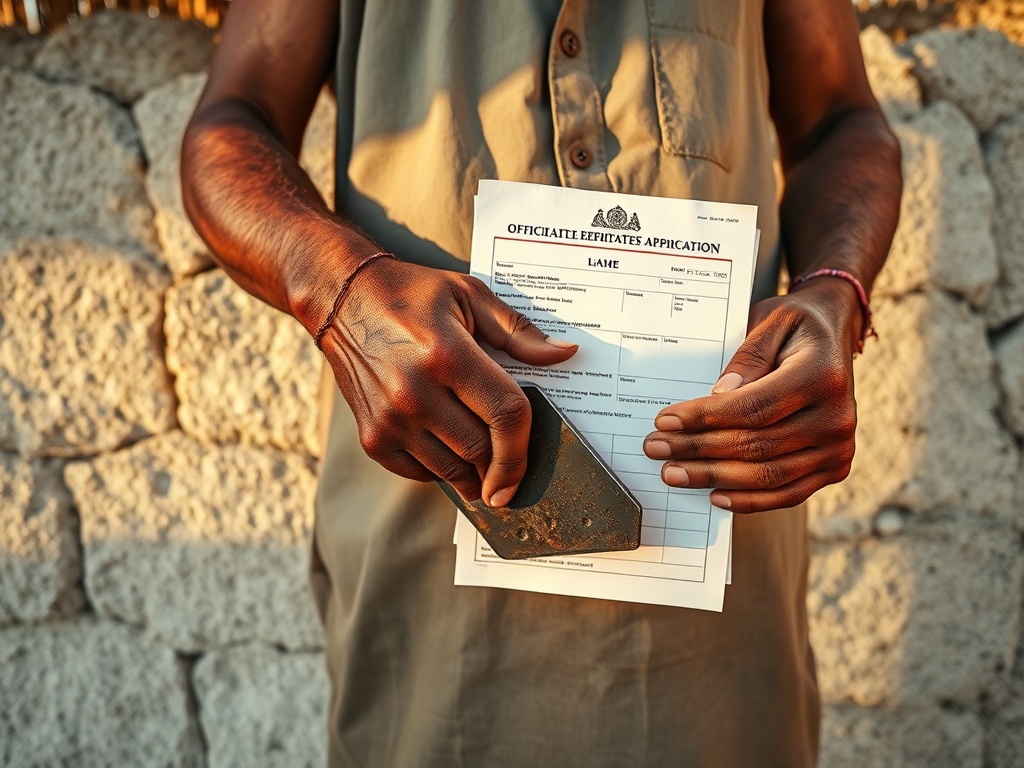
Twenty Years of Mortar, One Application Form
The afternoon sun beats down on the coral stone walls of a construction site in Malé, where hands that have laid bricks for twenty years now hesitate over application forms. These hands know the weight of a trowel, the consistency of mortar, the precise angle that makes a wall stand true. Yet somewhere in an air-conditioned office, someone has decided these hands need a Level 4 certificate to prove what they already know.
Across the islands, there are people who never finished formal schooling—not from lack of intelligence, but from circumstance. The boy who left school to help his fisherman father after the catch dwindled. The girl who stayed home to care for younger siblings when her mother fell ill. They found their education in the rhythm of labor, in the silent understanding that comes from doing something day after day, year after year.
In the narrow streets of the capital, where housing policies create winners and losers, and economic decisions seem disconnected from reality, there's a growing sense that the systems meant to help ordinary people are instead designed to exclude them. The fisherman who understands shark populations better than any textbook now questions why protected species are targeted while more sustainable options are ignored. The shopkeeper who serves his community wonders why complex regulations focus on cigarettes when more pressing issues go unaddressed.
There's a particular wisdom that comes not from classrooms but from lived experience—the kind that understands when the wind will shift, how to mend a net so it lasts another season, which construction methods withstand the monsoon rains. This knowledge, earned through sunburned days and tired evenings, represents a different kind of certification—one written in calloused hands and practical solutions.
As policy debates rage about what's fair and what makes economic sense, the voices of those who actually do the work often go unheard. Their frustration isn't just about paperwork or regulations—it's about being told that decades of proven capability mean less than a piece of paper. It's about watching decisions being made by people who've never held their tools or understood their craft.
The real tragedy isn't just that skilled people might be kept from working—it's that we risk losing the very knowledge that has built these islands, stone by stone, generation by generation.
— Source fragments: Why do Jobs like bricklayer, manual laborers need level 4 certificate? This is deliberately done to deprive simple ordinary people from getting a job; Some people do not through school system for various reasons. But they may acquire skill by doing these jobs over years; If they must allow shark fisheries why not hammerhead shark or some other shark which is not endangered and which can fetch more value? This makes no economic sense; It is a discriminatory policy! It is inequitable distribution of wealth! It is not a viable solution to housing; Its not fair and it looks like they have no clue to fix this mess