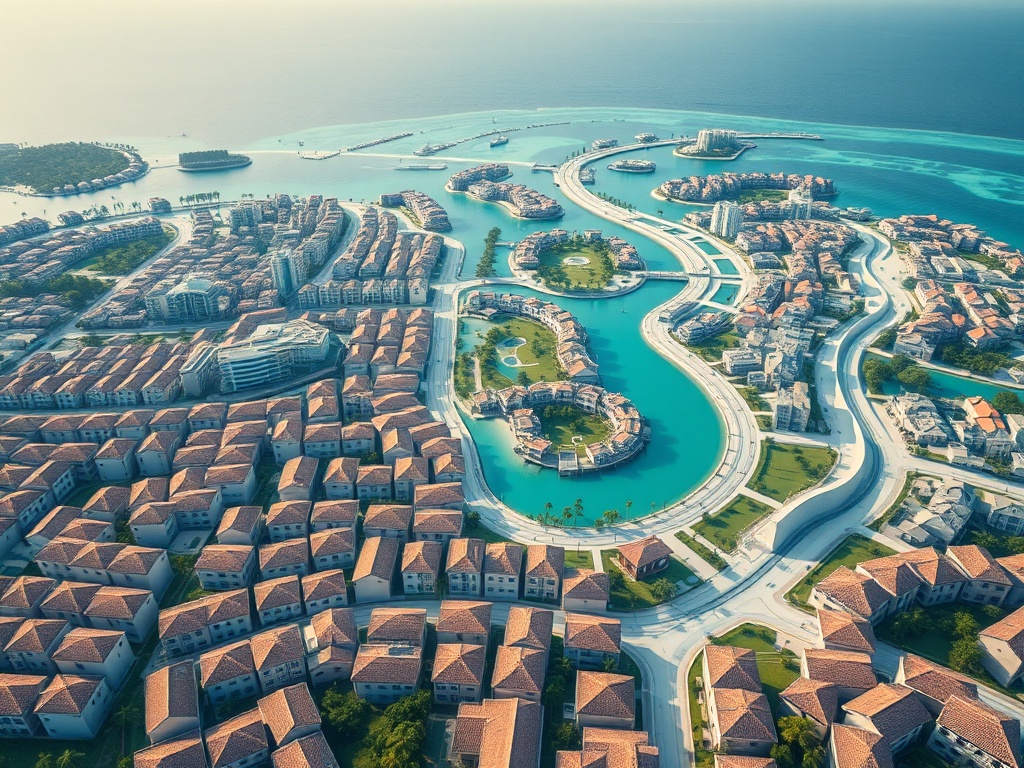
Two in Five Southern Islanders Now Call Malé Home
Malé stands as both anchor and albatross for the Maldives—an ancient island capital buckling under the weight of modern demands. With two in five residents from Gaafu Alifu and Gaafu Dhaalu atolls alone calling the city home, the concentration of population has created a pressure cooker of urban challenges that demands more than temporary solutions.
The debate has shifted from whether decentralization is necessary to how best to achieve it. One compelling proposal suggests moving the administrative capital to a new location while maintaining Malé as the financial hub, following models like Ankara, Brasilia, and Indonesia's planned Nusantara. This approach recognizes Malé's irreplaceable economic role while acknowledging that its physical constraints cannot support all government functions.
Meanwhile, Rasmalé emerges as a partial answer—a project designed to accommodate approximately 30,000 people who missed out on the Binveriya land scheme. The mathematics are precise: 37 million square feet allocated for residential use, with 1,200 square feet plots intended to provide breathing room for families currently squeezed into Malé's limited space.
The conversation reveals deeper tensions around permanent residency laws and the practical challenges of modeling migration patterns. Critics argue that simply shifting administrative categories without addressing fundamental infrastructure gaps will achieve little. The distribution of migration from atolls isn't equal, creating pockets of intense urbanization pressure that require targeted solutions.
At the heart of the discussion lies a recognition that successful decentralization requires creating cities with genuine appeal—places offering employment, quality education, healthcare, and that cherished island lifestyle that many Malé residents still value. The vision includes developing four additional urban centers around the Maldives, each with the amenities and opportunities that currently draw people to the capital.
Some propose an 'expat island' as an interim measure to reduce congestion, acknowledging the complex reality of foreign worker populations while addressing local concerns about competition for space and resources. This pragmatic approach recognizes that multiple solutions must work in concert rather than seeking a single silver bullet.
The challenge remains mathematical and human simultaneously—balancing equations of land distribution with the intangible qualities that make communities thrive. As one observer notes, the solution requires respecting existing residency frameworks while pushing for systemic changes that address both immediate congestion and long-term urban planning.
What emerges is a picture of a nation grappling with its urban future—not through confrontation but through careful consideration of how to preserve what works while building what's needed. The stars may foretell thirty-story towers, but the real work lies in creating sustainable urban ecosystems that honor both tradition and progress.
— Source fragments: Cities with lots to offer can shift perspectives; parents want cleaner island lifestyle but lack jobs/schools; Malé cannot be depopulated but could have expat island; Rasmalé calculations for 30k people; administrative capital relocation proposals; migration modeling challenges and unequal atoll distribution; permanent address impractical; need fundamental changes beyond residency shifts; respect residency law while developing alternative cities