Two in Five Southern Islanders Now Call Malé Home
The numbers tell a stark story: two in five people from Gaafu Alifu and Gaafu Dhaalu now live in Malé. This statistic reveals more than migration patterns—it exposes the gravitational pull of an overcrowded capital that continues to draw islanders seeking opportunities, even as it strains under their weight. The debate about Malé's future has moved beyond whether decentralization is needed to how it can be achieved meaningfully.
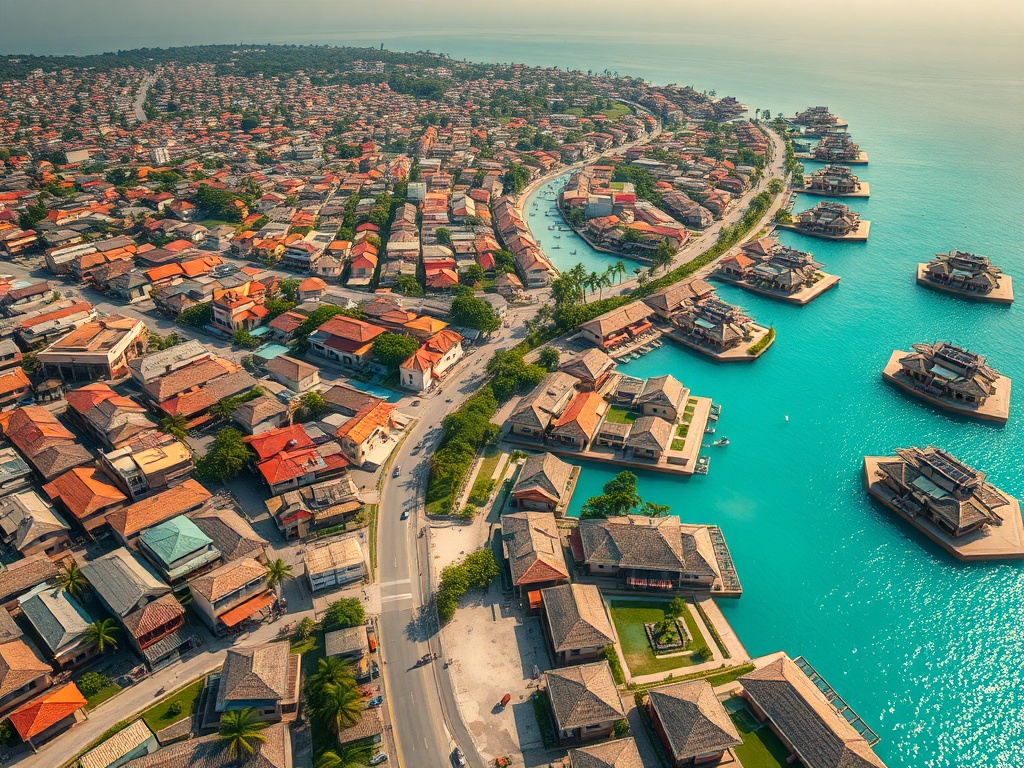
The conversation reveals multiple pathways forward. Some advocate for creating entirely new urban centers—"expat islands" or satellite cities like RasMalé—designed to absorb population overflow while maintaining the island lifestyle many Maldivians cherish. The RasMalé project, envisioned for 30,000 people who missed out on the Binveriya housing scheme, represents one ambitious attempt to redistribute population pressure through planned urban expansion.
Another compelling proposal involves relocating the administrative capital while preserving Malé as the financial hub. This model, seen in Ankara, Brasilia, and Indonesia's upcoming Nusantara, could decentralize power and opportunity without diminishing Malé's economic role. The interim approach respects Malé's status as an ancient island that cannot be simply depopulated, while acknowledging that congestion requires immediate resolution.
At the heart of these discussions lies a fundamental tension: how to build cities with sufficient jobs, schools, and amenities to attract families who want cleaner, healthier environments, while respecting existing residency laws and addressing practical concerns about migration modeling. The challenge isn't merely architectural or urban planning—it's about creating ecosystems where communities can thrive.
The debate has evolved beyond questioning whether decentralization is necessary to exploring how multiple approaches might coexist. Developing four different cities around the Maldives, similar to Malé in opportunity but distinct in character, could provide the variety of choice that a nation of scattered islands deserves. This approach acknowledges that no single solution will suffice for a population with diverse needs and aspirations.
What emerges is a vision of the Maldives not as a single overcrowded capital with peripheral atolls, but as a network of vibrant urban centers where the island lifestyle can be preserved alongside modern opportunity. The mathematical complexity of modeling migration patterns underscores that this isn't merely an engineering problem—it's about understanding human aspirations and creating destinations worth moving toward, not just escape routes from congestion.
As these conversations continue, the consensus grows that fundamental changes must accompany any geographical shift. Permanent address systems may need rethinking, residency laws might require adjustment, and development must be holistic—addressing not just where people live, but how they work, learn, and connect. The solution lies not in fighting existing systems but in building compelling alternatives that make decentralization an attractive choice rather than a forced compromise.
— Source fragments: I think if you build cities with lots to offer and then market it well, you can really shift such perspectives. I know few parents, who are from Male' btw, who'd love to raise their kids in a cleaner,healthier place with that island lifestyle. But the lack of jobs, good schools; Male' is an ancient island. cannot be depopulated. A better interim measure would be to create an expat island; Rasmale’ is a project for the 30k excess Male’ people; I think one way to alleviate congestion would be to move our administrative capital to a different location; The distribution of migration from atolls arent equal. Ga. and G.dh were noteworthy. 2 in 5 lives in Malé; I think we have to respect the permenant residency law.. So I feel like instead of fighting them, we should be pushing for changing either the residency system or developing 4 other different cities just like Male' around Maldives.