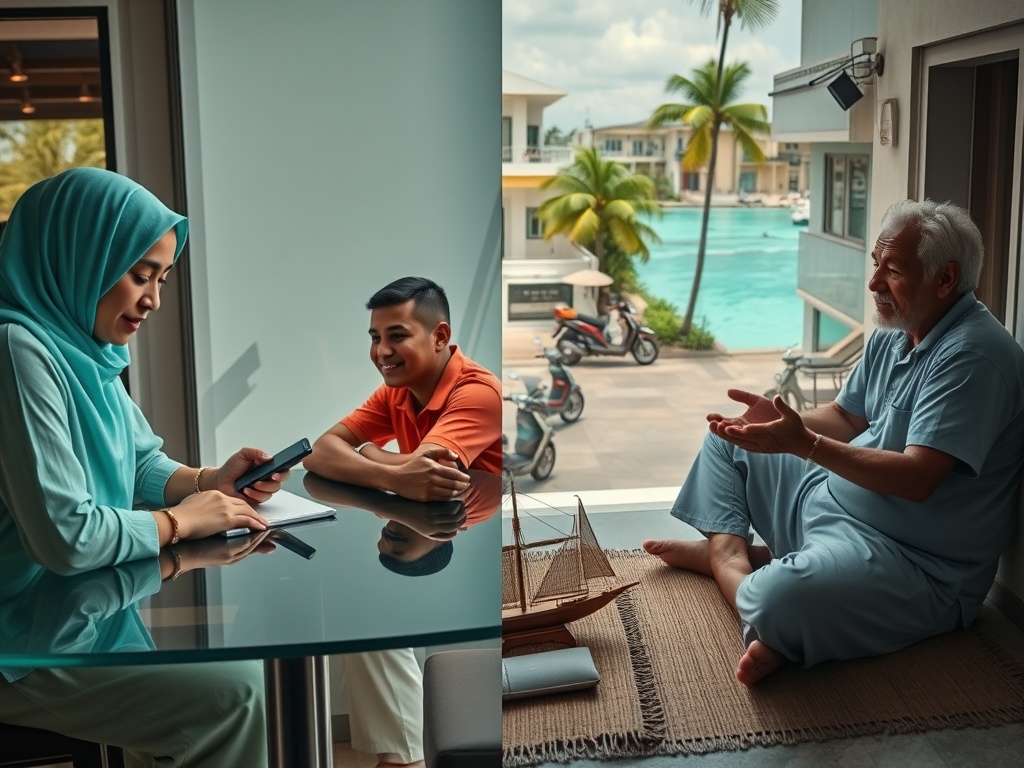
Two Maldivias: One in Cafés, One in Courtyards
In the shifting landscape of Maldivian society, a quiet conversation about values, morality, and generational divides is unfolding. The discourse reveals two distinct worldviews emerging—one focused on traditional foundations of family and marriage, the other grappling with modern concepts of entitlement and moral responsibility.
The question of entitlement versus earned success resonates deeply in a nation where economic pressures mount daily. The sentiment that entitlement "is the death of drive" speaks to growing concerns about ambition and self-reliance among Maldivian youth. With unemployment persisting and opportunities limited, the tension between inherited privilege and personal achievement becomes increasingly relevant. The observation that children should not feel automatically entitled to wealth reflects a broader societal anxiety about preserving motivation and work ethic in an economy where tourism wealth concentrates in few hands while many struggle.
Meanwhile, Generation Z stands at a crossroads. Their potential for independent thinking, free from established political influences, offers genuine hope for meaningful change. Yet this potential hinges on moral grounding—a compass that must navigate complex challenges from drug abuse to political disillusionment. The concern that corrupted morals could render this potential "useless" underscores how high the stakes are for the next generation of Maldivian leaders and citizens.
These generational perspectives exist alongside traditional values emphasizing married life and family stability—foundations that have long anchored Maldivian society. The call to focus on "married life instead" represents not just personal preference but a cultural touchstone in a 100% Muslim nation where family structures provide social cohesion amid rapid modernization.
The conversation about mocking others' intelligence reveals an underlying wisdom about human dignity that transcends generational lines. The gentle acceptance that "people are people" suggests a maturity often missing from public discourse, where political polarization and social media echo chambers frequently breed contempt rather than understanding.
As Maldives navigates foreign relations tensions, economic pressures, and governance challenges, these value conversations become more than philosophical exercises—they represent the foundational principles that will guide the nation's future direction. The tension between preserving cultural traditions and embracing progressive thinking, between earned success and inherited privilege, between moral clarity and pragmatic compromise—these are the currents shaping the Maldivian social fabric.
What emerges is not a simple conflict between old and new, but a complex negotiation about what values will sustain a society facing unprecedented challenges. The outcome will determine not just individual futures but the character of the nation itself.
— Source fragments: People who mock others for supposedly having low iq could be actually low IQ.. But its ok. People are people. I don't mind; If I was a wealthy parent I'd tell my kids the same. They aren't entitled to wealth itself. Entitlement is the death of drive and the root of this societal disillusionment; If Gen Z holds a good moral compass, then we can truly change our world. The majority of Gen Z are independent from political influence; Should focus a married life instead