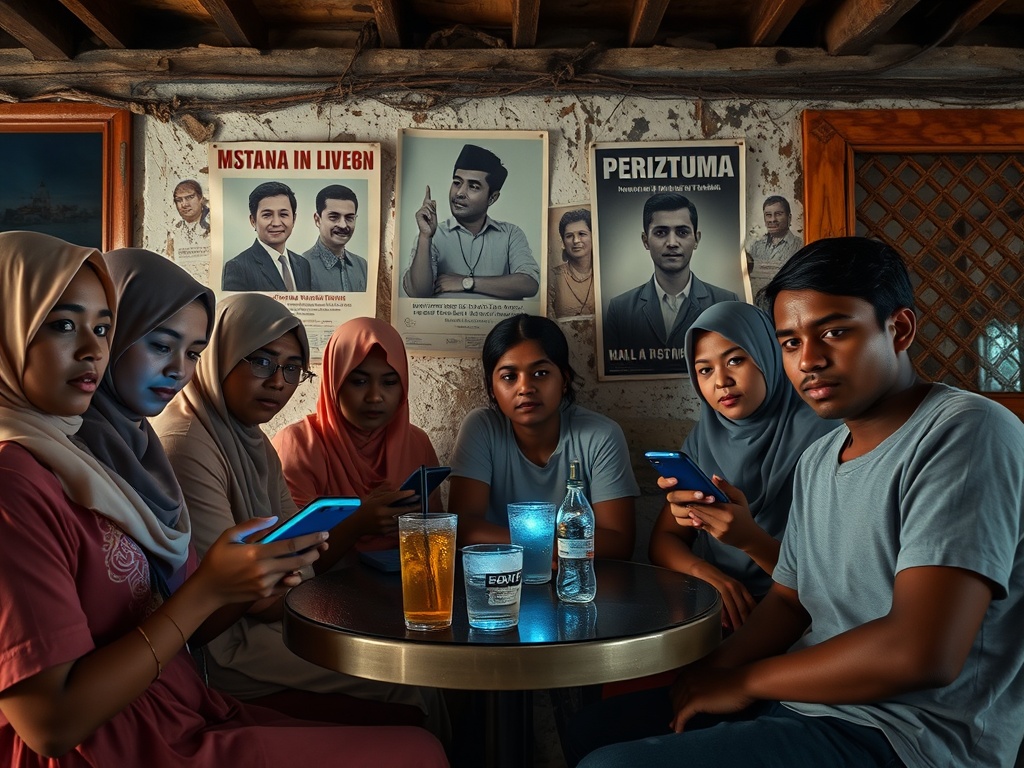
Two Sides of the Same Freaking Coin
In the crowded cafes of Malé and across countless social media threads, a quiet revolution of political disillusionment is unfolding. The sentiment echoes through digital spaces and real-world conversations: "They are all the same! Two sides of the same freaking coin." This growing chorus represents more than casual cynicism—it signals a fundamental breakdown in political trust that could reshape the nation's future.
The current political landscape finds itself caught between a government facing rising public dissent and an opposition struggling to present a credible alternative. While many young people express clear dissatisfaction with the current administration, the absence of compelling political options leaves them politically homeless. This vacuum creates a dangerous disconnect in a nation where youth constitute the majority demographic.
Political discourse has devolved into what many describe as "measley childish taunts" rather than substantive debate. When challenged, the response often defaults to personal attacks rather than policy discussions. This deterioration of political conversation reflects a deeper crisis—the erosion of meaningful political choice.
The question "What does that do for the people?" resonates particularly strongly among a generation facing multiple crises: unemployment, drug epidemics, and a housing shortage that makes basic dignity elusive. For those struggling to afford life in the congested capital, political endorsements and party rallies feel increasingly irrelevant when measured against daily survival.
This disillusionment manifests not as apathy but as informed skepticism. Citizens have grown weary of seeing government resources deployed for political rallies while public services struggle. They've witnessed housing projects become political footballs while genuine housing solutions remain out of reach. They've seen healthcare deteriorate while political appointments multiply.
The critical question now facing the Maldives is whether this widespread discontent will translate into political change or simply deeper alienation. With public dissent acknowledged as running high across the political spectrum, the traditional mechanisms of political accountability appear increasingly strained.
What emerges from this collective frustration is a demand for substance over spectacle. The call to "actually do something" represents more than impatience—it's a plea for governance that addresses the real crises affecting ordinary Maldivians. As one generation of political leadership cycles through, another watches from the sidelines, waiting for a politics worthy of their participation.
— Source fragments: As if MDP didn't use the same government resources to bring more people to the rally. Cut the crap bro they are all the same! Two sides of the same freaking coin; I think both correct. But there is no credible opposition now. Lot's of young people are not happy with government. They are the majority; Endorsement doesn't matter anymore. At the end of the day, the people decide. What does that do for the people? Please stop showing off and actually do something; Everyone knows for a fact public dissent towards the government is very high