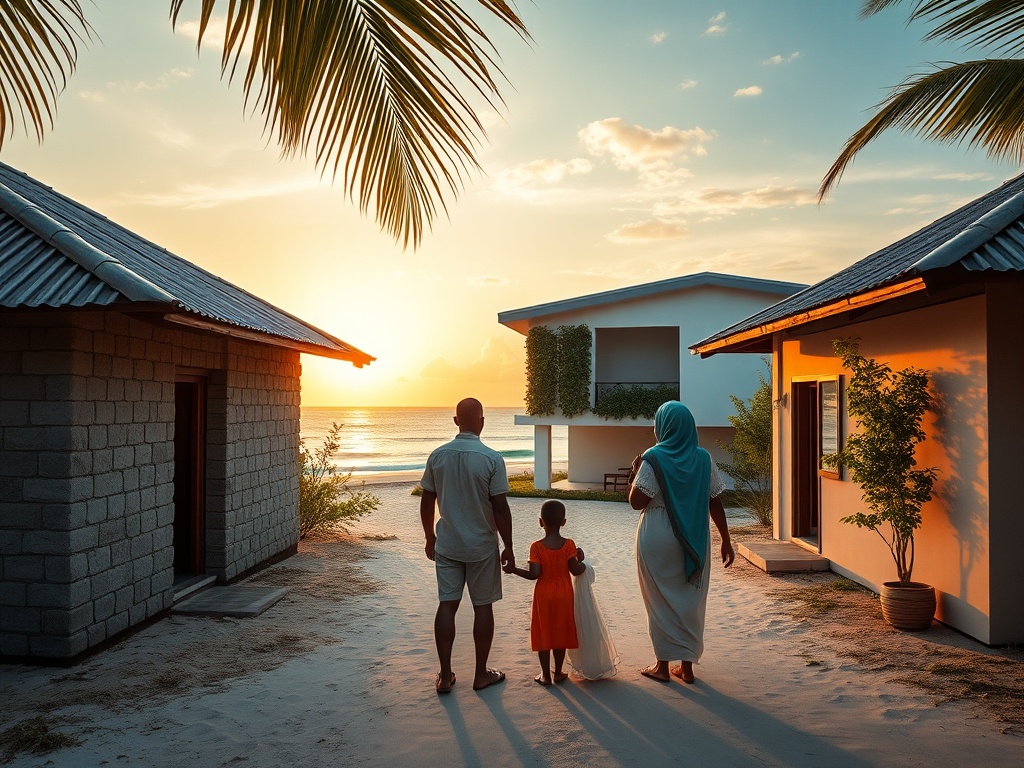
Unlocking Our Islands, Unlocking Our Lives
There’s a quiet longing that hums beneath the surface of our island lives—a desire to pack a bag, sell a house, and start anew on a different shore, just as people do in other countries. Yet, for many of us, that dream feels distant, tethered by a real estate system that keeps us rooted in place. We watch resort islands bloom with world-class architecture, their villas perched over turquoise lagoons, their designs a testament to innovation and beauty. Meanwhile, on our inhabited islands, housing options are often limited, ownership is tangled in bureaucracy, and the chance to relocate for work, family, or simply a change of scenery remains out of reach.
This isn’t just about bricks and mortar; it’s about freedom. The freedom to chase a job in another atoll, to live closer to aging parents, or to build a home where the rhythm of life better suits our spirit. Our nation’s history is one of seafaring and migration—our ancestors navigated these seas with skill and courage. Today, that same spirit is stifled by a lack of mobility. We see the potential in our own shores: the vacant plots, the underused land, the communities yearning for renewal. A forward-thinking vision from the government could untangle this knot, creating a structured, transparent real estate market that empowers citizens instead of confining them.
Imagine if local islands mirrored the aesthetic and functional excellence of our resorts—not in luxury, but in thoughtful design, sustainable materials, and community-focused planning. We could have homes that breathe with the ocean breeze, neighborhoods woven with green spaces, and infrastructure that supports a modern, mobile population. This wouldn’t erase our cultural identity; it would enrich it, blending tradition with progress. The economic ripple effects would be profound: construction jobs, local entrepreneurship, and a more dynamic distribution of people and resources across the archipelago.
Of course, any change must be grounded in our values and realities. We are a conservative, homogenous society where community ties run deep. Liberalizing real estate doesn’t mean uprooting those bonds; it means giving people the choice to strengthen them in new ways. It means addressing youth unemployment by opening doors to opportunities beyond one’s home island. It means tackling the housing crisis in Malé by easing pressure on the capital through vibrant alternatives elsewhere. And it means learning from the pitfalls of guesthouse tourism—where rapid growth sometimes outpaced regulation—to ensure that development is equitable and sustainable.
We stand at a crossroads, with the tools and talent to reshape our living landscape. By embracing a bold, structured approach to real estate, we can honor our past while building a future where no Maldivian feels stuck. The beauty we’ve created for visitors can become the beauty we build for ourselves, island by island, home by home.