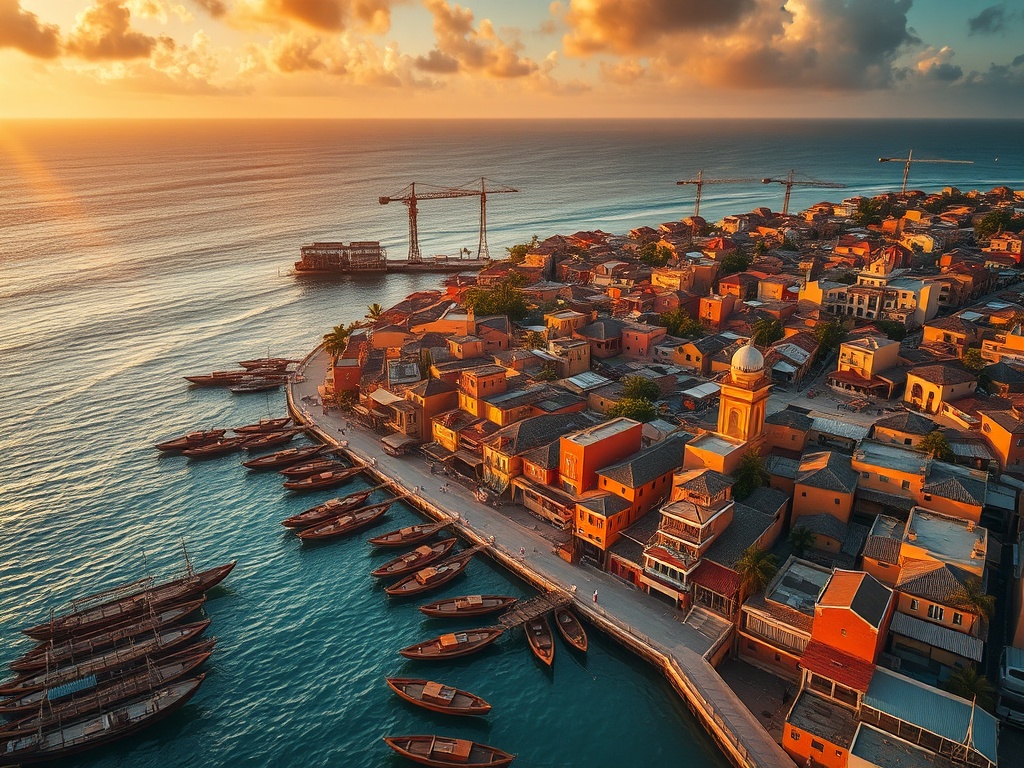
Urban Density Meets Distant Construction Cranes in Malé
The debate over land distribution in the Greater Malé Region has become a mirror reflecting deeper fractures in Maldivian society. At its core lies a fundamental tension between historical privilege and contemporary claims of equity, between the practical demands of urban development and the emotional weight of ancestral belonging.
The argument that Malé residents shouldn't receive free land because the capital was built on national funds represents one pole of this discussion. Proponents suggest these high-value properties should serve the nation's collective future rather than individual entitlement. Yet this perspective collides with the reality that many Malé residents face the same housing pressures as those from other islands—overcrowding, exorbitant rents, and limited living space.
Meanwhile, from the atolls comes a different narrative—one of generational displacement and institutional neglect. The 'baakee generation' describes those caught between two worlds: no longer finding opportunity in their home islands, yet never fully embraced in the capital. Their experience speaks to a systemic failure to distribute development evenly across the archipelago, creating a centrifugal force that pulls talent and ambition toward Malé while leaving peripheral communities struggling.
The language we use reveals these tensions. The distinction between 'Raajje therey' and 'RT'—one carrying cultural weight, the other perceived as dismissive—illustrates how terminology can either acknowledge or erase lived experience. This isn't merely semantic; it reflects whose stories we consider legitimate in national conversations.
Historical grievances surface repeatedly in these discussions. Many point to decades of central government policies that prioritized Malé's development at the expense of other islands, creating what some describe as institutionalized discrimination. The trauma of this imbalance, they argue, cannot be addressed without first acknowledging its existence and understanding its continuing consequences.
Yet the solution cannot simply be to replace one form of privilege with another. The principle that all citizens deserve equal consideration regardless of origin remains foundational. When housing policies create different categories of citizenship based on geography, they reinforce the very divisions they claim to address.
The reality is more complex than simple binaries of Malé versus 'the rest.' Many wealthy Malé families trace their origins to other islands, their success built over generations of migration and enterprise. Meanwhile, property ownership patterns in the capital reveal a landscape where landlords from various backgrounds benefit from the current system, complicating any straightforward narrative of regional advantage.
What emerges is a picture of a nation struggling to reconcile its rapid urbanization with its archipelagic identity. The challenge isn't merely technical—how to distribute limited land fairly—but philosophical: how to build a national community that honors diverse experiences while ensuring equitable access to opportunity.
The next generation watches these debates unfold, their patience wearing thin with inherited grievances and unfulfilled promises. Their tolerance for the status quo appears to be diminishing, suggesting that solutions cannot be delayed indefinitely without risking deeper social fragmentation.
Ultimately, the land question transcends real estate. It's about belonging, dignity, and the kind of nation Maldivians want to build—one where geography doesn't determine destiny, and where the capital serves as a unifying center rather than a symbol of division.
— Source fragments: Malé people don’t deserve Free land; Malé supremacy will ruin rest of Maldives; trauma forced upon raajjetherey meehaa; baakee generation; discrimination in land distribution; regional identity tensions; historical grievances; wealth distribution inequities