Victory Day at 38: Columnist urges Maldives to keep the lessons of the November 3, 1988 coup alive for a new generation
Maldivians marked 38 years since the November 3, 1988 coup attempt on Tuesday, with a column by Mohd Aaseef (Mondhu) arguing that the day's lessons risk fading for a generation that never experienced it.
Writing on Victory Day, the author said no Maldivian under roughly 35 would have seen the events of that dawn, noting his youngest child turns 33 this year. He described telling his children, as the family sat by a window, of the sudden panic that struck Malé on the dawn of November 3, 1988, and the fear that the country's independence might be lost - and said the children listened attentively and showed a strong resolve that such a coup never be repeated.
But he asked how far those stories are perceived across society at large, noting that beyond the official sessions held on the day and special television and radio programmes, the events are rarely recalled during the rest of the year. While the National Defence Force holds official activities every year to commemorate Victory Day, he argued that ceremonies of a single day will not give the new generation a complete understanding of the history, and that the details must be told in their original form, kept visible and repeated.
According to the column, around 4:00 AM on Thursday, November 3, 1988, residents of Malé were awakened by unusual gunfire - a sudden coup attack launched by foreign hired soldiers led by some Maldivians aiming to overthrow then President Maumoon Abdul Gayoom's government. Two Maldivians were among the top leaders of the plot, and the attack was carried out with the assistance of armed hired soldiers from the Sri Lankan terrorist group PLOTE. About eighty armed hired soldiers arrived in Malé and targeted important state institutions, primarily Bandarakoshi, the main headquarters of the then National Security Service (NSS).
The attack, which the author said plunged the country's independence and sovereignty into danger, was thwarted by the bravery of Maldivian security forces and swift assistance from the Indian military under "Operation Cactus" on the second day of the coup. In trials conducted through the Maldivian judicial system, a total of 75 people were tried, including seven Maldivians involved in the plot and the captured hired soldiers.
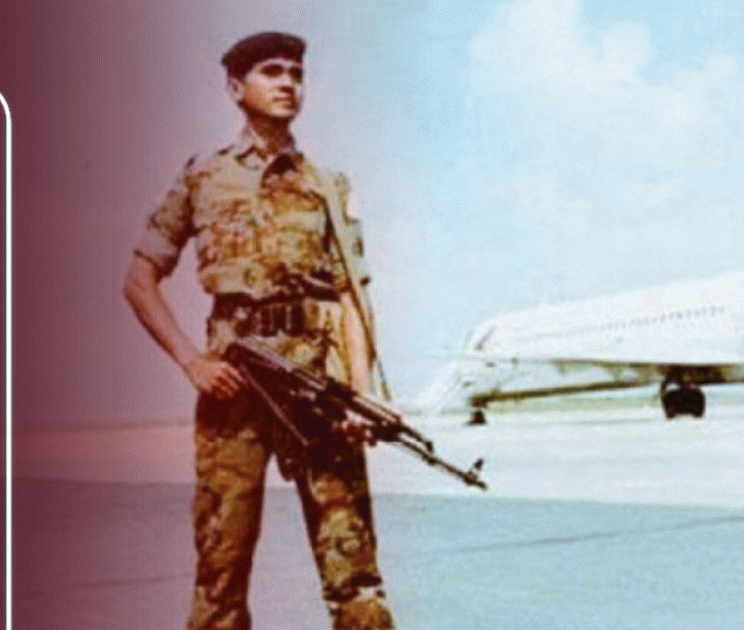
The column recounts that the first to face the attack at Bandarakoshi was Corporal Hussain Adam, on duty at one of the two posts guarding the main gate. Born in Kulhudhuffushi, Haa Dhaalu Atoll, he retaliated immediately as enemy soldiers approached the headquarters, before reaching the age of twenty. He received his third bullet wound that day while defending the country; his return fire stopped some of the attackers, and by holding the gate defence until his weapon ran out and preventing the terrorists from entering Bandarakoshi, soldiers inside gained valuable time to prepare and ammunition was kept from enemy hands.
Corporal Hussain Adam was among the martyrs of the coup. A total of 19 Maldivians were martyred, including eight military personnel who fought in defence of the country and 11 ordinary citizens. The author said the biggest message for today's youth is that a young man who had not turned twenty sacrificed his life for the country's independence and sovereignty. A building symbolising the rifle he used was constructed last year on his home island of Kulhudhuffushi, recalling his sacrifice.
The column also points to the treachery of some Maldivians as a lesson, saying the opportunity for foreign hired soldiers to attack arose because of it, and that the actions of the seven Maldivians among the 75 tried show the danger of prioritising personal interests and political revenge over the country.
It highlights the Maldivian National Service Programme, announced on the occasion of Victory Day and run under the Ministry of Defence, which aims to instil the fundamentals of Islam and patriotic love in young people and to raise them on good morals, with military and technical training conducted in Maafilaafushi, Vaavu Atoll. The programme, the author writes, opens opportunities to connect with the National Defence Force and the Police and builds a loyal generation that strengthens the country's independence and sovereignty.
He also notes that the Defence Force produces dramas and films to explain its duties to young people and to foster patriotism, while arguing that more efforts are needed to appreciate those who stand firm in protecting the country's independence and sovereignty. Defending the country, he concludes, is not the responsibility of uniformed soldiers alone: military preparedness and the Islamic ideology and patriotic spirit in every citizen are the country's strongest shield.