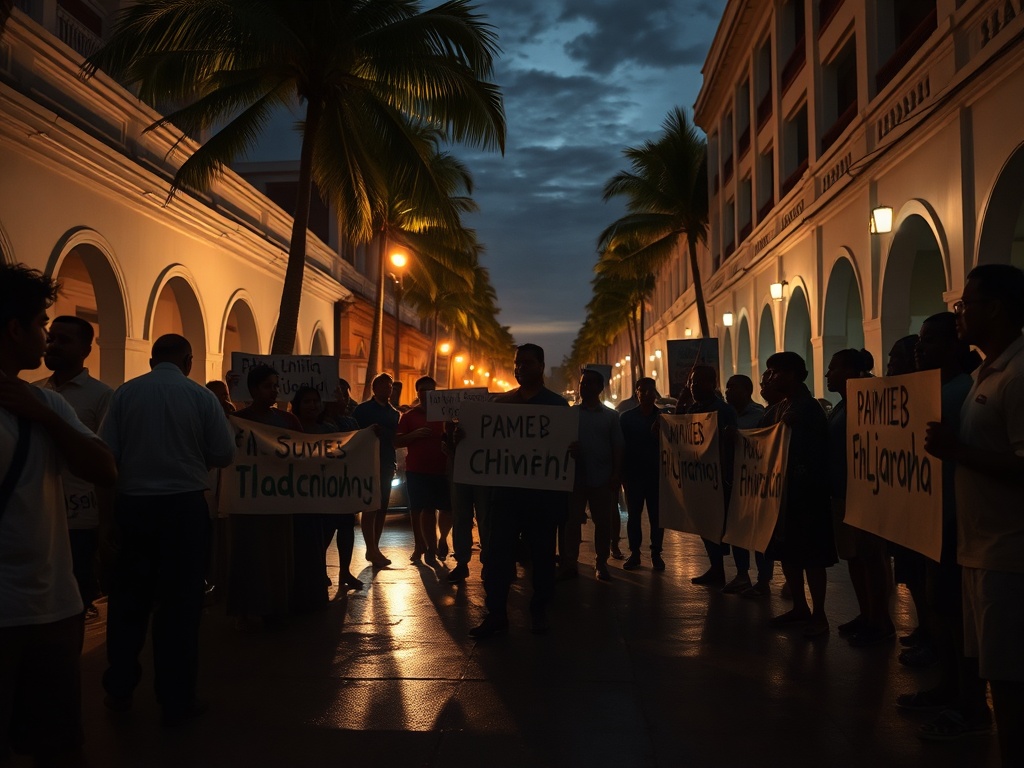
Voters Choosing Between Shadows on the Ballot
The political theater unfolding across Maldivian atolls reveals a democracy grappling with its own limitations. As voters prepare to cast their ballots, the conversation has shifted from policy platforms to fundamental questions about power, memory, and accountability.
Recent rallies and campaign events have drawn scrutiny beyond their surface messaging. Some attendees openly acknowledge attending political gatherings primarily for the peripheral benefits—a free weekend in the capital, temporary respite from economic pressures. This transactional approach to political participation reflects deeper systemic issues where electoral support becomes commodified.
The shadow of what one observer called "the binveriya scam"—referencing housing and land distribution policies—looms large over current political discourse. Critics argue that once such systems are established, they become self-perpetuating mechanisms that outlive any single administration. The pattern repeats: ambitious promises made during election seasons, followed by implementation delays, only to be resurrected when the next political cycle demands tangible achievements.
This cycle points to a fundamental challenge in Maldivian democracy: the gap between campaign rhetoric and governance reality. As one commentator noted, "We forget. He knows that we forget." This political amnesia enables the recycling of unfulfilled promises, with policies conveniently timed to maximize electoral advantage rather than public benefit.
The debate has evolved beyond simple partisan loyalties. Disillusioned voters increasingly question the entire political class, noting that multiple allegations shadow figures across the spectrum. The perception of a self-perpetuating elite—"rich elites chasing power"—has eroded trust in democratic institutions. When citizens begin to see political leadership as merely different faces of the same privileged class, the very foundation of representative democracy trembles.
This sentiment echoes ancient philosophical warnings about democracy's vulnerabilities. The quality of governance, as Socrates suggested, depends fundamentally on the education and engagement of the citizenry. In the Maldivian context, this translates to whether voters can see beyond immediate incentives to evaluate long-term consequences.
The current political moment represents what one observer described as an "unchained monster"—a system where previous restraints have dissolved, allowing underlying problems to surface more visibly. The question facing Maldivian democracy isn't merely which candidate to support, but whether the system itself can evolve beyond short-term electoral calculations toward genuine accountability.
As the political season intensifies, the most significant development may be the growing public skepticism toward all political actors. This critical engagement, while born of disillusionment, could ultimately strengthen democratic foundations by demanding more than ceremonial participation and temporary benefits. The true test may be whether this skepticism translates into sustained pressure for systemic change rather than cyclical disappointment.
— Source fragments: Political rallies as transactional events, recurring policy patterns described as 'scams', voter memory and political timing, elite power structures, philosophical perspectives on democracy