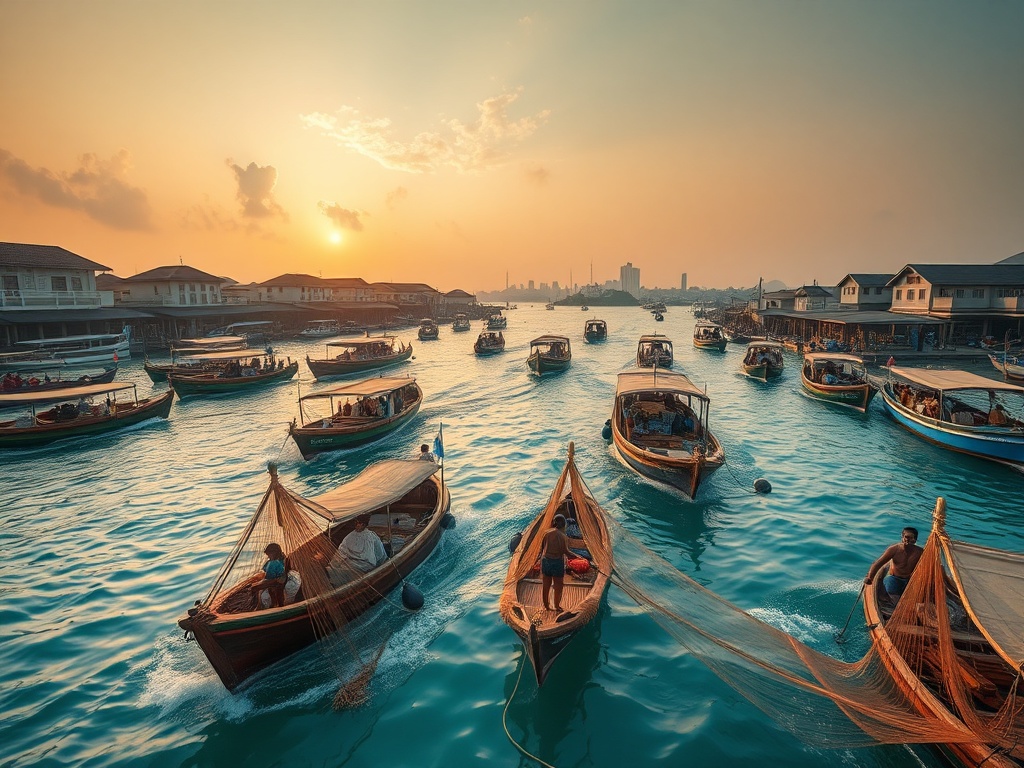
We keep going even when the sea gets rough
Sometimes I stand at the harbor edge in Malé, watching the ferries come and go. The sea breeze carries the scent of salt and diesel, of fish and frustration. We live on these islands surrounded by endless ocean, yet sometimes it feels like we're trapped between waves—political waves, economic waves, waves of uncertainty that never quite break.
They talk about radicalization and bombings, about assassination attempts and power struggles. We read the headlines, watch the news, then go about our days. Because what else is there to do? The politicians come and go like the tides—Muizzu, Solih, Nasheed—each promising calm waters, each leaving their own kind of turbulence. Meanwhile, we're still here, navigating the same currents.
I think about the teachers gathering for their conference, trying to build something lasting in a system that changes with every election cycle. I think about the principals who've seen governments come and go, who understand that education outlasts politics. There's something profoundly Maldivian about this—this determination to keep teaching, keep learning, keep building even when the foundations feel shaky.
The economic pressures are the real tide that shapes our days. You feel it at the market, where the prices of onions and rice tell a story of import reliance and currency shortages. You see it in the faces of young people who finish school with nowhere to go, caught between unemployment and the lure of easier money elsewhere. The resorts glitter on distant islands, but that wealth feels as distant as those islands themselves.
Yet there's a rhythm to life here that persists. The call to prayer still marks the hours. Families still gather for evening tea. Neighbors still share what they have. We've learned to read the weather—both the meteorological kind and the political kind. We know when to batten down the hatches, when to venture out, when to simply wait for better conditions.
Maybe that's our real strength—not in dramatic resistance, but in quiet persistence. Not in changing the tides, but in learning to sail them. The sea has taught us patience, taught us that some storms pass if you just hold on long enough. And while the politicians debate India Out campaigns and Supreme Court appointments, we're still here, still fishing, still teaching, still building lives between the waves.
There are days when the weight feels heavy—when the housing crisis makes Malé feel like a cage, when the medicine shortages threaten someone you love, when you wonder if the next generation will have any islands left to call home. But then you see children playing on the seawall, hear laughter from a tea shop, watch neighbors helping each other through another difficult day.
We keep going because the alternative is unthinkable. We keep smiling because despair solves nothing. We keep building because these islands are ours, no matter who's in power or what scandal dominates the headlines. The ocean has shaped us for centuries—it has taught us resilience, taught us that even the roughest seas eventually calm. And so we wait, and work, and hope that better days are coming with the next tide.