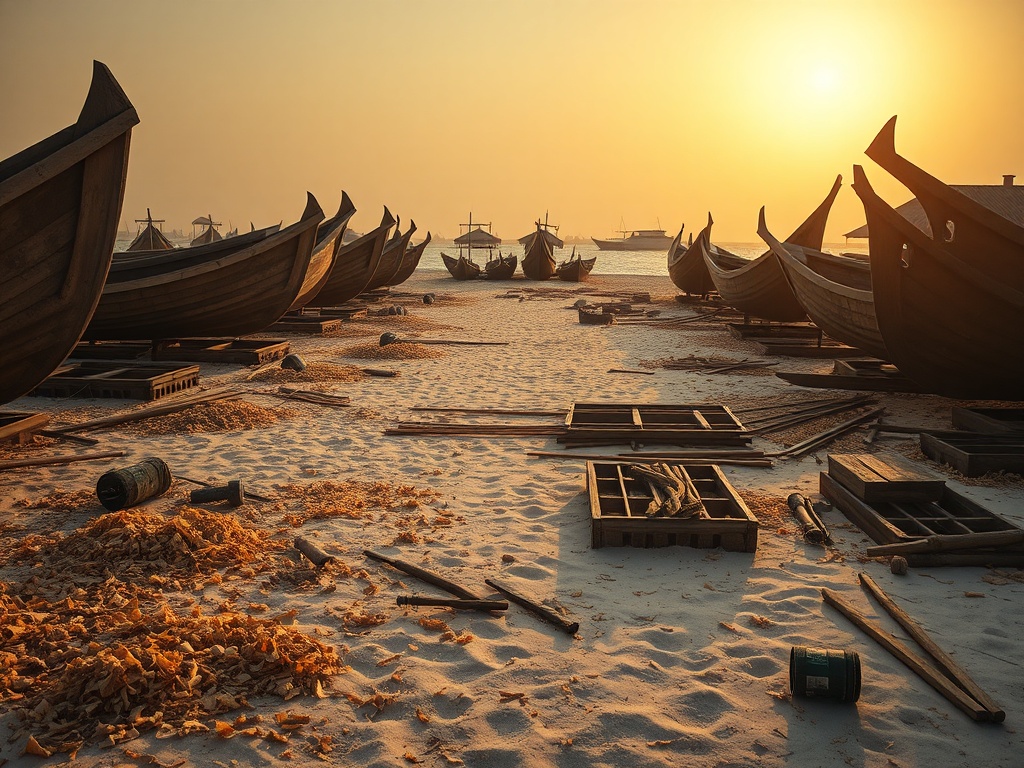
We must revive our exquisite wooden boat building tradition
The scent of freshly carved wood used to fill our harbors, mingling with the salt spray and sea breeze. In every island, from Huvadhoo to Haa Alif, the rhythmic sounds of adze against timber echoed through the coconut groves. Our ancestors weren't just building boats—they were crafting floating masterpieces that carried our civilization across the Indian Ocean. These vessels weren't merely functional; they were extensions of our identity, carved with patterns that told stories of our islands, our faith, and our connection to the sea.
Today, that tradition has faded like an old photograph left in the sun. Where once skilled craftsmen shaped massive dhonis with nothing but hand tools and inherited knowledge, now we see fiberglass hulls imported from abroad. The intricate carvings that once adorned our sailing vessels have been replaced by mass-produced fittings. We've traded generations of mastery for convenience, losing something essential in the process.
This isn't just about nostalgia. Reviving traditional boat building addresses real challenges we face today. With youth unemployment hovering around 30%, these skills could provide meaningful work that connects young Maldivians to their heritage. The same hands that might otherwise drift toward destructive paths could instead learn to shape wood into something beautiful and functional. The knowledge isn't completely lost—there are elders in islands like Baa and Laamu who still remember the techniques, who can still read the grain of wood like others read a book.
Imagine if every atoll had at least one traditional boatyard where young people could apprentice. Not as museum pieces, but as working vessels adapted for modern use—fishing dhonis that combine traditional design with efficient engines, passenger ferries that carry the aesthetic legacy of our ancestors while meeting today's needs. These boats could become symbols of our cultural resilience, floating ambassadors of Maldivian craftsmanship.
The economic potential extends beyond local use. In a tourism industry struggling with mass-market dilution, traditional Maldivian boats could become premium experiences—sailing excursions on authentically crafted vessels that tell the story of our maritime heritage. Guests pay premium prices for authenticity, and what could be more authentic than sailing on a boat built using centuries-old Maldivian techniques?
This revival would require more than just workshops and tools. It would need a shift in how we value our own heritage. We'd need to source the right woods, perhaps through sustainable forestry partnerships with neighboring countries. We'd need to document the knowledge before it disappears completely. Most importantly, we'd need to convince our youth that working with their hands to create something beautiful is as valuable as any office job.
Standing on the jetty in Malé, watching the endless parade of generic fiberglass boats, I can't help but feel we've lost part of our soul. The sea is our lifeblood, but we've forgotten how to properly honor it with vessels worthy of its majesty. The revival of traditional boat building isn't just about preserving the past—it's about building a future where our economic development doesn't come at the cost of our cultural identity. Our hands remember this work, even if our minds have temporarily forgotten.