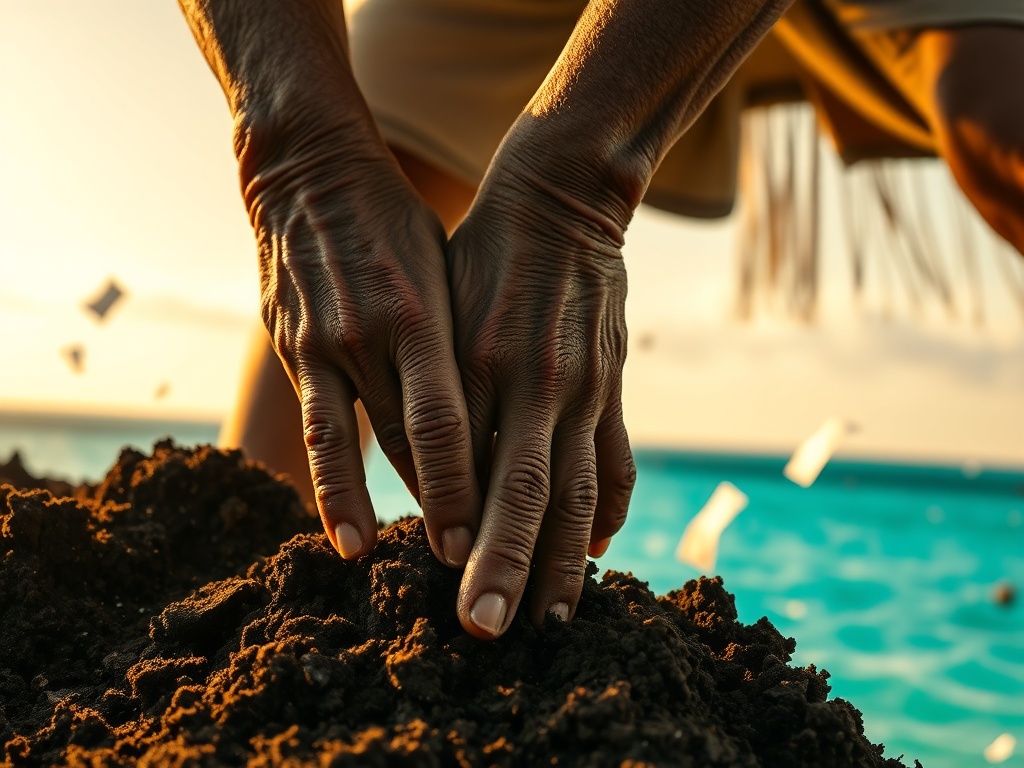
Weathered Hands, Island Soil, and the Policy Papers Blowing Away
The question hangs in the humid air, as tangible as the salt on the breeze: if you cannot wean yourself from the land, if you cannot transform it into something beyond itself, then what is it? Just sand and coral, waiting for the tide. Yet for Maldivians, land is never just land. It is identity, memory, future—all compressed into scarce, precious atolls.
Across these islands, voices rise with competing visions. Some argue for unity—that any Dhivehin should be able to settle anywhere, buy land, sell it, move on. The dream of mobility, of choice unconstrained by whether one comes from Malé or the outer atolls. Yet others see the practical reality: land in Malé commands millions while equivalent space in Hithadhoo might fetch thousands. The economics of scarcity shape our sense of fairness.
Beneath these policy debates lies a deeper tension—between formal systems and lived expertise. There are those who will never navigate the education system, who hold no certificates, yet possess skills honed by generations of island life. How do we capture that wisdom in policy? How do we honor the boat builder who reads the waves like text, the farmer who understands soil the way others understand spreadsheets?
The conversation inevitably turns to tourism—the golden goose that both sustains and confines us. Can we diversify our economy without destroying what feeds us? The question reveals our collective anxiety about putting all our eggs in one fragile basket.
Some remember past land policies that balanced primary residence with optional second homes—pragmatic solutions that acknowledged our archipelagic reality. Others reject free handouts entirely, while accepting they've become political currency. The compromise emerges: land for living, given freely, but with conditions. Use it as home, not investment. Tax rentals so the benefit circulates back to community.
Ultimately, the land will end up with those who steward it. Whether through policy or persistence, through certificates or centuries of unwritten knowledge. As we debate these questions, we're not just allocating plots—we're deciding what kind of society we want to build on this fragile ground between sea and sky.
— Source fragments: technically maybe not, but if you can't yourself wean out of the land and use it for anything else then what is it?; Any dhivehin who wants to settle in any island shall be able to buy or obtain land; they have skills and expertise. how to capture that in policy?; Can we diversify Maldives economy; land for living shall be given for free; A 2000 sqft land in S. Hithadho on average is worth about 300-500k I believe. A 200sqft land in Male' is still worth millions; Ultimately the land will end up with the landowner