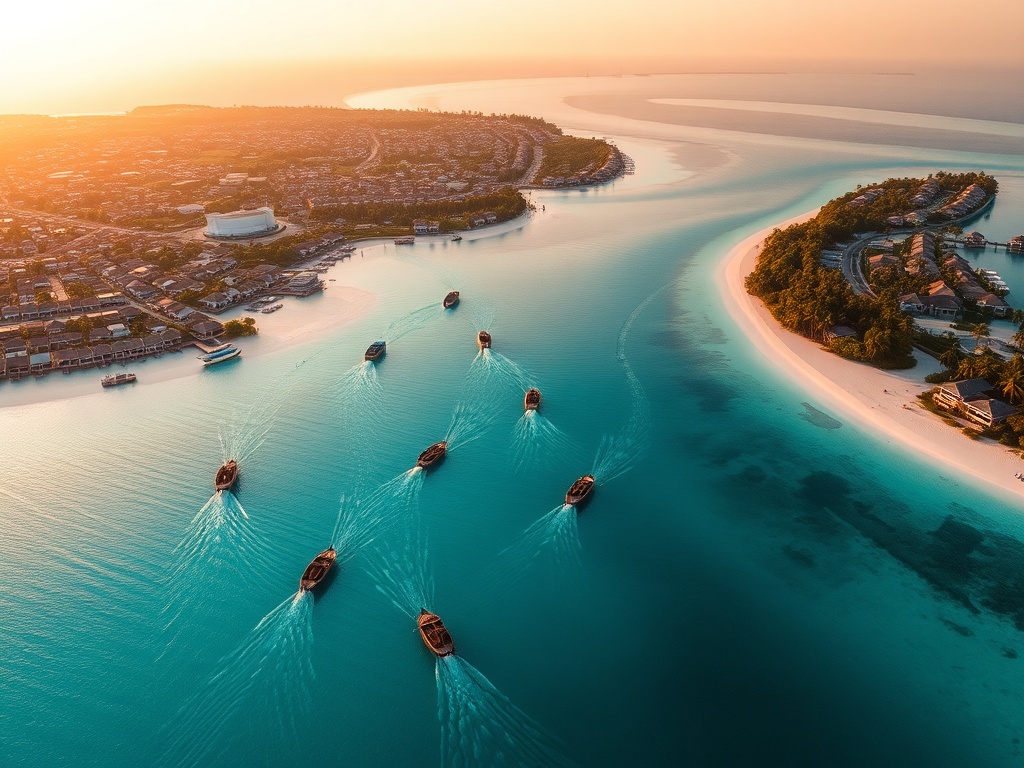
What is land if you cannot wean yourself from it?
The question hangs in the salty air, as persistent as the sea breeze: if you cannot wean yourself from the land, if you cannot use it for anything else, then what is it? It becomes more than soil, more than territory. It becomes identity itself.
Across our scattered islands, the debate about land echoes through crowded Male' streets and quiet atoll shores. Some argue for equality—that any Dhivehin should be able to settle anywhere, buy land, sell it, move freely between islands as life demands. The dream is fluidity, the right to choose one's home without artificial barriers between Male' meeha and Raajjetherey meeha.
Yet reality complicates this vision. A 2000 square foot plot in Hithadhoo might be worth thousands, while a tiny patch in Male' commands millions. The disparity speaks volumes about where opportunity concentrates, where life clusters, where dreams either flourish or wither.
Meanwhile, another truth persists: there are people who will never navigate the formal education system, who may lack certificates but possess deep skills and expertise. Their wisdom comes from hands working with wood, from navigating currents, from understanding the subtle language of weather and waves. How do we capture this in policy? How do we honor the knowledge that doesn't come with diplomas?
The conversation turns to principles. Some reject free land handouts entirely, while others accept them as established precedent but argue for fairness in distribution. The compromise emerges: land for living should be given freely, but with conditions. It must be a primary residence. If rented out, it should be taxed in ways that protect tenants. There are ways, people insist. Systems can be designed.
Underlying all these discussions is the fundamental tension between tradition and progress, between the pull of home islands and the push of economic necessity. Environmental assessments for new developments remind us that every reclamation, every road built, carries consequences for both nature and community.
Ultimately, the land will end up with the landowners, but first we must decide: who deserves to be those landowners? And what responsibilities come with that privilege? The answers we find will shape not just our geography, but our collective soul.
— Source fragments: technically maybe not, but if you can't yourself wean out of the land and use it for anything else then what is it?; I think the correct policy is not to differentiate between Male' meeha or Raajetherey meeha; the thing is there are people who will not go through the education system no matter what; I don’t believe in free land handouts to begin with; About land: I believe land for living shall be given for free; A 2000 sqft land in S. Hithadho on average is worth about 300-500k I believe. A 200sqft land in Male’ is still worth millions; Ultimately the land will end up with the landowner