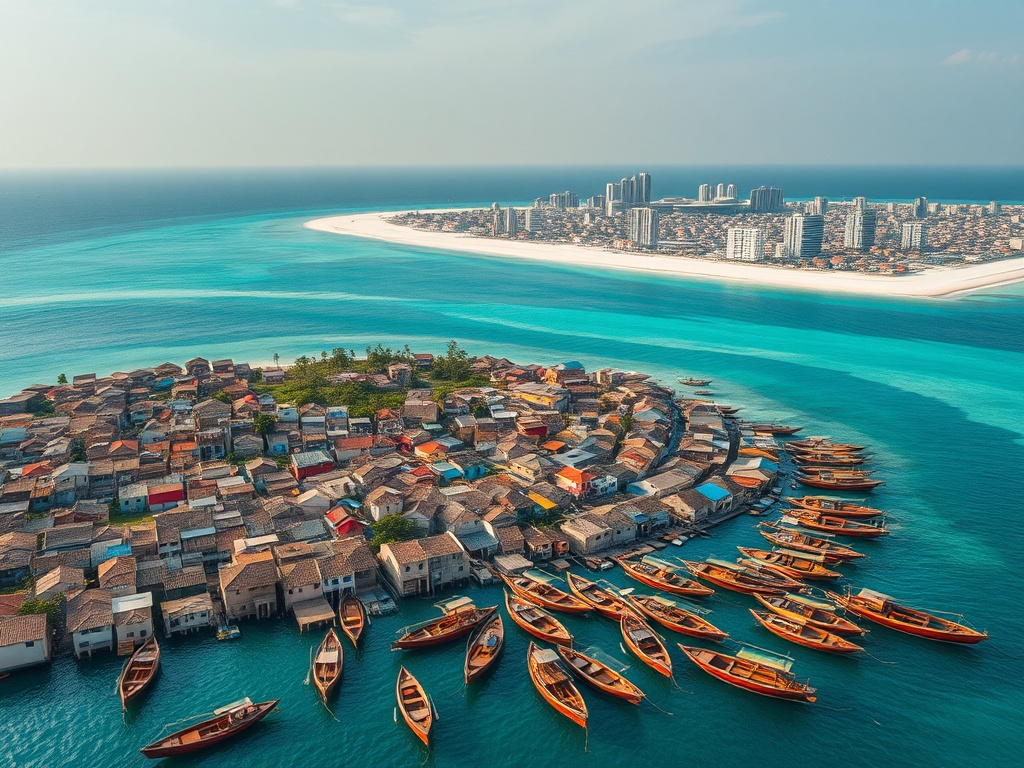
What Is Land You Cannot Build On?
The question hangs in the humid Maldivian air like the salt spray after high tide: if you cannot wean yourself from land and use it for anything else, then what is it? This philosophical inquiry has become the foundation of a heated national conversation about land distribution, ownership, and what it means to belong to these scattered islands.
At the heart of the debate lies a fundamental paradox. On one hand, there's growing consensus that land for living should be provided as a basic right—a primary residence for every Dhivehin. Yet this socialist impulse clashes with capitalist realities when regulation enters the picture. As one observer notes, "We become socialist communists when we demand free land from the government but instantly turn into pro-capitalists the moment the government tries to regulate the rent on those same lands."
The Binveriya scheme and similar initiatives have created deep divisions. Some oppose free land distribution entirely, viewing it as unsustainable entitlement. Others object specifically to Malé-centric distribution that excludes those from other islands. Meanwhile, many Malé residents argue that since reclaimed land in the capital was paid for by all citizens through national funds, all should have equal claim to it.
This tension between local entitlement and national citizenship reflects broader questions about Maldivian identity. Should being from Malé grant special rights to Malé land? Or should any Dhivehin be able to settle anywhere in the archipelago without discrimination? The debate has shifted from practical housing policy to fundamental questions of belonging and equity.
Practical concerns complicate the ideological debate. Proposed solutions include restricting free land to primary residences only, implementing taxation systems that prevent landlords from passing costs to tenants, and creating mechanisms to ensure land serves its intended purpose rather than becoming speculative assets.
The economic disparities are stark—a 2000 square foot plot in Hithadhoo might be worth 300,000 Rufiyaa, while a 200 square foot plot in Malé commands millions. This valuation gap reinforces geographical inequality and makes uniform policies challenging to implement.
What emerges from these fragmented voices is not just a policy debate but a cultural moment of reckoning. The conversation has moved beyond simple solutions to confront the complex relationship Maldivians have with their limited land. It's about more than property—it's about defining what land means to a people whose national identity is so deeply tied to territory, yet whose economic realities often conflict with sentimental attachments.
The challenge for policymakers lies in balancing these competing visions—creating systems that acknowledge historical precedents while building toward more equitable futures. The solution may require moving beyond binary choices toward nuanced approaches that recognize both the practical needs of citizens and the symbolic importance of land in the Maldivian psyche.
— Source fragments: technically maybe not, but if you can't yourself wean out of the land and use it for anything else then what is it?; I think the correct policy is not to differentiate between Male' meeha or Raajetherey meeha; I don’t believe in free land handouts to begin with; About land: I believe land for living shall be given for free; We become socialist communists when we demand free land from the government but instantly turn into pro-capitalists the moment the government tries to regulate the rent; Those who are against the Male Free Goathi Scheme are against it for two reasons; A 2000 sqft land in S. Hithadho on average is worth about 300-500k I believe. A 200sqft land in Male’ is still worth millions