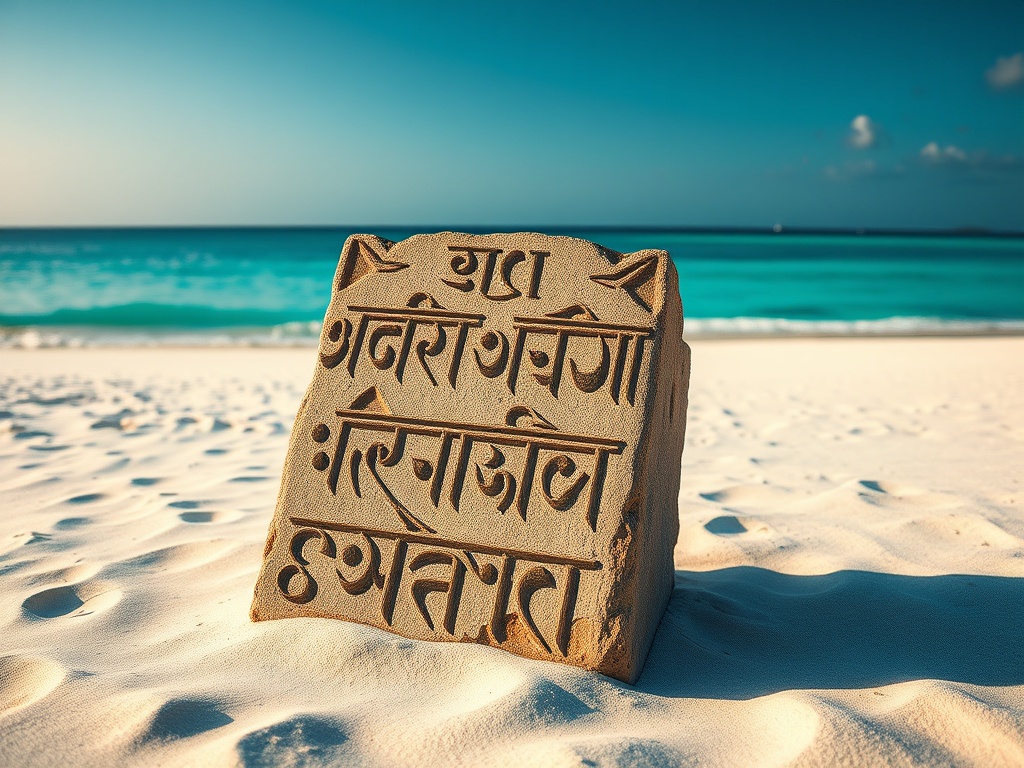
What Makes Us Dhivehin: The Unbroken Thread Through Time
Sometimes, in the quiet between monsoon showers, I think about what it means to be Dhivehin. The question hangs in the humid air like the scent of mas huni and fresh tuna. We've been having these conversations lately—debates about nations and civilizations, about who we were and who we are becoming.
Five hundred years ago, our ancestors looked out at these same turquoise waters, spoke variations of the same language we speak today, and called themselves Dhivehin. They carved intricate hirigaa patterns into coral tombstones, patterns whose meanings we've forgotten but whose beauty still speaks to us across centuries. They built mosques from coral stone, their faith as enduring as the structures themselves. They knew themselves as one people across these scattered atolls, long before modern borders were drawn on maps.
This continuity is something precious, something we carry in our blood and our stories. When we gather for evening tea, when we share folklore about our islands, when we recognize each other as kin across different atolls—we are living that unbroken thread. The concept of 'Dhivehin' wasn't invented in some constitution-writing room; it emerged organically from generations of shared experience in this unique archipelago.
Yet today, we find ourselves at a crossroads. Our history has often been told through foreign lenses, our narratives Indianized by experts who see us through their own frameworks. We risk losing the very things that make us distinct—the small traditions, the local stories, the understanding of why our ancestors marked their graves with those particular patterns.
What does it mean to preserve this identity in 2025? It means remembering that being Dhivehin isn't just about geography or government. It's in the way we greet each other, the respect we show our elders, the community that forms spontaneously when someone needs help. It's in the fisherman who reads the waves as his father taught him, and the young woman who studies our ancient scripts hoping to recover lost knowledge.
The ocean that separates our islands also connects us—each wave carrying memories of who we've always been. As the light changes over the lagoon, turning from gold to violet, I feel the weight and gift of this continuity. We are the current chapter in a very long story, and how we write it matters not just for us, but for those who will call themselves Dhivehin five hundred years from now.
— Source fragments: "Even 500 years back we roughly believed same thing, we talked same language. we identified as dhivehin", "I remember reading somewhere that we still do not know why we had the hirigaa patterns engraved on tombstones", "our history is highly Indianized by the 'experts'. so we lost a large portion of history due to these experts indianized narratives", "nation state is not nation. i am talking about nation. India never existed as a nation before their nation state was created. but dhivehin were dhivehin even when we were a kingdom"