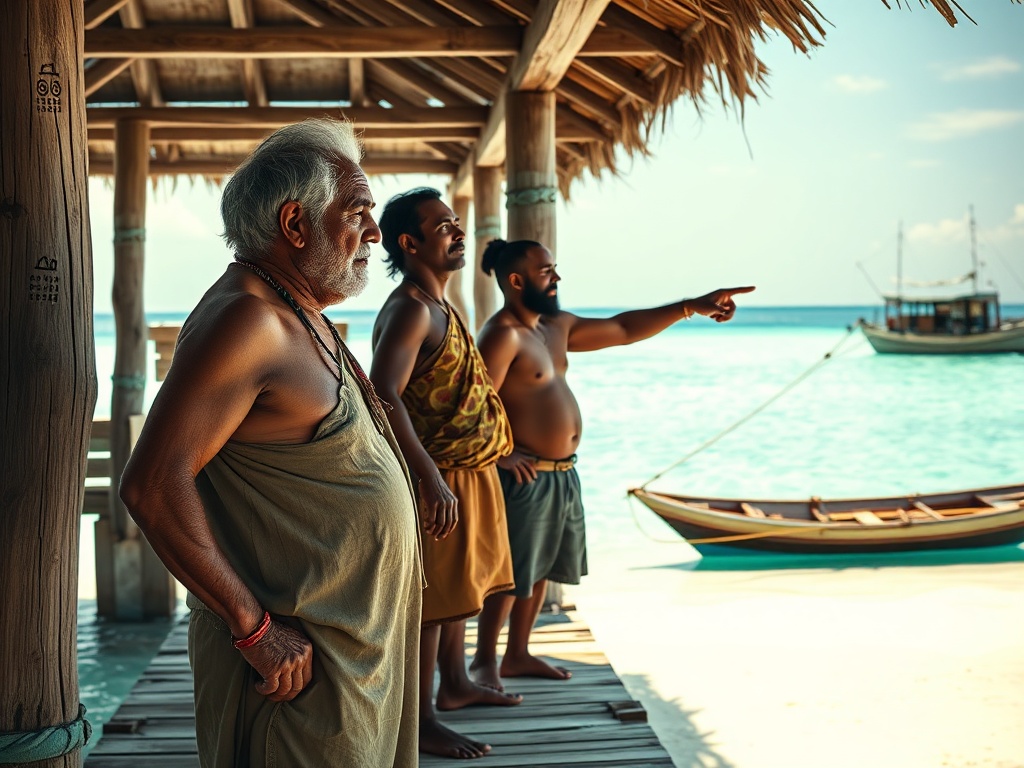
When Addu Bus Becomes a Language of Its Own
In the southernmost atoll of Addu, a local quip captures something deeper than regional pride: "Addu bus is a separate language bro." The comment, playful on the surface, hints at the distinct cultural identity that has long characterized this archipelago's diverse communities. Now, this regional self-awareness is evolving into something more profound—a quiet movement of Maldivians reclaiming their identity as native aboriginal people.
This isn't about political posturing or academic debate. It's a personal reckoning, as one observer noted the need to tell younger generations: "we were aboriginal." The statement reflects a growing desire to ground Maldivian identity in something deeper than colonial records or tourist brochures. For many, the official historical narrative feels incomplete, built on "a few models everyone is relying on as if it came from above" while fundamental questions about origins remain unanswered.
The conversation extends beyond genealogy into lived experience and environmental knowledge. Traditional weather systems like the nakaiy—with Dhosha beginning November 27th and Iruvai starting December 10th—provide a framework for understanding seasonal changes that modern meteorology often overlooks. These systems represent generations of observational science, woven into language and daily life.
Even linguistic variations reveal deeper truths about cultural diversity within unity. The question of whether "Juwey dhatha was speaking in Malé dialect" highlights how regional speech patterns preserve distinct histories and perspectives. Meanwhile, the shared use of terms like "Suvaa" across communities suggests underlying cultural connections that transcend modern administrative boundaries.
This emerging consciousness represents neither rejection of modernity nor romanticization of the past. Rather, it's an integration—acknowledging that being Maldivian means carrying both ancient knowledge and contemporary reality. As one voice observed, "Aboriginals are coming. You should be relishing"—not as threat but as cultural enrichment.
The movement remains organic and personal, emerging from kitchen conversations, social media exchanges, and quiet moments of reflection. It represents a maturing national identity, one that recognizes the value of looking backward to move forward with greater cultural confidence and self-understanding.
— Source fragments: Addu bus is a separate language bro; I needed to tell the kids we were aboriginal; Aboriginals are coming; we are native aboriginal people here; Nobody really knows when we first arrived; We call it Suvaa too; Juwey dhatha was speaking in Malé dialect; The weather changes we are experiencing right now are due to the change in the nakaiy