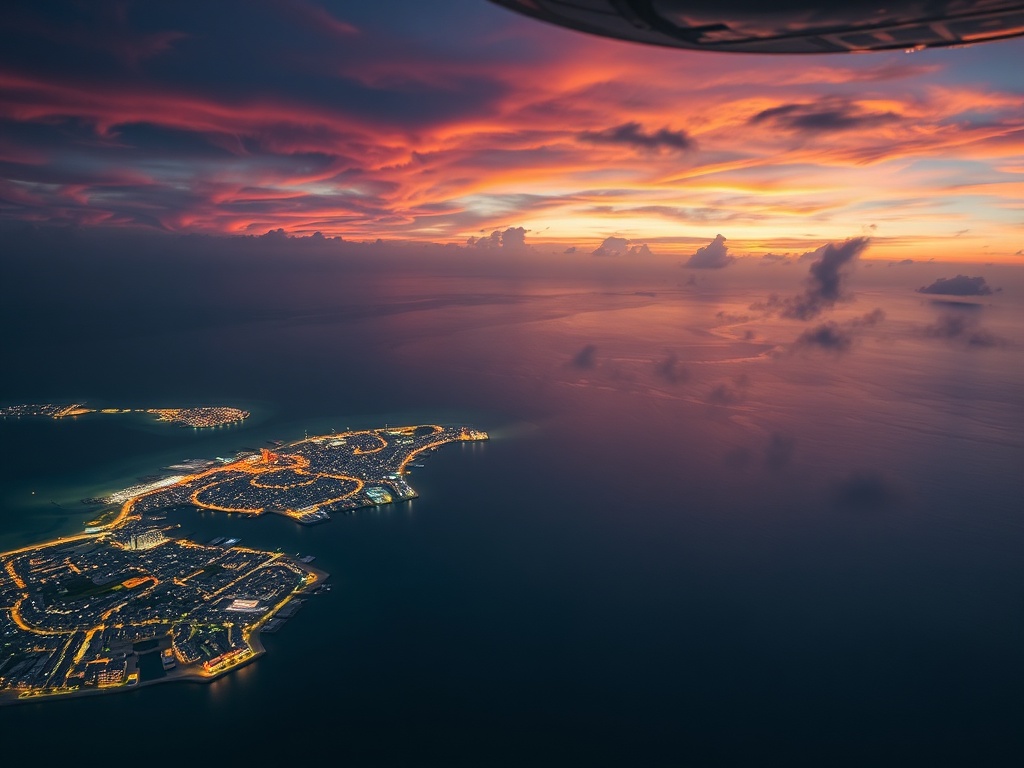
When Addu's Lights Go Out, Malé Still Glows
When the lights go out in Addu and Fuvahmulah, it's more than a utilities failure—it's a symptom of a deeper national malaise. The complete breakdown of essential services in the southern atolls has prompted residents to question whether their geography determines their destiny in the Maldives.
The frustration echoes across social media platforms: "This should prompt a national emergency response, but because this is the south, the state doesn't care." The sentiment reflects a growing perception that response times and resource allocation follow an invisible map where proximity to Malé correlates with governmental attention.
This geographical hierarchy extends beyond infrastructure into the very language of development. The naming of new lands and projects after the capital reinforces what critics call a "silent sense of ownership" that centers progress exclusively around Malé. This linguistic framing transforms outlying regions into mere annexes of an established hierarchy rather than equal partners in national development.
"THE SOUTH IS SLOWLY BEING ERASED," one observer notes, capturing the fear that regional identities are being subsumed by a centralized vision of progress. The response from another corner—"Bro it's been divided long before you"—suggests this isn't a new phenomenon but rather an entrenched feature of Maldivian governance.
The practical consequences are measurable. Residents acknowledge that "tertiary health and education is not feasible in my little island" but argue for accessibility through regional hubs. The solution, as proposed by development advocates, involves "right policies and incentives" that would naturally decentralize capital and talent. Yet the consistent complaint remains that "no president has ever demonstrated that in action.
This isn't merely about infrastructure allocation but about citizenship itself. The stark declaration "nah bro im a second class citizen" reveals how geographical inequality translates into perceived social standing. The demand for equal treatment before asking what citizens can do for the nation highlights how development disparities undermine national unity.
The conversation reveals a nation grappling with its spatial politics. While the physical distance between islands can be measured in kilometers, the developmental gap feels continental. As one southern resident summarized the prevailing sentiment: the response to southern crises would differ dramatically if they occurred closer to the centers of power.
The challenge for policymakers isn't merely technical—fixing power grids and water systems—but philosophical: reimagining a Maldives where development radiates outward rather than concentrating inward, where citizenship isn't graded by postcode, and where the nation's geography becomes its strength rather than its fracture lines.
— Source fragments: Both Addu and Fuvahmulah are now facing total utilities failure; naming these new lands after Male' gives a silent sense of ownership; THE SOUTH IS SLOWLY BEING ERASED; second class citizen; With right policies and incentives, capital and talent will decentralize