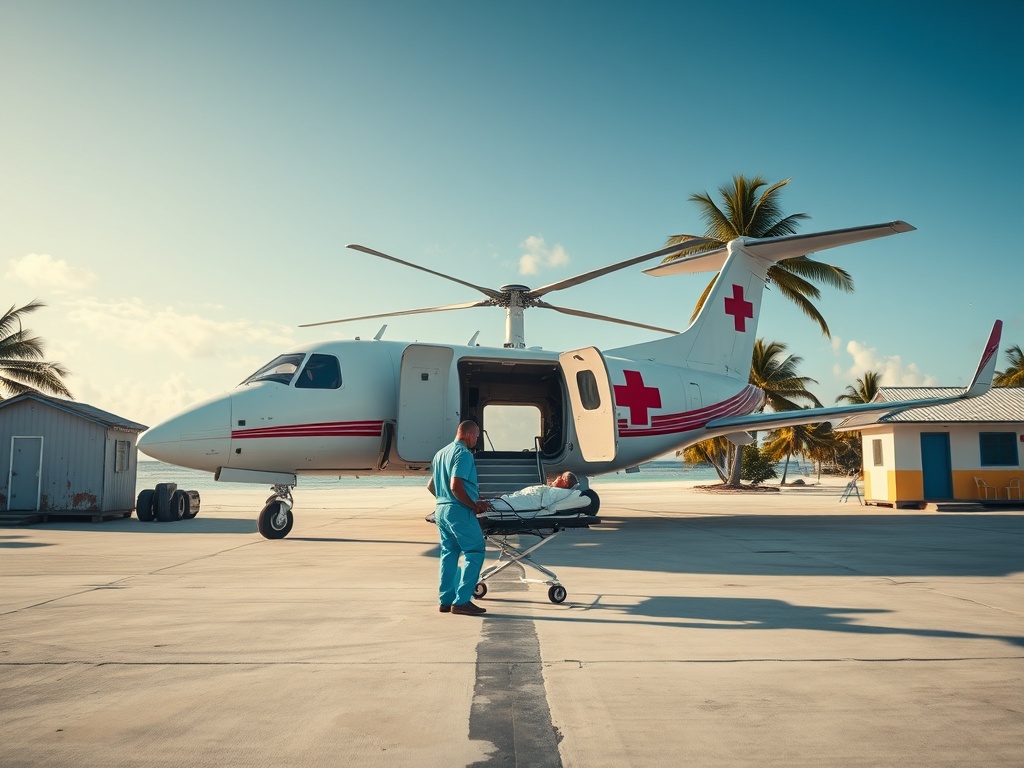
When Air Ambulances Are Your Local Clinic
In the scattered archipelago of the Maldives, where islands stretch across the Indian Ocean, healthcare delivery presents a geographic and financial conundrum. The sight of air ambulances shuttling patients to the capital has become familiar, yet many are beginning to question whether this system represents the most efficient use of scarce resources. At current rates of 2-3 medical evacuations daily, the cumulative costs of handling and fuel raise legitimate questions about whether these funds might be better invested in developing regional healthcare facilities that could serve island communities closer to home.
The debate extends beyond transportation to the very architecture of healthcare administration. In a system where services must be properly documented and billed through centralized platforms, there's growing recognition that decentralization could streamline patient care. The ability to obtain necessary memos and approvals from multiple counters without central bottlenecks would represent a significant step toward patient-centered care in a nation where travel between islands remains logistically challenging.
Behind these systemic questions lies the reality of medical expertise distribution. While qualified specialists, including gynecology professors and department heads, practice in the Maldives, their concentration in Malé creates a professional imbalance that mirrors the geographic one. This centralization forces patients from outer atolls to undertake expensive journeys for specialized care that could potentially be delivered regionally.
Meanwhile, discussions around healthcare financing reveal another layer of complexity. The implementation of systems like Aasandha, the national health insurance scheme, has been shadowed by concerns about proper billing practices and service documentation. The need for accurate entry of services into billing systems underscores the importance of both technological infrastructure and administrative integrity in ensuring healthcare resources reach those who need them most.
These healthcare challenges exist within a broader social context where mental health care approaches reflect cultural values. Unlike institutionalization models common elsewhere, community-based care that allows individuals to remain in familiar environments with basic needs met represents an alternative approach that merits consideration in healthcare planning.
As the Maldives grapples with these intersecting issues, the conversation is shifting from simply treating illness to building a healthcare system that is geographically accessible, financially sustainable, and administratively transparent. The solution may lie not in more medical evacuations to the capital, but in bringing quality care closer to where Maldivians live.
— Source fragments: Would 2-3 air ambulance rides/day's cost can be invested in a better regional healthcare facility instead of bringing every patient to male? how much would be the estimate handling/fuel cost per day at this rate; Or, decentralizes it so you can get memos for all doctors from all counters; They are qualified gynecology professors . HOD is janab; yeah i fear im next level savvy at ADK they don't really use vinavi oa taught him how to search services and enter them so they can be billed through vinavi by any healthcare provider