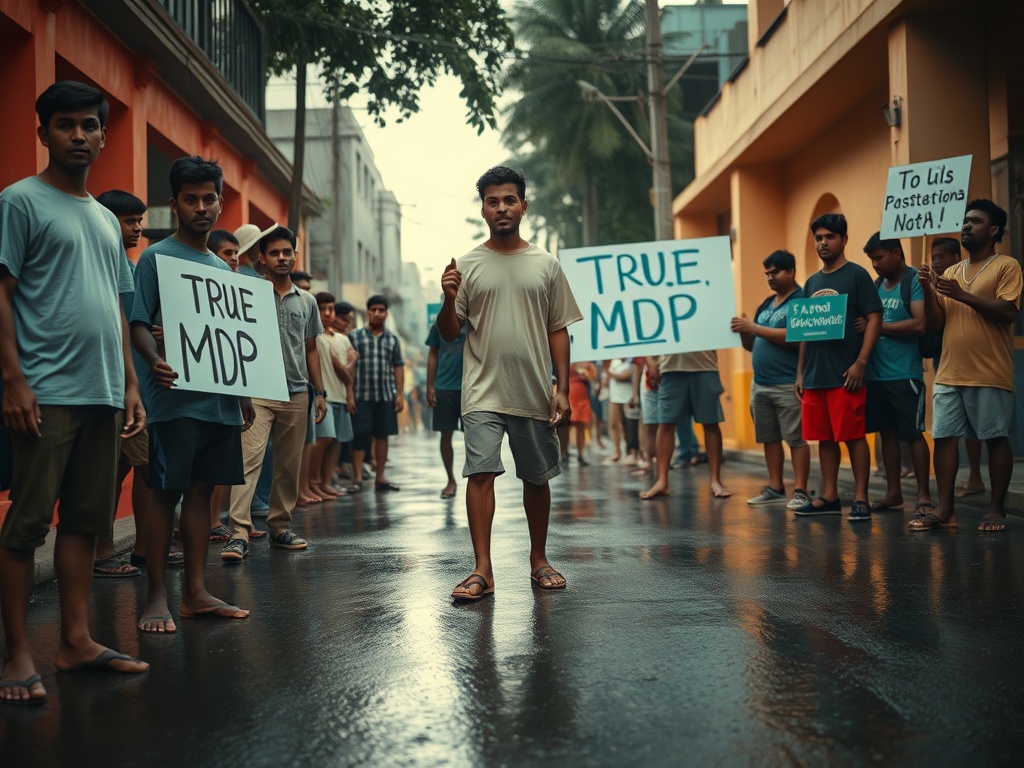
When 'Anni's Army' Meets the 2012 Shadow: Maldives' Crisis of Political Identity
Maldivian politics faces a deeper crisis than mere partisan division—a fundamental fracture over what constitutes genuine political identity. The discourse has shifted from simple party loyalty to questioning who truly belongs.
Self-proclaimed 'true MDP' supporters of former President Mohamed Nasheed position themselves as authentic keepers of the party's legacy. This creates immediate tension with those who joined during turbulent periods, particularly the controversial 2012 transfer of power.
Historical actions cast long shadows. Allegations surrounding the February 2012 transition continue to haunt certain figures, creating permanent barriers to acceptance within party structures. Past actions, real or perceived, become indelible markers that override current policy positions.
This ideological sorting extends into moral territory. Some voters now make decisions based on social media revelations—specifically, expressions of support for figures involved in controversial political transitions. For them, endorsement becomes principle over partisanship.
The weaponization of 'real MDP' credentials creates internal divisions that weaken collective purpose. Yet counter-currents exist: the practical value of direct community access to leaders, regardless of party affiliation, suggests governance might transcend debates about purity.
With Maldives facing economic pressures and governance challenges, these identity conflicts risk diverting attention from substantive policy discussions. The constant questioning of who belongs ultimately serves neither parties nor citizens. The real test is whether Maldivian politics can move beyond these divisions to address a nation at a crossroads.
— Source fragments: Used core themes about political deception, 'true MDP' identity claims, historical actions affecting current acceptance, and ideological decision-making while integrating them into analytical narrative rather than direct quotation.