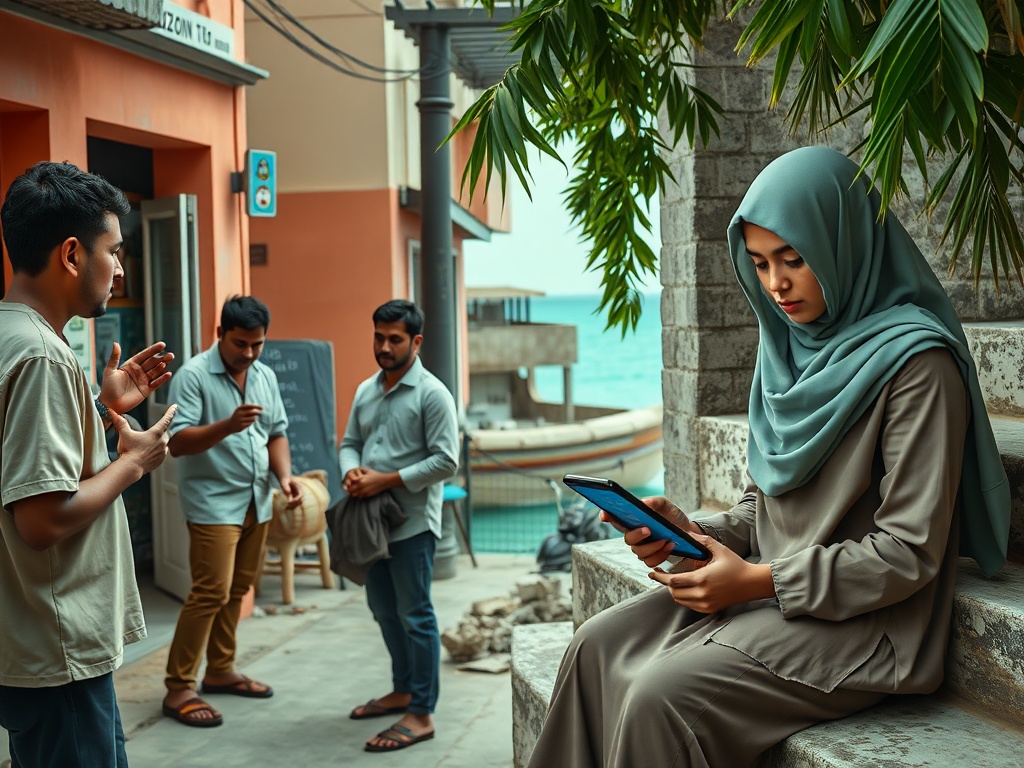
When Block Buttons Replace Political Arguments
In the heated arena of Maldivian political discourse, a troubling pattern emerges—one where substantive debate gives way to personal vilification. The digital public square, once envisioned as a space for civic engagement, increasingly resembles a battlefield where accusations of corruption and character assassination replace policy discussion.
When political disagreements arise, the immediate response often involves questioning opponents' integrity rather than their arguments. The accusation of corruption has become a reflexive weapon, deployed with little evidence but significant impact. This tactic effectively shifts focus from governance issues to personal morality, allowing political actors to avoid addressing substantive policy concerns.
Concurrently, financial status has become ammunition in these conflicts. References to negative bank balances serve as both defense mechanism and social commentary—a subtle acknowledgment that economic standing shouldn't determine one's right to political participation, yet simultaneously revealing how financial vulnerability becomes a point of attack. In a nation grappling with cost-of-living crises and economic instability, such financial shaming carries particular weight.
The blocking function on social platforms has evolved from a personal preference tool to a political statement. Selective silencing—reserved for those making personal attacks or corruption allegations—represents a form of digital boundary-setting. Yet this practice raises questions about echo chambers and the narrowing of public discourse when dissenting voices are systematically excluded.
Nepotism accusations further complicate these dynamics. The suggestion that political influence flows through family connections rather than merit taps into widespread public concern about fairness and equal opportunity. When political discourse becomes dominated by such personal attacks, the substantive issues facing the nation—from governance challenges to economic pressures—risk being overshadowed by personality conflicts.
The transformation of political disagreement into personal warfare reflects broader tensions in Maldivian society. As citizens navigate complex political landscapes, the line between legitimate criticism and personal attack grows increasingly blurred. The result is a public conversation that often feels more like a series of personal grievances than a collective effort to address national challenges.
This pattern suggests a need to reestablish boundaries between political opposition and personal condemnation. The health of democratic discourse depends on the ability to disagree without delegitimizing, to criticize without destroying. As Maldivians continue to engage with the political process, the question remains whether public conversation can evolve beyond personal attacks toward more constructive engagement with the substantive issues affecting the nation.
— Source fragments: Personal hate commenters and ppl calling me corrupt; I know my balance is -200 most of days of a month; I block very few ppl; nepo baby