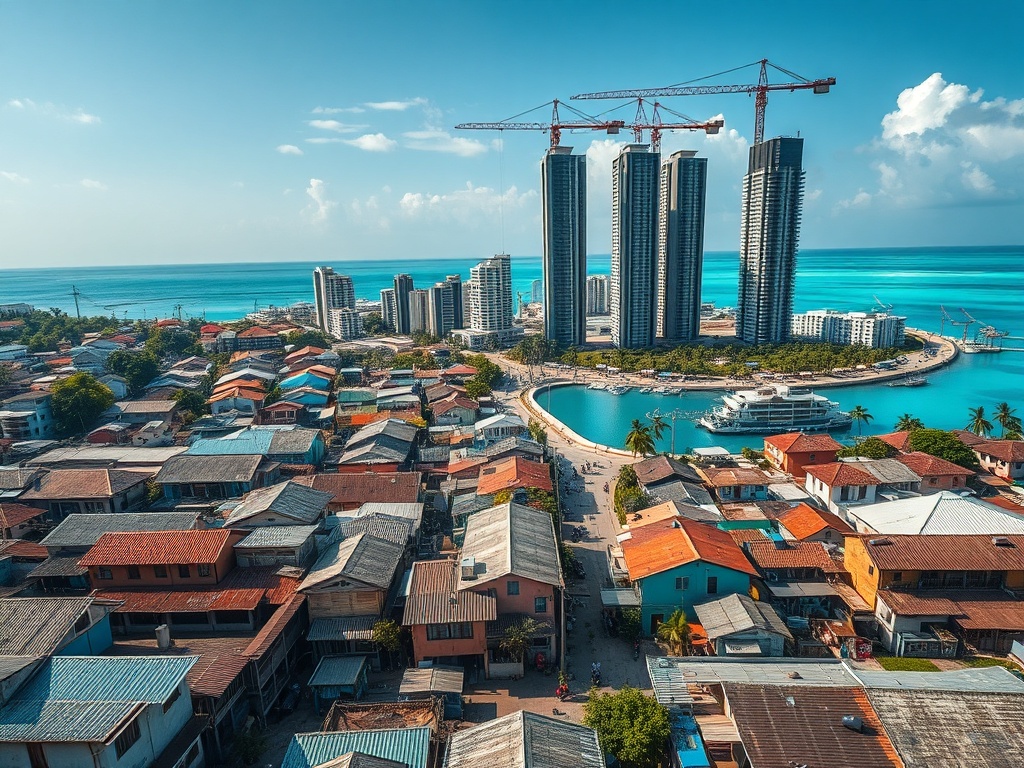
When Campaign Promises of Land Meet Malé's Crowded Streets
In the cramped islands of the Maldives, where space is both precious and political, the promise of land has long been a powerful electoral tool. Recent housing initiatives, particularly the Binveriyaa scheme, have sparked intense public debate about who truly benefits from these programs and whether they address genuine need or simply reward political loyalty.
The conversation reveals a deep-seated skepticism toward institutions meant to serve the public. The Housing Development Corporation (HDC), tasked with addressing the nation's chronic housing shortage, faces accusations of complicity in a system that prioritizes political connections over equitable distribution. Critics argue that regardless of which party holds power, the outcome remains the same: those with existing advantages find ways to accumulate more, while those truly struggling continue to wait.
This pattern extends beyond individual schemes to the very structure of governance. Parliamentarians, many of whom benefit directly from the current system, approve policies that perpetuate inequality. The discussion highlights how political and business interests often intertwine, with stakeholders in construction companies positioned to profit enormously from specific land allocation models. What should be a solution to a fundamental human need becomes another opportunity for enrichment.
The public's frustration stems from witnessing a cycle where each new administration repackages old promises. The same 'curry,' as one observer noted, gets reheated election after election. Meanwhile, evidence suggests that many recipients of free land already possess property—either through family inheritance or previous purchases—undermining the programs' stated purpose of helping the landless.
This system creates a fundamental injustice where political loyalty trumps genuine need. The conversation reflects a broader crisis of trust in institutions, where the public perceives that brutal crimes go unpunished when the perpetrators have political backing, and the innocent bear the consequences. The cycle appears unbreakable not because solutions don't exist, but because too many benefit from maintaining the status quo.
As the 2028 elections approach, the political calculus around housing may shift, but the underlying problem remains: until land distribution is divorced from political patronage and grounded in transparent, needs-based criteria, these schemes will continue to fuel public cynicism rather than solve the housing crisis they purport to address.
— Source fragments: So true, MDP is all abt corruption and laadheeny now; I think most of it will be blamed on HDC; Why free goathi matters; Parliament with majority RT seats approve of this BS because they are of the beneficiaries; Binveriyaa was a scam to get votes; Most people who did get free land this time, that i know of, either have land or flats; This is about those who have taken advantage of the system and corruption to benefit them