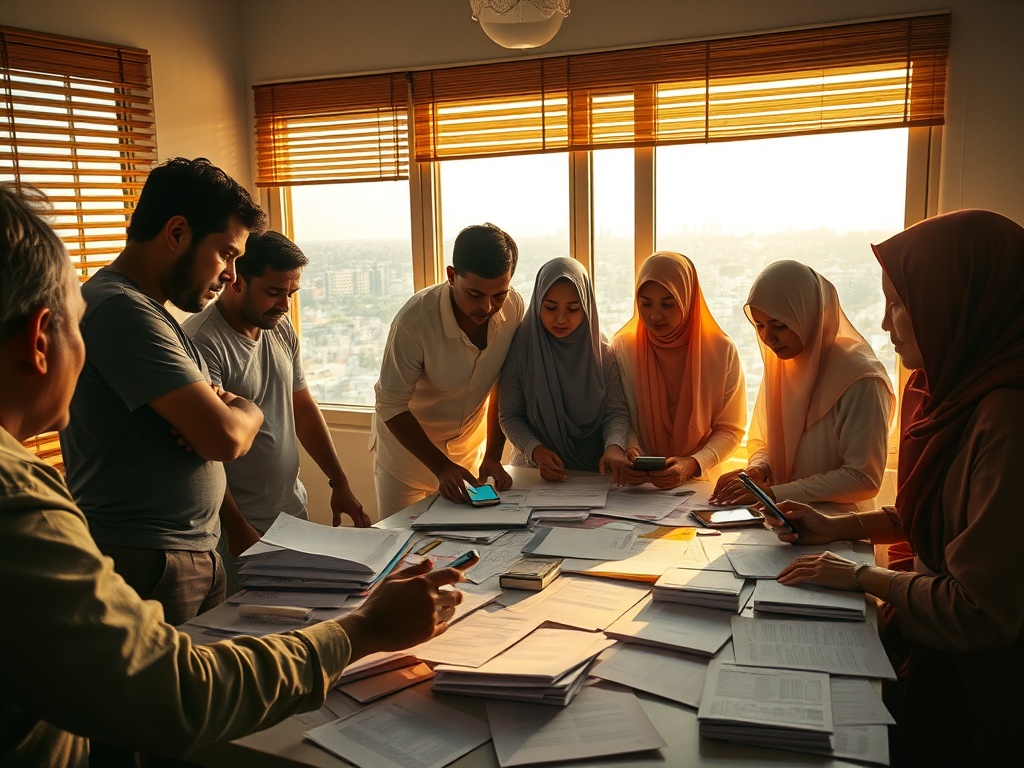
When "Can't We Just Be Civil?" Echoes Through Maldivian Coffee Shops
The plea echoes across social media feeds and coffee shop conversations: "Can't we just be civil?" It's a simple question that reveals a deeper struggle in how Maldivians communicate about the issues that shape their lives. When complex political and social matters become mired in technical jargon or partisan rhetoric, the conversation breaks down, leaving many citizens feeling excluded from discussions that directly affect their futures.
This communication gap manifests in multiple ways. Some seek simplification—"can u babify these terms for a toddler brain"—not out of condescension but from a genuine desire for accessibility. Others demand transparency, asking "where can I see the source of this?" when confronted with claims that feel disconnected from verifiable facts. The frustration is palpable when people download documents only to find they don't contain the promised clarity.
At the heart of this struggle lies a fundamental tension between complexity and comprehension. The issues facing the Maldives—from governance challenges to economic pressures—are inherently multifaceted. Yet when discussions become so specialized that they resemble "tweeting about Maafannu" to someone unfamiliar with the neighborhood's specific dynamics, we risk creating a society where only the initiated can participate in civic dialogue.
The call for civility isn't merely about politeness; it's about creating space for genuine understanding. When conversations become polarized, with participants telling others "please don't tag me on these," we lose the collective wisdom that comes from diverse perspectives. The insistence that "it's imperative everybody understands what's going on all at the same time" reflects a democratic ideal that remains elusive in practice.
What emerges is a quiet consensus that important discussions should be accessible to all. The recognition that "when somebody talks about such important things it should be there" points to a shared value of inclusion, even when implementation falls short. In a nation navigating complex transitions, the way we talk about our challenges may be as important as the solutions we eventually implement.
The path forward requires acknowledging that simplification need not mean dilution, and that civil discourse strengthens rather than weakens our collective capacity for problem-solving. As one observer noted with the simple affirmation "Ameen. This is true," there remains common ground beneath our disagreements—if only we can find the language to access it.
— Source fragments: Can't we just be civil and say it was a chocolatey stain; This is like tweeting about maafannu; can u babify these terms for a toddler brain pls pls; Its imperative everybody understands whats going on all at the same time; please don't tag me on these; i blv when somebody talks about such important things it should be there; where can i see the source of this