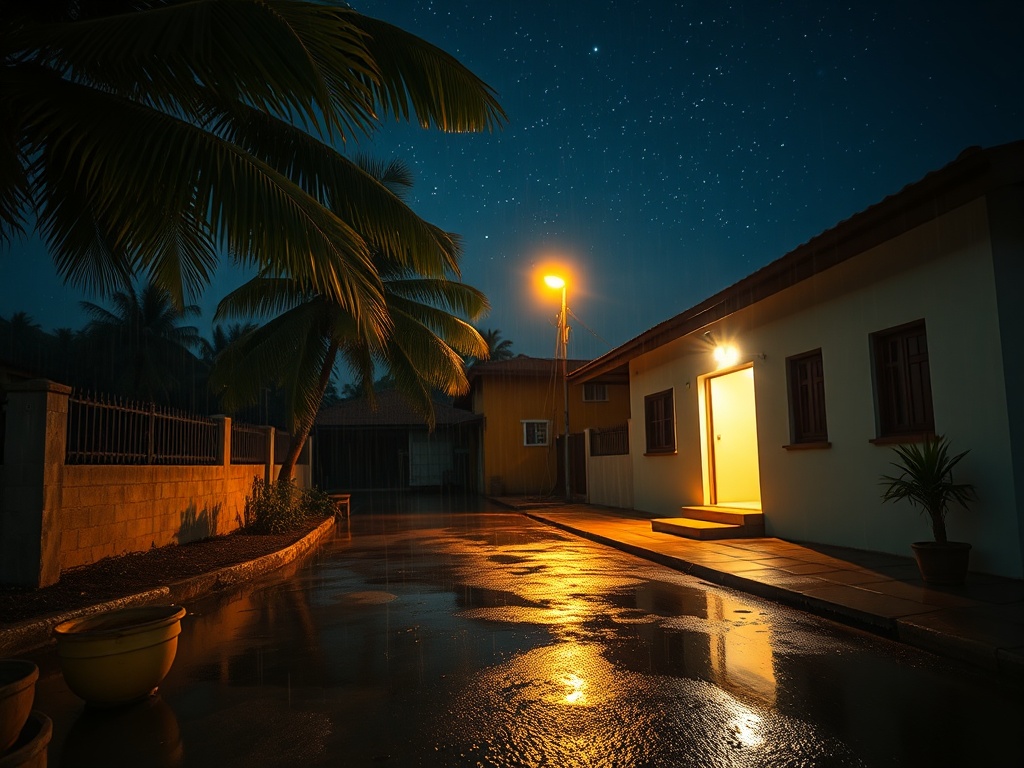
When City Status Arrives Before the Electricity Does
The designation of 'city' carries certain expectations—reliable electricity, clean running water, accessible healthcare. Yet in Fuvahmulah, like many Maldivian urban centers beyond the capital, this label often feels like an administrative formality rather than a reflection of reality.
Power cuts have become a regular feature of daily life, their frequency dictated not by weather or technical glitches but by the fundamental inadequacy of generator capacity. When the lights flicker and die, entire households hold their breath, wondering how long this interruption will last and what perishables might be lost. The rhythm of life becomes dictated by infrastructure limitations rather than human needs.
Water supply presents another layer of complexity. The plants meant to provide this most basic necessity struggle with maintenance issues and capacity constraints, leaving residents to navigate unpredictable access to clean water. In a nation surrounded by ocean, the irony of water scarcity isn't lost on those who experience it daily.
Perhaps most concerning is the healthcare situation. Without proper hospital facilities, residents face difficult choices when serious medical issues arise. The option of traveling to Malé or abroad for treatment exists, but it's a privilege accessible mainly to those with means, creating a two-tier system where geography and wealth determine health outcomes.
These infrastructure gaps highlight a broader pattern across the Maldives, where urban designation has sometimes outpaced service delivery. The challenges in Fuvahmulah reflect systemic issues in public sector efficiency and resource allocation that affect multiple islands. As one of the southernmost atolls, the city's struggles also raise questions about equitable development across the archipelago.
The visitor who notices these issues after a short stay raises an important question: what about those who call this place home permanently? Their resilience in facing these challenges daily speaks to a deeper commitment to community, but resilience shouldn't be mistaken for acceptance of substandard conditions.
As the Maldives continues its development trajectory, the experience of cities like Fuvahmulah serves as a crucial reminder that true progress is measured not by administrative labels but by the quality of life those labels actually deliver. The gap between urban status and urban services represents one of the most pressing governance challenges facing the nation's development planners.
— Source fragments: Sometimes I wonder what's the use of calling a place a 'city' if the people living there still struggle for the most basic services? Frequent power cuts due to lack of enough generators, no proper water supply because of issues with the plants, and no proper hospital facilities these are real challenges faced by people every day. I'm just a visitor, and yet I can feel the difficulty. What about those who live here in Fuvahmulah permanently? They deserve better.