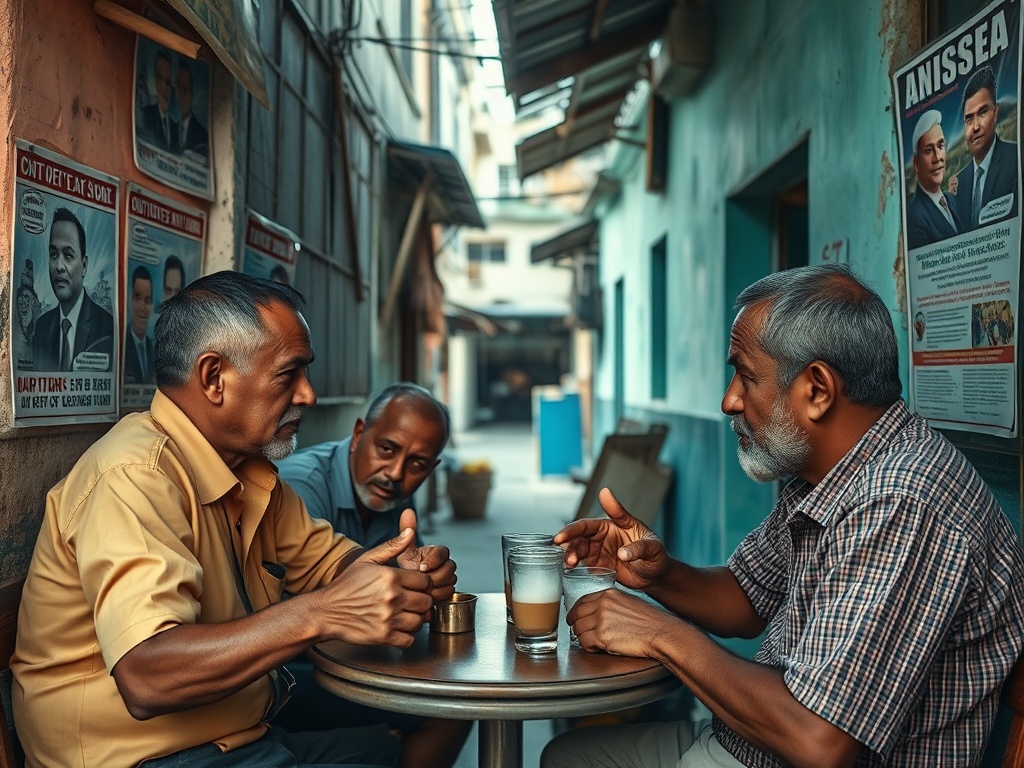
When Coffee Shop Debates Replace Real Solutions
In the swirling currents of Maldivian political conversation, a familiar pattern emerges: what begins as substantive discussion quickly descends into personal jabs and defensive posturing. The mention of a former MP from Hithadhoo, the questioning of a mayor's transformation, the weary advice to avoid arguing with 'ignorant folks'—these fragments reveal a political culture where engagement often feels more like combat than conversation.
The warning that some will 'defeat you with experience of quarrelling and wasting time' speaks volumes about the quality of our public discourse. When political energy is consumed by personal disputes and defensive positioning, what remains for addressing the pressing issues that affect Maldivian families every day? The high cost of living, the housing crisis in Malé, the youth unemployment—these substantive challenges demand our collective attention, yet they often get lost in the noise of political squabbling.
There's a particular weariness that settles in when discussions become circular, when the same arguments are rehashed without progress. The observation that 'the lion doesn't concern himself with the past' suggests a desire to move beyond historical grievances and personal histories toward more forward-looking conversations. Yet this aspiration often clashes with a political reality where personal histories and past affiliations remain central to how politicians and their supporters are judged.
The scattered nature of these conversational fragments—jumping from political figures to cryptocurrency to television preferences—reflects the fragmented attention of a society trying to navigate multiple pressures simultaneously. The casual mention of potentially losing '300kg' of something valuable, followed by an apology for confusion, mirrors the broader sense of uncertainty that characterizes many aspects of Maldivian life today.
What emerges from these disconnected voices is a portrait of political engagement as both necessary and exhausting. The desire for accountability—'what do u have to say about this'—exists alongside the recognition that some battles aren't worth fighting. This tension between engagement and disengagement defines the experience of many Maldivians who care about their country's direction but find the process of political participation draining and often unproductive.
Perhaps the most telling fragment is the simple statement: 'That is the issue.' Without context, it could refer to anything—and in a way, it refers to everything. The issues are numerous, interconnected, and often overwhelming. The challenge for Maldivian society is to build channels of communication that can sustain substantive discussion without collapsing into personal attacks or exhausting circular arguments. Only then can we address the real issues that matter to people's daily lives.
— Source fragments: Let me guess. Fuwad? He was Hithadhoo MP; did you know Nizar before he was elected Mayor?; Brother. Don't argue with ignorant folks. They will defeat you with experience of quaralling and wasting time; what do u have to say about this; The lion doesn't concern himself with the past; insha'Allah we don't lose the 300kg; That is the issue