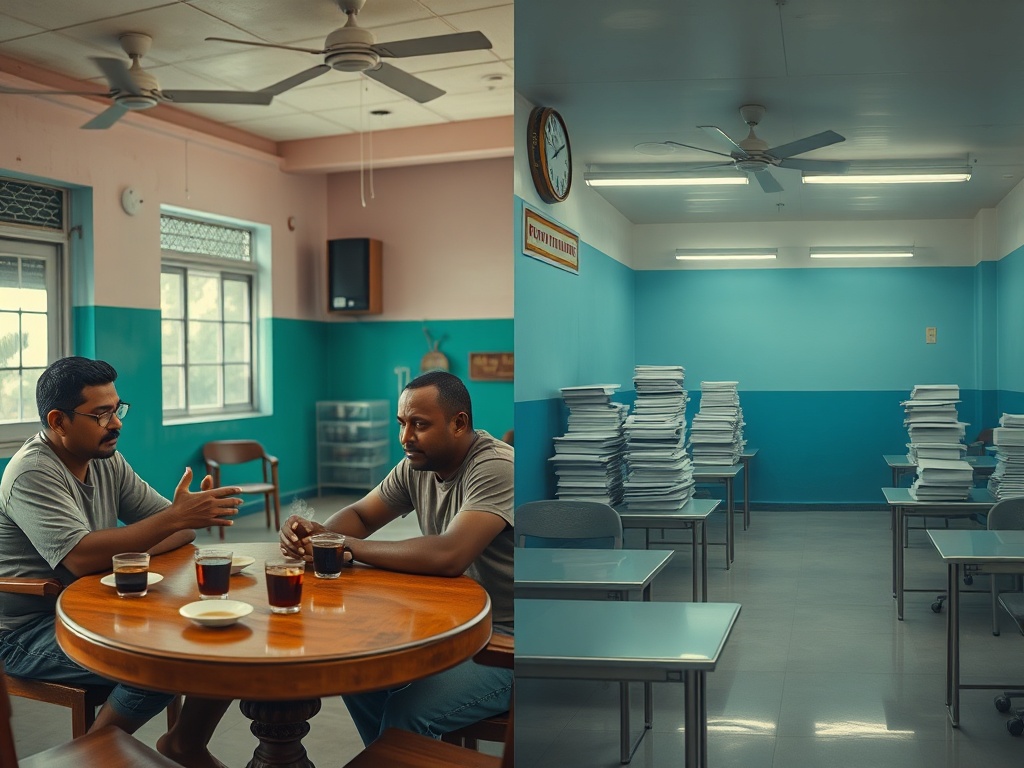
When Competence Becomes Exceptional
In Maldivian political discourse, public admiration often serves as both shield and signal. Phrases like "The man's a legend" or "This COO is one of the few who truly know what they're doing" reveal a political landscape where genuine competence has become so rare it warrants special mention. Recognizing basic professional capability feels noteworthy amid systemic erosion of meritocracy in public service.
This phenomenon extends to institutional decay, where references to "Raaje therey nice gondudhoh" and "Vaavu trip" hint at a political culture where personal connections and regional favoritism trump policy substance. These expressions mask deeper patterns of resource distribution that bypass transparent allocation mechanisms.
Intellectual engagement through book recommendations and the Arabic-derived "iqra'ed" suggests an educated citizenry hungry for substantive discourse. Yet this sophistication coexists with political realities where nepotism appointments, bloated ministries, and politicized judiciary decisions dominate governance. The contrast between public sophistication and systemic dysfunction creates tension that manifests in coded exchanges.
Selective praise for specific officials serves as implicit criticism of the broader system. When citizens single out individuals for competence, they simultaneously highlight the incompetence surrounding them. This pattern reflects a public adept at reading between lines—understanding that in a system where direct criticism carries risks, admiration becomes the safest form of commentary.
As the nation grapples with housing crises, foreign currency shortages, and institutional corruption, these social media interactions form a parallel discourse where citizens navigate the gap between aspirations for competent leadership and the reality of a political system struggling with transparency, accountability, and effective governance. The need to celebrate basic competence reveals how far standards have fallen—and how much work remains to rebuild them.
— Source fragments: User expressions of political support, references to regional favoritism, intellectual engagement through book recommendations, contextual understanding of Maldivian political and socio-economic challenges