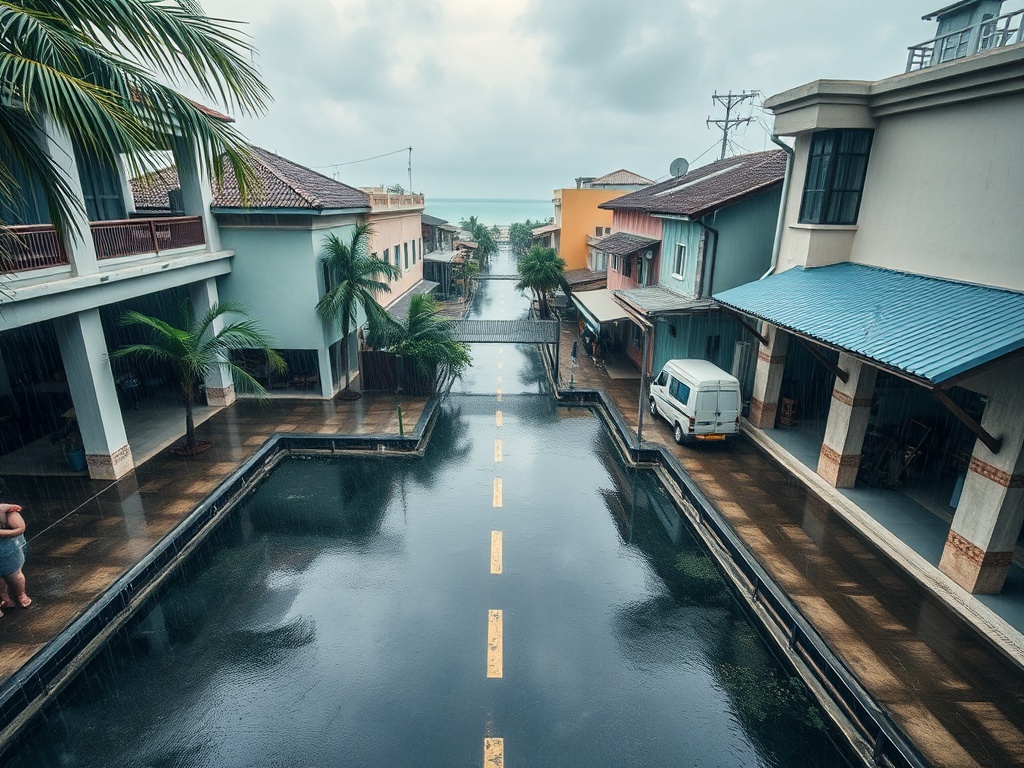
When Concrete Can't Drink: Male's Search for Ground That Absorbs Rain
In the dense urban landscape of Male', where every square meter counts and flooding remains a persistent threat, a quiet revolution in infrastructure thinking is taking root. The conversation has shifted from simply building bigger drains to reconsidering our fundamental relationship with water in this island city.
At the heart of this discussion lies a simple but profound principle: sometimes less engineering delivers more resilience. The observation that "with asphalt and concrete, less is more" reflects a growing awareness that impermeable surfaces exacerbate flooding by preventing rainwater from naturally percolating into the ground. When every drop of rainfall becomes surface runoff, even the most sophisticated drainage systems can be overwhelmed during heavy downpours.
This perspective challenges the conventional wisdom that complex, engineered solutions are always superior. While massive storm drains have their place in urban planning, they represent only one piece of the puzzle. The real opportunity may lie in reimagining how we design our urban surfaces from the ground up—literally.
The traditional Maldivian approach to water management, hinted at in local wisdom, understood the importance of allowing water to find its natural path. Before concrete dominated the landscape, more permeable surfaces allowed rainwater to recharge groundwater aquifers rather than becoming problematic runoff. This historical knowledge offers valuable lessons for contemporary urban planning.
What's emerging is a more nuanced understanding of urban hydrology specific to Male's unique geography. As a low-lying island city with limited land area, the relationship between built environment and natural water cycles becomes critically important. The discussion isn't about rejecting modern engineering outright, but about finding the right balance between technological solutions and nature-based approaches.
The current debate acknowledges that while large-scale drainage systems serve important functions, they represent costly, single-purpose infrastructure. Meanwhile, approaches that incorporate permeable surfaces, green spaces, and designs that work with natural water flow offer multiple benefits—reducing flooding while simultaneously recharging groundwater, reducing urban heat island effects, and creating more livable public spaces.
This shift in perspective comes at a crucial time for Male', where urban density continues to increase and climate change brings more intense rainfall events. The conversation about water management is no longer just about moving water away faster, but about rethinking how we can live with water more sustainably in our island environment.
As infrastructure planning evolves, the most promising solutions may be those that blend modern engineering with traditional wisdom—creating a more resilient Male' that respects both its urban character and its island nature.
— Source fragments: "Also with asphalt and concrete, less is more. The more room water has to get in to the ground, the better." "yeah i get that but they also have massive storm drains. i'm not saying that's necessary for male' but surely there must be better drainage systems than what we have"