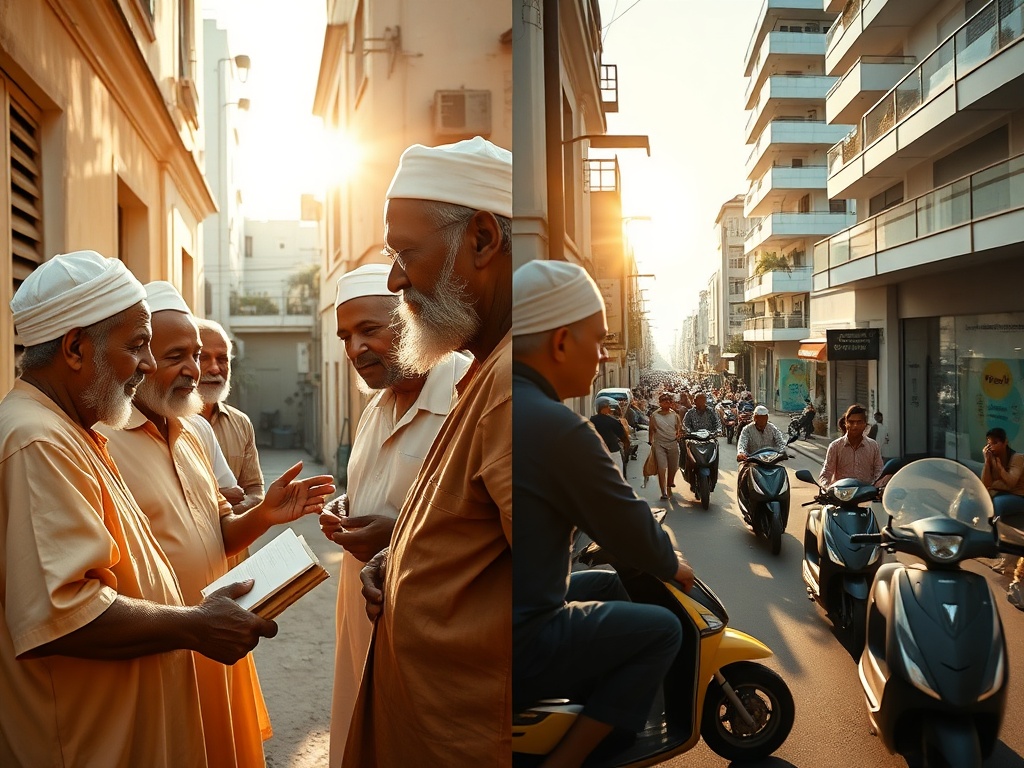
When Defending the Nation Feels Like Defending Its Mistakes
Across Maldivian social circles and family gatherings, a quiet tension simmers beneath the surface of daily life. It's the unspoken divide between those who defend the nation despite its flaws and those who voice their disillusionment with increasing volume. This isn't merely political disagreement—it's a fundamental conversation about what patriotism requires in troubled times.
The older generation often views criticism as betrayal. "The country didn't fail you, a handful of people did," represents a common sentiment among those who remember different struggles. For them, abandoning ship during rough seas is unthinkable. Their perspective is forged in earlier decades when national identity felt more fragile, when the very concept of Maldives as an independent nation was still being solidified. This isn't blind loyalty but rather a deeply ingrained belief that nations, like families, require commitment especially when they stumble.
Yet younger voices counter with equal conviction. Their experience of the Maldives is different—one where systemic problems feel personal. When they see housing projects politicized, job opportunities limited, and governance systems favoring connected families, their frustration isn't directed at some abstract concept of nationhood but at tangible failures. The observation that "the world saw it differently" reflects awareness that international perspectives often judge nations by their treatment of citizens, not just by their flags.
This generational dialogue plays out against a backdrop of very real challenges. The housing crisis in Malé isn't theoretical—it's overcrowded living rooms and impossible rents. The education-to-employment pipeline remains broken for many young Maldivians. When systemic issues become daily obstacles, questioning the system becomes natural rather than rebellious.
The most productive voices in this conversation advocate for focusing on issues rather than personalities. "Don't be like Kurusee. Attack the issue, not the man" represents a mature approach to civic engagement—one that recognizes that systems outlast individuals. This perspective suggests that true patriotism requires clear-eyed assessment of problems alongside commitment to solutions.
What emerges from these competing views isn't a simple right-or-wrong dichotomy but a more complex understanding of national identity. Perhaps both perspectives contain truth: nations deserve loyalty, but they also earn it through just governance. The challenge for the Maldives lies in creating space for this conversation to evolve from social media debates into constructive civic engagement—where criticism and commitment aren't opposing forces but complementary aspects of a healthy democracy.
As the nation navigates its political and economic challenges, this internal dialogue may prove more important than any single policy debate. How a society talks about itself during difficult times often determines what it becomes when those times pass.
— Source fragments: The country didn't fail you, a handful of people did; Don't be like Kurusee. Attack the issue, not the man; lol the world saw it differently; haha.. young people like to brag