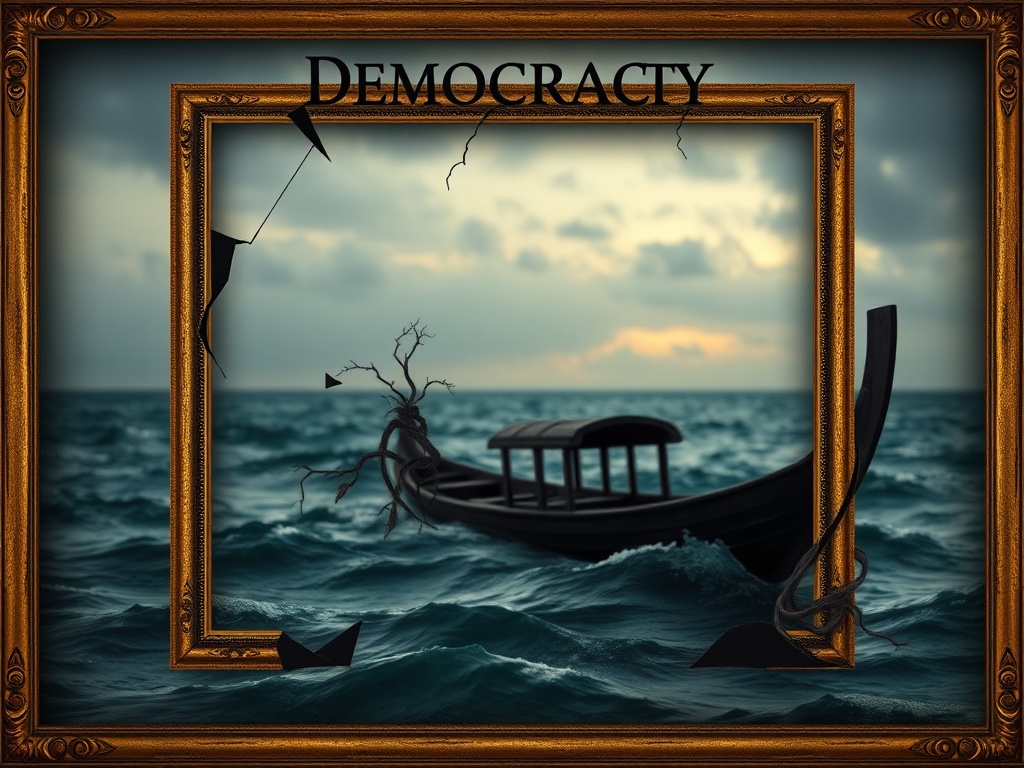
When Democracy's Frame Cracks on Maldivian Screens
In the turbulent arena of Maldivian social media, a recent exchange has surfaced, weaving together threads of geopolitical conspiracy, accusations of extremism, and a fundamental questioning of the nation's democratic integrity. The discourse, fragmented yet potent, offers a window into the anxieties that simmer beneath the surface of public political life.
At its core, the conversation questions the very architecture of power. One voice asserts that the current system is not a functioning democracy but rather "a fascist autocracy disguised as a democracy." This critique is rooted in a specific historical grievance: the alleged involvement of foreign intelligence services in a past political transition, which purportedly led to a system designed to favor a select few. This sentiment echoes a broader, persistent public skepticism about the transparency and fairness of governance structures, where accusations of external manipulation often find fertile ground.
Simultaneously, the dialogue takes a sharp turn toward individual accountability and security. A specific individual is named and linked, through reference to official international designations, to extremist organizations. The intent behind this revelation is presented not as mere gossip, but as a civic duty—information provided "for your knowledge" to "inform you about this particular user and his relation with Islamic extremism." This act of public flagging sits at a tense intersection. It touches upon the nation's 100% Muslim identity, the global scrutiny of religious extremism, and the domestic challenges of monitoring and addressing radicalization while safeguarding civil liberties.
The juxtaposition of these two themes—systemic political failure and individual alleged extremism—is not coincidental. It reflects a layered public consciousness where distrust in governing institutions coexists with vigilance against threats to social and religious cohesion. The tone is one of grim resignation ("It is what it is") paired with a call for watchfulness, suggesting a populace that feels both powerless against macro-political designs and responsible for micro-level communal safety.
This online snapshot, while raw, encapsulates a significant strand of contemporary Maldivian discourse. It moves beyond simple policy debates to grapple with foundational questions of sovereignty, authenticity, and security in a nation navigating complex domestic pressures and an intricate web of foreign relations. The conversation itself becomes a testament to the ongoing struggle to define the nation's character amidst competing narratives of control, faith, and freedom.
— Source fragments: 1. Critique of system as 'fascist autocracy disguised as democracy' linked to alleged foreign interference. 2. Allegation about a specific individual's designation as a financial facilitator for a banned extremist organization. 3. Framing of the information as a public service for awareness and vigilance.