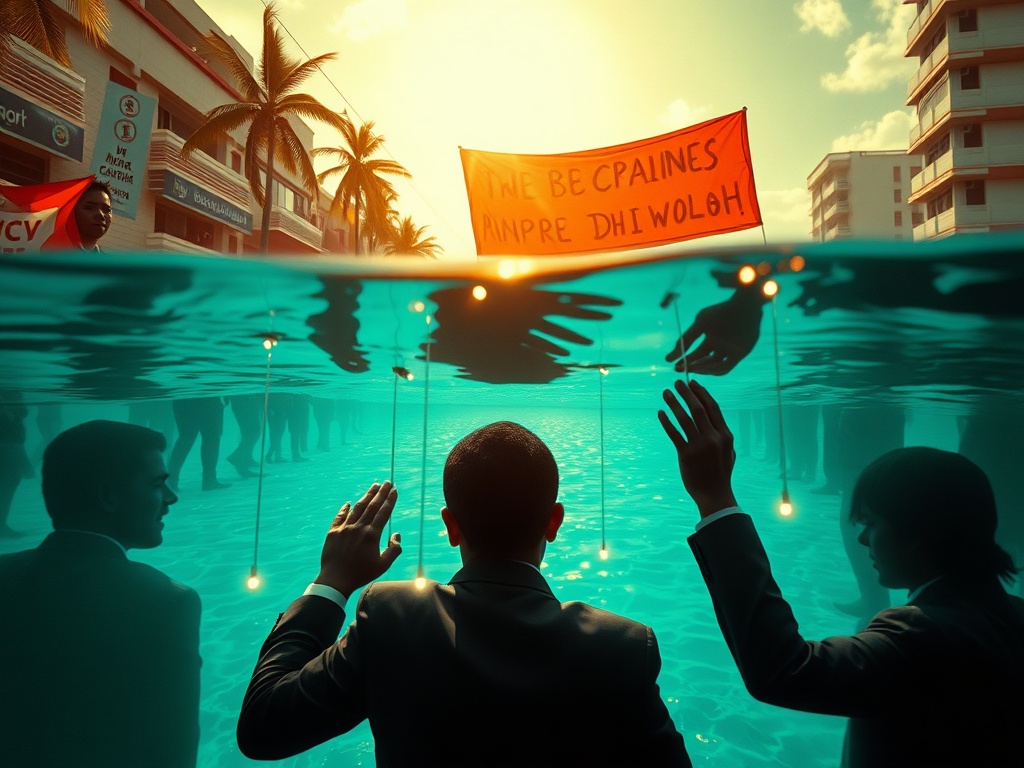
When Democracy's Stage Hides the Same Hands Pulling Strings
In the Maldives' political landscape, a troubling paradox has emerged. The democratic freedoms won through years of struggle now appear to serve as a smokescreen, obscuring deeper structural issues that remain untouched by electoral politics. As one observer noted, the surface-level political theater between parties like MDP and PNC masks the reality that neither can effectively challenge the corporate elite that continues to shape the nation's destiny.
The frustration is palpable across social media and public discourse. Citizens watch as police swiftly confiscate phones for government criticism while turning a blind eye to gangs that serve political interests. The judiciary faces accusations of being stacked with political appointees rather than independent arbiters of justice. These patterns suggest a system where the forms of democracy are preserved while its substance is systematically hollowed out.
At the heart of this disillusionment lies the recognition that political parties have become incapable of meaningful self-reform. The MDP, once the standard-bearer for democratic change, now faces internal collapse and accusations of failing both its leadership and its supporters. The current political generation appears trapped in a cycle of empty promises and council pledges that never materialize into substantive change.
The real crisis extends beyond political theater to touch every aspect of Maldivian life. Young people face unemployment and limited opportunities while watching resources flow to politically connected interests. Housing remains a distant dream for many, with government projects often benefiting those who can manipulate the system rather than those in genuine need. Healthcare shortages and economic pressures compound the sense that the system serves the few at the expense of the many.
What emerges from this collective frustration is a cry for something beyond the current political paradigm. The demand is not for more political gamesmanship but for a generation of leaders with genuine will, integrity, and motivation to address the country's deep-seated problems. The question haunting the political landscape is whether such leadership can emerge from a system that seems designed to perpetuate the status quo.
As the Maldives navigates this complex moment, the challenge becomes clear: democratic forms without substantive economic and social justice may ultimately prove empty. The real test for the nation's political future may lie not in which party wins the next election, but in whether any political force can break the cycle of corporate capture and deliver the meaningful change that citizens desperately seek.
— Source fragments: Nasheed's democracy project muddied the water surface so we can't see Capitalists on seabed; MDP and PNC incapable of criticising corporate elite; Police confiscate phones for government criticism but ignore government-serving gangs; Supreme Court appointments as political puppets; MDP failed to reform and failed as opposition; Need for strong, uncorrupted generation to lead country