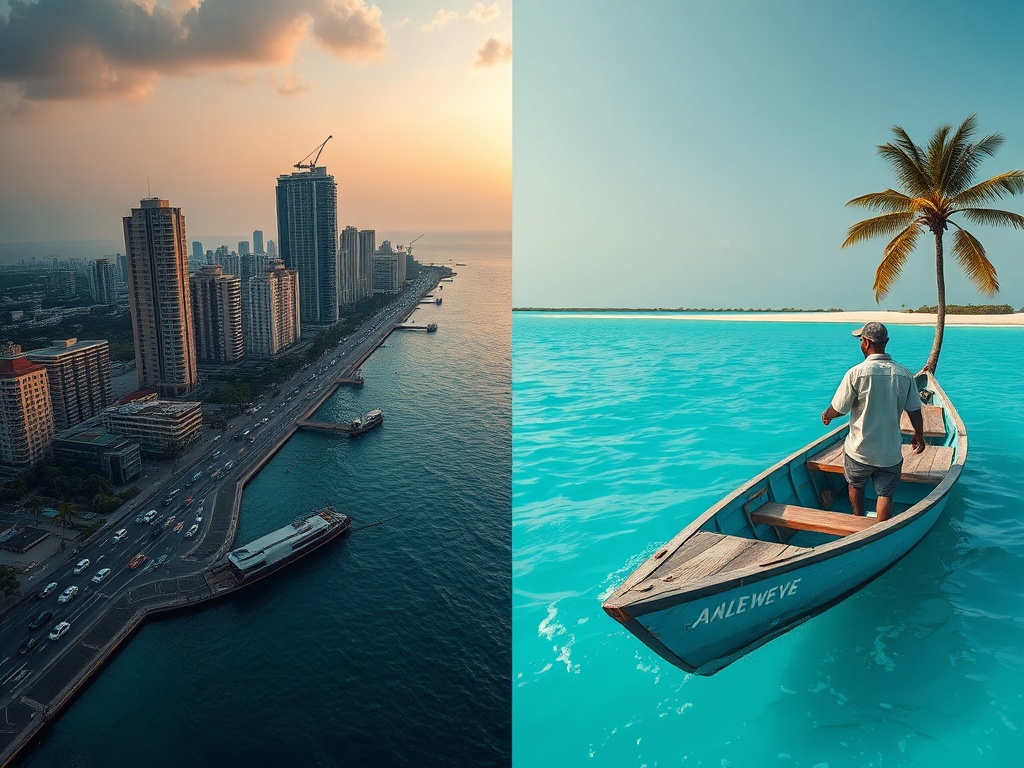
When Ex-MPs' Benefits Outweigh Your Island's Needs
The complaint echoes across Maldivian social circles and political discourse: "Only if we got those social benefits that ex-MPs and presidents get." This sentiment reveals more than just resentment toward political privilege—it exposes a fundamental weakness in the nation's governance architecture. The real issue isn't which leader occupies the podium, but the absence of a resilient system that survives political transitions.
Across the atolls, the conversation has shifted from personalities to structures. Critics argue that the current approach treats governance as a personal stage rather than an institutional framework. When state-owned enterprises drowning in debt prioritize logo changes and lavish events over fiscal responsibility, it reveals a deeper misalignment between public needs and institutional priorities.
The debate around federalization versus decentralization captures this tension perfectly. Some contend that Maldives is too small to find the human talent to manage a complex federal system, warning that such restructuring would compound existing inefficiencies. They advocate instead for regionalized urbanization through strengthened local governance.
Yet others point to the persistent marginalization of the atolls under the current unitary system. The question emerges: is federalization the only path to ensuring outlying communities receive their fair share of development? This isn't merely an academic discussion—it's about whether Maldivians in remote islands will continue watching development concentrate in the capital while their needs go unaddressed.
The challenge extends beyond political structures to institutional accountability. When complaints about problematic developments yield only "precautions" because projects were "permitted by the state," it reveals how systems designed to protect citizens can instead protect the powerful. The result is a growing cynicism about whether institutions serve the public or political interests.
What emerges from these discussions is a consensus that Maldives needs more than leadership changes—it requires system rebuilding. The focus must shift from who holds power to how power is structured, exercised, and held accountable. Until the system itself becomes resilient enough to withstand political whims and prioritize public needs over political theater, the cycle of disappointment will continue, regardless of which party or personality occupies the podium.
— Source fragments: Only if we got those social benefits that ex mp and president's get; What we need is a system brother. Leaders can come and go but the system needs to be strong and resiliant; Maldives doesn't need a federal system to develop the rest of the Maldives; Having said that, the unitary feature of the Maldives marginalizes the atolls; Who are they trying to impress? Who exactly are they competing with? A gov SOE drowning in debt; We did complain, but because it was permitted by the state, municipality issued only precautions